• Fri frakt över 249 kr
  • •
  • Snabba leveranser
  • •
  • Billiga böcker
Kundservice

Du är på sajten för privatpersoner.

Företag, bibliotek eller offentlig verksamhet?

Du handlar på classic.bokus.com, där alla dina funktioner finns intakta.
Till classic.bokus.com
Bokus logotyp. Gå till startsidan.
  • Erbjudanden
  • Nyheter
  • Student
  • Topplistor
  • Barn & ungdom
  • Bokus Play
  • E-böcker
  • Pocketböcker
  • Spel & pussel

10% rabatt på allt med kod: NYSTART10 →

Sidfot

Mina sidor

    Hjälp

    • Kundservice
    • Vanliga frågor och svar
    • Frakt och leverans
    • Retur vid ångerrätt
    • Reklamera vara
    • Betalning
    • Köpvillkor
    • Allmänna villkor
    • Information om webbplatsens tillgänglighet

    Om Bokus

    • Om oss
    • Pressrum
    • För studenter
    • För företag
    • För bibliotek och offentlig verksamhet
    • För leverantörer
    • Hållbarhet

    Populärt

    • Aktuella erbjudanden
    • Presentkort
    • Studentlitteratur
    • Nya böcker
    • Topplistor
    • Signerade böcker
    • Engelska böcker

    Inspiration

    • Boktips
    • BookTok
    • Populära bokserier
    • Barnbokskaraktärer
    • Populära författare
    Logotyp för Bokus
    Följ oss på Facebook (extern länk)Följ oss på Instagram (extern länk)Följ oss på YouTube (extern länk)Följ oss på TikTok (extern länk)
    bokus @ CookiesAnpassa cookiesIntegritetspolicyKöpvillkor
    Till Citymail hemsida (extern länk)Till Budbee hemsida (extern länk)Till Postnord hemsida (extern länk)Till Schenker hemsida (extern länk)Till Early Bird hemsida (extern länk)Till Walleys hemsida (extern länk)
    1. Djur och Natur
    2. Naturböcker
    3. Växtböcker

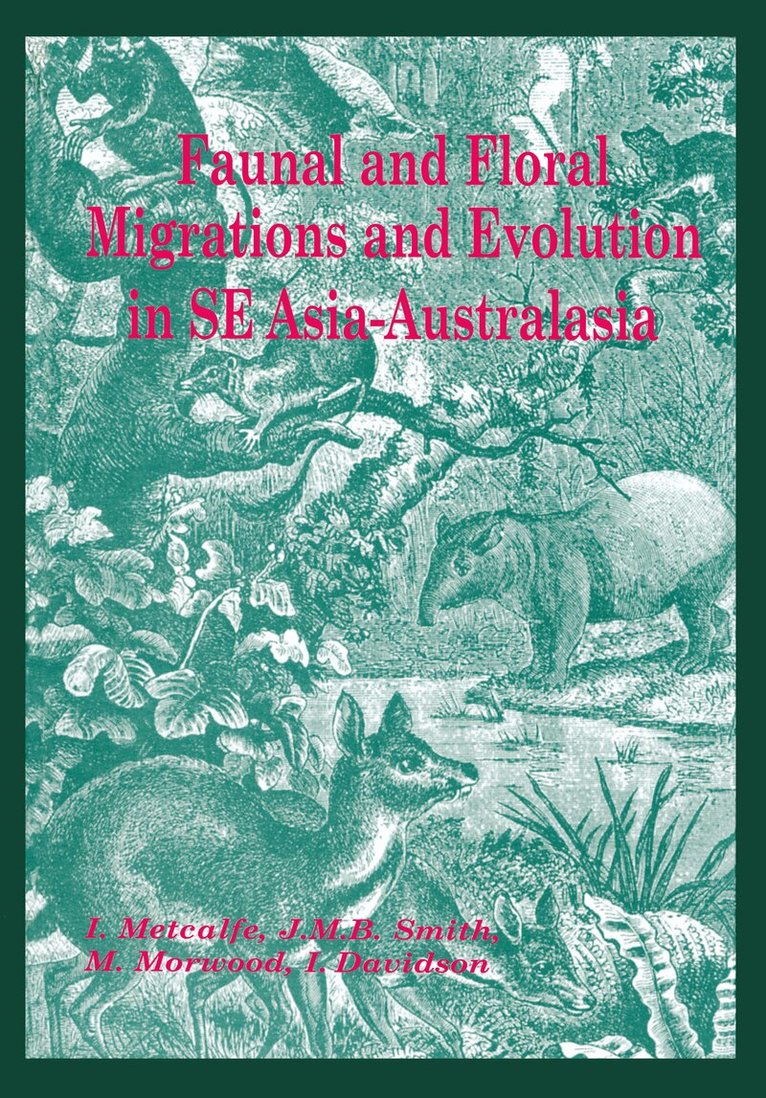
    Faunal and Floral Migration and Evolution in SE Asia-Australasia

    AvIan Metcalfe,Jeremy M.B. Smith

    Inbunden, Engelska, 2001

    2 645 kr

    Beställningsvara. Skickas inom 10-15 vardagar. Fri frakt över 249 kr.

    Beskrivning

    This multidisciplinary book focuses on the relationships and interactions between palaeobiogeography, biogeography, dispersal, vicariance, migrations and evolution of organisms in the SE Asia-Australasian region. The book investigates biogeographic links between SE Asia and Australasia which go back more than 500 million years. It also focuses on the links between geological evolution and biological migrations and evolution in the region. It was in the SE Asian region that Alfred Russell Wallace established his biogeographic line, now known as Wallace's Line, which was the beginning of biogeography. Wallace also independently developed his theory of evolution based on his work in this area.;The book brings together, for the first time, geologists, palaeontologists, zoologists, botanists, entomologists, evolutionary biologists and archaeologists, in the one volume, to relate the region's geological past to its present biological peculiarities. The book is organized into six sections. Section 1 Paleobiogeographic Background provides overviews of the geological and tectonic evolution of SE Asia-Australasia, and changing patterns of land and sea for the last 540 million years. Section 2 Palaeozoic and Mesozoic Geology and Biogeography discusses Palaeozoic and Mesozoic biogeography of conodonts, brachiopods, plants, dinosaurs and radiolarians and the recognition of ancient biogeographic boundaries or Wallace Lines in the region. Section 3 Wallace's Line focuses on the biogeographic boundary established by Wallace, including the history of its establishment, its significance to biogeography in general and its applicability in the context of modern biogeography.;Section 4 Plant biogeography and evolution includes discussion on primitive angiosperms, the diaspora of the southern rushes, and environmental, climatic and evolutionary implications of plants and palynomorphs in the region. The biogeography and migration of insects, butterflies, birds, rodents and other non-primate mammals is discussed in section 5, Non Primates. The final section 6 Primates focuses on the biogeographic radiation, migration and evolution of primates and includes papers on the occurrence and migration of early hominids and the requirements for human colonization of Australia.

    Produktinformation

    • Utgivningsdatum:2001-06-01
    • Mått:178 x 254 x 33 mm
    • Vikt:1 050 g
    • Format:Inbunden
    • Språk:Engelska
    • Antal sidor:416
    • Förlag:A A Balkema Publishers
    • ISBN:9789058093493

    Utforska kategorier

    • Växtböcker inom Djur och Natur
    • Botanik inom Naturvetenskap och teknik
    • Biovetenskap inom Naturvetenskap och teknik

    Mer om författaren

    Ian Metcalfe, Jeremy M.B. Smith, Mike Norwood, Iain Davidson

    Innehållsförteckning

    • Preface; Introduction; Section 1. Palaeogeographic Background. Palaeozoic and Mesozoic tectonic evolution and biogeography of SE Asia-Australasia; Cenozoic reconstructions of SE Asia and the SW Pacific: changing patterns of land and sea; Section 2. Palaeozoic and Mesozoic geology and biogeography. Cambrian to Permian conodont biogeography in East Asia-Australasia; Wallace Lines in eastern Gondwana: Palaeobiogeography of Australasian Permian Brachiopoda; A review of the Early Permian flora from Papua (West New Guinea); A biogeographic comparison of the dinosaurs and associated vertebrate faunas from the Mesozoic of Australia and Southeast Asia; Early Middle Jurassie (Aalenian) radiolarian fauna from the Xialu chert in the Yarlung Zangbo Suture Zone, southern Tibet; Section 3. Wallace's Line. Why Wallace drew the line: Are-analysis of Wallace's bird collections in the Malay Archipelago and the origins of biogeography; The linear approach to biogeography: Should we erase Wallace's Line? Fauna) exchange between Asia and Australia in the Tertiary as evidenced by recent butterflies; Why does the distribution of the Honeyeaters (Meliphagidae) conform so weil to Wallace's Line? Human influences on vertebrate zoogeography: animal translocation and biological invasions across and to the east of Wallace's Line, Wallace's line and marine organisms: the distribution of staghorn corals (Acropora) in lndonesia; Section 4. Plant biogeography and evolution. Why are there so many Primitive Angiosperms in the Rain Forests of Asia-Australasia? Australian Paleogene vegetation and environments: evidence for palaeo-Gondwanan elements in the fossil records of Lauraceae and Proteaceae; Vegetation and climate in lowland Southeast Asia at the Last Glacial Maximum; The restiads invade the north: the diaspora of the Restionaceae; Evolutionary history of Alectryon in Australia; Section 5. Non Primates. Australasian distributions in Trichoptera (lnsecta)- a frequent pattern or a rare case? Butterflies and Wallace's Line: faunistic patterns and explanatory hypotheses within the south-east Asian butterflies; The vertebrate fauna of the Wallacean Island Interchange Zone: the basis of inbalance and impoverishment; Dispersal versus vicariance, artifice rather than contest; The Australian rodent fauna, flotilla's, flotsam or just fleet footed? Corroboration of the Garden of Eden Hypothesis; Mammals in Sulawesi: where did they come from and when, and what happened to them when they got there? Section 6. Primates. Radiation and Evolution of Three Macaque Species, Macaca fascicularis, M. radiata and M. sinica, as Related to the Geographie Changes in the Pleistocene of Southeast Asia; Borneo as a biogeographic barrier to Asian-Australasian migration; Modelling Divergence, Inter-breeding and Migration: Species Evolution in a Changing World; Early hominid occupation of Flores, East lndonesia, and its wider Significance; The requirements for human colonisation of Australia; Did early hominids cross sea gaps on natural rafts?