• Fri frakt över 249 kr
  • •
  • Snabba leveranser
  • •
  • Billiga böcker
Kundservice

Du är på sajten för privatpersoner.

Företag, bibliotek eller offentlig verksamhet?

Du handlar på classic.bokus.com, där alla dina funktioner finns intakta.
Till classic.bokus.com
Bokus logotyp. Gå till startsidan.
  • Erbjudanden
  • Nyheter
  • Student
  • Topplistor
  • Barn & ungdom
  • Bokus Play
  • E-böcker
  • Pocketböcker
  • Spel & pussel

10% rabatt på allt med kod NYSTART10 →

Sidfot

Mina sidor

    Hjälp

    • Kundservice
    • Vanliga frågor och svar
    • Frakt och leverans
    • Retur vid ångerrätt
    • Reklamera vara
    • Betalning
    • Köpvillkor
    • Allmänna villkor
    • Information om webbplatsens tillgänglighet

    Om Bokus

    • Om oss
    • Pressrum
    • För studenter
    • För företag
    • För bibliotek och offentlig verksamhet
    • För leverantörer
    • Hållbarhet

    Populärt

    • Aktuella erbjudanden
    • Presentkort
    • Studentlitteratur
    • Nya böcker
    • Topplistor
    • Signerade böcker
    • Engelska böcker

    Inspiration

    • Boktips
    • BookTok
    • Populära bokserier
    • Barnbokskaraktärer
    • Populära författare
    Logotyp för Bokus
    Följ oss på Facebook (extern länk)Följ oss på Instagram (extern länk)Följ oss på YouTube (extern länk)Följ oss på TikTok (extern länk)
    bokus @ CookiesAnpassa cookiesIntegritetspolicyKöpvillkor
    Till Citymail hemsida (extern länk)Till Budbee hemsida (extern länk)Till Postnord hemsida (extern länk)Till Schenker hemsida (extern länk)Till Early Bird hemsida (extern länk)Till Walleys hemsida (extern länk)
    1. Historia och arkeologi
    2. Arkeologi

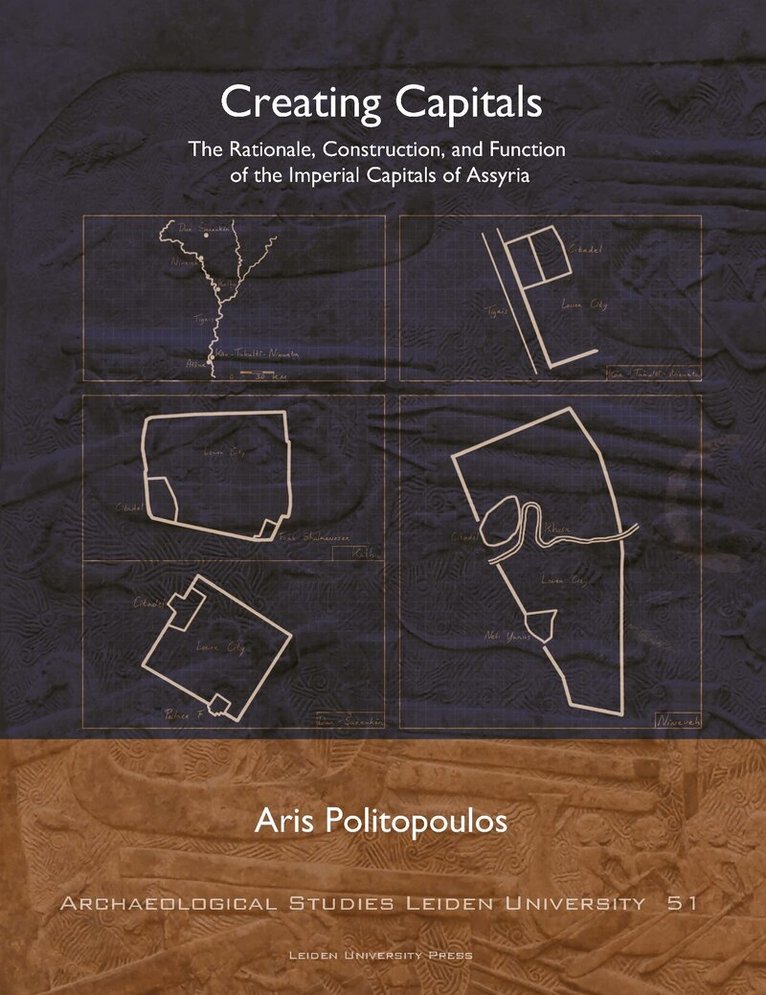
    Creating Capitals

    The Rationale, Construction, and Function of the Imperial Capitals of Assyria

    AvAris Politopoulos

    Häftad, Engelska, 2020

    Del i serien Archaeological Studies Leiden University

    1 327 kr

    Beställningsvara. Skickas inom 5-8 vardagar. Fri frakt över 249 kr.

    Beskrivning

    The creation of new capital cities are watershed moments in the lives of ancient empires. Assyria, arguably the most successful imperial state of the ancient Near East, repeatedly engaged in capital creation. Capital creation denotes the development of a monumental capital, either in a new location or through the profound transformation of a pre-existing settlement. This volume focusses on the rationale, construction, and function of the imperial capitals of Assyria: Kār-Tukultī-Ninurta, Kalḫu, Dur-Šarrukēn, and Nineveh.By exploring three key questions – why was a capital created, how was a capital created, and what were the functions of the capital – this study presents a comparative analysis of these four urban centers and presents a new perspective on their creation, as well as an innovative framework for the study of capital creation from antiquity to today.

    Produktinformation

    • Utgivningsdatum:2020-03-11
    • Mått:210 x 273 x undefined mm
    • Format:Häftad
    • Språk:Engelska
    • Serie:Archaeological Studies Leiden University
    • Antal sidor:182
    • Förlag:Leiden University Press
    • ISBN:9789087283520

    Utforska kategorier

    • Arkeologi inom Historia och arkeologi
    • Religion: allmänt inom Filosofi och religion
    • Litteraturvetenskap inom Skönlitteratur

    Mer om författaren

    Aris Politopoulos is an archaeologist whose research focuses on ancient Near Eastern empires, the development of cities, and the study of play in the past. He is a lecturer of Near Eastern Archaeology at the Faculty of Archaeology (Leiden University) and a post-doctoral researcher for the Past-at-Play Lab in the Leiden University Centre for Arts in Society.

    Innehållsförteckning

    • 1: Creating Capitals – Approaches, Perspectives, and Methodology 1.1 Introduction 1.2 Classifying Cities 1.3 Capital Creation as a Form of Statecraft 1.4 Capital Creation and the Study of Empires 1.5 Methodology 2: Assyria and A..ur 2.1 Choosing Assyria 2.2 A..ur, the Traditional Capital of Assyria 3: K.r-Tukult.-Ninurta – Capital Creation in the Middle Assyrian Empire 3.1 Introduction 3.2 Setting the Stage – Historical Overview of Middle Assyria 3.3 Why – Building a Capital, Building an Empire 3.4 How – The Realization of a New Capital 3.5 What – The Function and 'Demise' of K.r-Tukult.-Ninurta 4: Kal.u – The First New Neo Assyrian Capital 4.1 Introduction 4.2 From Decline to Empire - Political History of the Early Neo Assyrian State 4.3 Why – The Case of a New(?) Foundation 4.4 How – The Construction and Opening Festival of Kal.u 4.5 What – City Design and Function of Kal.u 4.6 Concluding Remarks on the Creation of Kal.u 5: Dur-.arruk.n – A Short-lived Capital 5.1 Introduction 5.2 Paving the Way – from Decline to Tiglath-Pileser III 5.3 The History of the Sargonic Period 5.4 Why – An attempt of Imperial Consolidation 5.5 How – Building Dur-.arruk.n 5.6 What – Urban Design of Dur-.arruk.n 5.7 What – The Citadels 5.8 What – Conclusions 6: Nineveh – The Largest Capital of Assyria 6.1 Introduction 6.2 Middle Assyrian Nineveh 6.3 Neo Assyrian Nineveh 6.4 Historical Context 6.5 Why – A capital waiting to happen? 6.6 How 6.7 What – Urban Layout 6.8 What – Citadels 6.9 What – Waters of Nineveh 6.10 What – Conclusions 7: Creating Capitals – Comparative Analysis and Conclusions 7.1 Introduction 7.2 Why – The Reasons Behind Capital Creation in Assyria 7.3 How – The Construction Process of Assyrian Capitals 7.4 What - A Conceptual Challenge 8: Conclusions 8.1 A Model for Assyrian Capital Creation 8.2 Applicability of the Model through History 8.3 Recommendations Acknowledgements Bibliography List of Figures List of Tables Appendix 1 Appendix 2