• Fri frakt över 249 kr
  • •
  • Snabba leveranser
  • •
  • Billiga böcker
Kundservice

Du är på sajten för privatpersoner.

Företag, bibliotek eller offentlig verksamhet?

Du handlar på classic.bokus.com, där alla dina funktioner finns intakta.
Till classic.bokus.com
Bokus logotyp. Gå till startsidan.
  • Erbjudanden
  • Nyheter
  • Student
  • Topplistor
  • Barn & ungdom
  • Bokus Play
  • E-böcker
  • Pocketböcker
  • Spel & pussel

10% rabatt på allt med kod: NYSTART10 →

Sidfot

Mina sidor

    Hjälp

    • Kundservice
    • Vanliga frågor och svar
    • Frakt och leverans
    • Retur vid ångerrätt
    • Reklamera vara
    • Betalning
    • Köpvillkor
    • Allmänna villkor
    • Information om webbplatsens tillgänglighet

    Om Bokus

    • Om oss
    • Pressrum
    • För studenter
    • För företag
    • För bibliotek och offentlig verksamhet
    • För leverantörer
    • Hållbarhet

    Populärt

    • Aktuella erbjudanden
    • Presentkort
    • Studentlitteratur
    • Nya böcker
    • Topplistor
    • Signerade böcker
    • Engelska böcker

    Inspiration

    • Boktips
    • BookTok
    • Populära bokserier
    • Barnbokskaraktärer
    • Populära författare
    Logotyp för Bokus
    Följ oss på Facebook (extern länk)Följ oss på Instagram (extern länk)Följ oss på YouTube (extern länk)Följ oss på TikTok (extern länk)
    bokus @ CookiesAnpassa cookiesIntegritetspolicyKöpvillkor
    Till Citymail hemsida (extern länk)Till Budbee hemsida (extern länk)Till Postnord hemsida (extern länk)Till Schenker hemsida (extern länk)Till Early Bird hemsida (extern länk)Till Walleys hemsida (extern länk)
    1. Samhälle och politik
    2. Sociologi och antropologi
    3. Antropologi

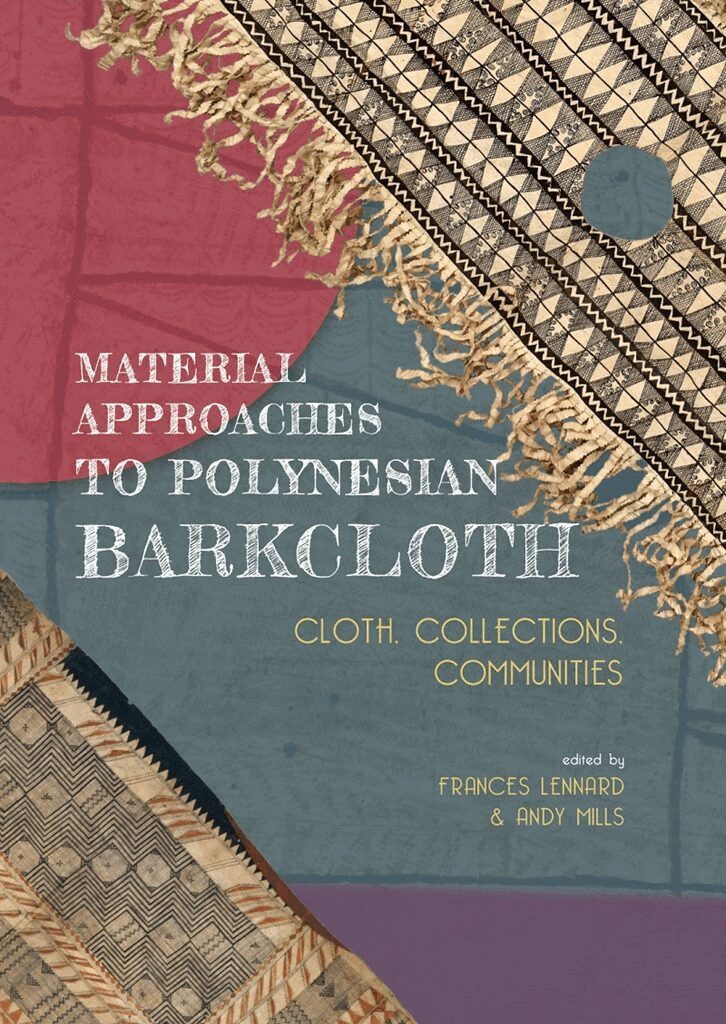
    Material Approaches to Polynesian Barkcloth

    Cloth, Collections, Communities

    AvFrances Lennard,Andy Mills

    Häftad, Engelska, 2020

    929 kr

    Skickas . Fri frakt över 249 kr.

    Beskrivning

    Barkcloth or tapa, a cloth made from the inner bark of trees, was widely used in place of woven cloth in the Pacific islands until the 19th century. A ubiquitous material, it was integral to the lives of islanders and used for clothing, furnishings and ritual artefacts. Material Approaches to Polynesian Barkcloth takes a new approach to the study of the history of this region through its barkcloth heritage, focusing on the plants themselves and surviving objects in historic collections. This object-focused approach has filled gaps in our understanding of the production and use of this material through an investigation of this unique fabric’s physical properties, transformation during manufacture and the regional history of its development in the 18th and 19th centuries.The book is the outcome of a research project which focused on three important collections of barkcloth at The Hunterian, University of Glasgow; Royal Botanic Gardens, Kew and the National Museum of Natural History, Smithsonian Institution. It also looks more widely at the value of barkcloth artefacts in museum collections for enhancing both contemporary practice and a wider appreciation of this remarkable fabric. The contributors include academics, curators, conservators and makers of barkcloth from Oceania and beyond, in an interdisciplinary study which draws together insights from object-based and textual reseach, fieldwork and tapa making, and information on the plants used to make fibres and colourants.This book will be of interest to tapa makers, museum professionals including curators and conservators; academics and students in the fields of anthropology, museum studies and conservation; museum visitors and anyone interested in finding out more about barkcloth.

    Produktinformation

    • Utgivningsdatum:2020-12-23
    • Mått:178 x 254 x 21 mm
    • Vikt:846 g
    • Format:Häftad
    • Språk:Engelska
    • Antal sidor:330
    • Upplaga:20001
    • Förlag:Sidestone Press
    • ISBN:9789088909719

    Utforska kategorier

    • Antropologi inom Samhälle och politik

    Mer om författaren

    Frances Lennard is Professor of Textile Conservation at the University of Glasgow and was director of the Centre for Textile Conservation and Technical Art History until 2020. Her research interests focus on conservation approaches and methodologies and she is particularly interested in interdisciplinary research. She is the co-editor of Tapestry Conservation: Principles and Practice, with Maria Hayward and Textile Conservation: Advances in Practice, with Patricia Ewer. She was Principal Investigator of the research project, Situating Pacific Barkcloth in Time and Place. Dr Andy Mills is curator for Archaeology and World Cultures at The Hunterian. He is a world art historian, ethnohistorian and anthropologist, with specialist interests in Oceanic art, collections provenance, missionary collecting, textiles, and arms and armour, among other things; he is the co-editor, with Tom Crowley, of Weapons, Culture and the Anthropology Museum. During the project Situating Pacific Barkcloth in Time and Place, Andy’s research focused on historical change in the arts of Polynesian barkcloth, analysing the materials and processes of tapa-making, and exploring the histories of barkcloth in the world’s museums.

    Recensioner i media

    …organised, factual, and academically strong. […] This underlining focus being conservation and preservation makes this book a good source for researchers, academics, museums curators, conservators, and students.

    Innehållsförteckning

    • AcknowledgementsImage creditsBiographiesIntroductionFrances LennardPart I: Tapa as Fabric: Bast and ColourantsThe procurement, cultural value and fabric characteristics of Polynesian tapa speciesAndy MillsPlant profile 1. Paper mulberry, Broussonetia papyriferaPlant profile 2. Breadfruit, Artocarpus altilisMark NesbittTechnical variation in historical Polynesian tapa manufactureAndy MillsBreadfruit tapa: not always second bestMichele Austin Dennehy, Jean Chapman Mason, Adrienne L. KaepplerPlant profile 3. Pacific banyan, Ficus prolixaPlant profile 4. Māmaki, Pipturus albidusMark NesbittA new perspective on understanding Hawaiian kapa-makingLisa Schattenburg-RaymondPolynesian tapa colourantsAndy Mills, Taoi Nooroa, Allan TuaraPlant profile 5. Beach hibiscus, Sea hibiscus, Hibiscus tiliaceusPlant profile 6. ‘Ākia, Wikstroemia uva-ursiMark NesbittHawaiian dyes and kapa pigments: a modern perspective and brief analysis of the historic recordLisa Schattenburg-RaymondPart II: Understanding Tapa in Time and PlaceTowards a regional chronology of Polynesian barkcloth manufactureAndy MillsLiving with tapa and the social life of ritual objectsAdrienne L. KaepplerPlant profile 7. ‘Oloa, Neraudia melastomifoliaPlant profile 8. Polynesian arrowroot, Tacca leontopetaloidesMark NesbittWest Polynesian dyes and decorations as cultural signaturesAdrienne L. Kaeppler‘A classification of Tongan ngatu’: change and stability in Tongan barkcloth forms since 1963Billie LythbergWhite for purity, brown for beautiful like us and black because it is awesomeFanny Wonu VeysPlant profile 9. Koka, Bischofia javanicaPlant profile 10. Candlenut, Aleurites moluccanaMark NesbittBarkcloth from the islands of Wallis (‘Uvea) and FutunaHélène GuiotBarkcloth in the Māori worldPatricia Te Arapo Wallace‘Ahu Sistas: reclaiming history, telling our storiesPauline Reynolds, Jean ClarksonPlant profile 11. Turmeric, Curcuma longaPlant profile 12. Noni, Morinda citrifoliaMark Nesbitt‘Tataki ʻe he Leá: Guided Language’Tui Emma Gillies, Sulieti Fieme’a BurrowsPart III: Tapa in Collections and the CommunityThe Hunterian’s Polynesian barkcloth collectionAndy MillsFrom maker to museum: Polynesian barkcloth at the Royal Botanic Gardens, KewMark Nesbitt, Brittany Curtis, Andy MillsPlant profile 13. Mati, Ficus tinctoriaPlant profile 14. Tou, Cordia subcordataPlant profile 15. Ironwood, Casuarina equisetifoliaMark NesbittSmithsonian Institution barkcloth collectionsAdrienne L. Kaeppler‘Holomua ka hana kapa’: a symposium on caring for kapa and kapa makers at the Bernice Pauahi Bishop Museum, December 2017Alice ChristopheFiji masi and the Auckland Museum Pacific Collection Access ProjectFuli Pereira, Leone Samu-TuiPlant profile 16. Malay apple, Syzygium malaccensePlant profile 17. Red mangrove, Rhizophora mangleMark NesbittShown to full advantage: conservation and mounting of barkcloth for display in the ‘Shifting Patterns: Pacific Barkcloth Clothing’ exhibition at the British MuseumMonique PullanConservation as part of ‘Situating Pacific Barkcloth in Time and Place’: improving preservation, enhancing access and sharing knowledgeFrances Lennard, Reggie Meredith Fitiao, Su’a Tupuola Uilisone Fitiao, Ruby Antonowicz-Behnan, Beth KnightAfterword: Polynesian barkcloth past, present, futureMark Nesbitt, Frances Lennard and Andy MillsBibliography