• Fri frakt över 249 kr
  • •
  • Snabba leveranser
  • •
  • Billiga böcker
Kundservice

Du är på sajten för privatpersoner.

Företag, bibliotek eller offentlig verksamhet?

Du handlar på classic.bokus.com, där alla dina funktioner finns intakta.
Till classic.bokus.com
Bokus logotyp. Gå till startsidan.
  • Erbjudanden
  • Nyheter
  • Student
  • Topplistor
  • Barn & ungdom
  • Bokus Play
  • E-böcker
  • Pocketböcker
  • Spel & pussel

10% rabatt på allt med kod: NYSTART10 →

Sidfot

Mina sidor

    Hjälp

    • Kundservice
    • Vanliga frågor och svar
    • Frakt och leverans
    • Retur vid ångerrätt
    • Reklamera vara
    • Betalning
    • Köpvillkor
    • Allmänna villkor
    • Information om webbplatsens tillgänglighet

    Om Bokus

    • Om oss
    • Pressrum
    • För studenter
    • För företag
    • För bibliotek och offentlig verksamhet
    • För leverantörer
    • Hållbarhet

    Populärt

    • Aktuella erbjudanden
    • Presentkort
    • Studentlitteratur
    • Nya böcker
    • Topplistor
    • Signerade böcker
    • Engelska böcker

    Inspiration

    • Boktips
    • BookTok
    • Populära bokserier
    • Barnbokskaraktärer
    • Populära författare
    Logotyp för Bokus
    Följ oss på Facebook (extern länk)Följ oss på Instagram (extern länk)Följ oss på YouTube (extern länk)Följ oss på TikTok (extern länk)
    bokus @ CookiesAnpassa cookiesIntegritetspolicyKöpvillkor
    Till Citymail hemsida (extern länk)Till Budbee hemsida (extern länk)Till Postnord hemsida (extern länk)Till Schenker hemsida (extern länk)Till Early Bird hemsida (extern länk)Till Walleys hemsida (extern länk)
    1. Historia och arkeologi
    2. Arkeologi
    3. Arkeologiska perioder och områden

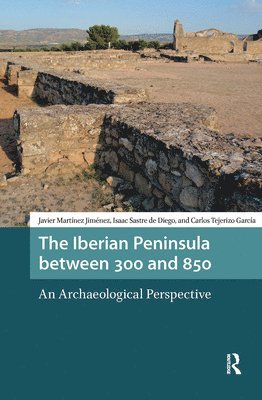
    Iberian Peninsula between 300 and 850

    An Archaeological Perspective

    AvMartínez Jiménez,Isaac Sastre de Diego

    Inbunden, Engelska, 2018

    Del 6 i serien Late Antique and Early Medieval Iberia

    2 493 kr

    Beställningsvara. Skickas inom 10-15 vardagar. Fri frakt över 249 kr.

    Fler format och utgåvor

    Häftad

    701 kr

    Beskrivning

    The first work to address the end of Roman Hispania and the emergence of Medieval Spain from a principally archaeological perspective

    Produktinformation

    • Utgivningsdatum:2018-06-14
    • Mått:156 x 234 x 27 mm
    • Vikt:748 g
    • Format:Inbunden
    • Språk:Engelska
    • Serie:Late Antique and Early Medieval Iberia
    • Antal sidor:392
    • Upplaga:0
    • Förlag:Amsterdam University Press
    • ISBN:9789089647771

    Utforska kategorier

    • Arkeologiska perioder och områden inom Historia och arkeologi

    Mer om författaren

    Javier Martínez Jiménez is a Postdoctoral Researcher in the Faculty of Classics and a By-Fellow at Churchill College, University of Cambridge. He did his thesis (Oxford, 2013) with Bryan Ward-Perkins on the continuity of aqueducts in late antique Iberia, and has directed the survey of the aqueduct of Reccopolis and co-directed the Oxford excavations at Casa Herrera (Mérida). Isaac Sastre de Diego is an independent scholar. He has been a researcher in the Spanish National Research Council, where he continued his doctoral research with Luis Caballero (Madrid, 2009) on early medieval liturgy and Christian architecture, directly involved in the direction of excavations at Casa Herrera (Mérida) and surveys on the pre-Romanesque monuments of Asturias. Carlos Tejerizo García is a Postdoctoral Researcher in the Institute of Heritage Sciences of the Spanish National Research Council. His doctoral research (Vitoria, 2016) was focused on the archaeology of rural communities in the Duero basin, where he has done part of his fieldwork, under the supervision of Juan Antonio Quirós and Alfonso Vigil-Escalera Guirado.

    Recensioner i media

    "The wording of the title could not be more accurate: the book’s main contribution is [...] in its perspective, a task in which the authors succeed. The book unearths more than five centuries of Iberian history, which unfold before the reader’s eyes as a slow transformation of material culture in parallel and in contrast to the otherwise fast tempo of political change." - Damián Fernández, Early Medieval Europe, Vol. 30, Iss. 1

    Innehållsförteckning

    • INTRODUCTION: AN ARCHAEOLOGICAL PERSPECTIVE ON LATE ANTIQUE AND EARLY MEDIEVAL IBERIA. I. 20th century approaches to the period II. New theories and new data: archaeology in the 21st century III. The nature of the transformations: Regionalism vs centralization PART I: LATE ROMAN HISPANIA Chap. 1. The transformations of Roman Hispania: 4th-5th c. Chap. 2. New townscapes in the late Empire 2.1 Fortifications 2.2 The old Roman monuments 2.3 The fate of urban infrastructure 2.4 Suburbanization and de-urbanization 2.5 The new role of towns Chap. 3. Landscape and rural settlements 3.1 The end of the villa and the emergence of villages 3.2 Changing burial practices: social or ethnic transformations? 3.3 Breakdown of trading networks Chap. 4. Christianization and Germanization? New evidence for current debates PART II: THE POST-ROMAN PERIOD (450-711) Chap. 5. Towns and cities under Christian prevalence 5.1 The slow transformations of the Roman urban network 5.2 The Visigothic period of 'urban renewal' and the new foundations 5.3 Topography and architecture of power 5.4 Urban economies and material culture Chap. 6. The new rural landscape 6.1 Villages and other lay rural settlements 6.2 Churches, monasteries and ecclesiastical sites 6.3 Hillforts Chap 7. A new material culture and how to understand politics, society and economy PART III: TOWARDS THE MIDDLE AGES (711-850) Chap. 8. The formation of a new culture based on tradition and innovation Chap. 9. The consolidation of new political spheres: New urbanism 9.1 The Islamization of towns 9.2 Eastern influences and the rethinking of the townscape 9.3 New state foundations: north and south 9.4 Feudal townscapes? Chap. 10. Changing landscapes and rural settlements 10.1 Castles and junds: the new central places 10.2 The evolution of villages and the emergence of alquerías 10.3 Religious landscapes: churches, monasteries, ribats and cemeteries 10.4 A rural revolution? Technology and innovation