• Fri frakt över 249 kr
  • •
  • Snabba leveranser
  • •
  • Billiga böcker
Kundservice

Du är på sajten för privatpersoner.

Företag, bibliotek eller offentlig verksamhet?

Du handlar på classic.bokus.com, där alla dina funktioner finns intakta.
Till classic.bokus.com
Bokus logotyp. Gå till startsidan.
  • Erbjudanden
  • Nyheter
  • Student
  • Topplistor
  • Barn & ungdom
  • Bokus Play
  • E-böcker
  • Pocketböcker
  • Spel & pussel

10% rabatt på allt med kod: NYSTART10 →

Sidfot

Mina sidor

    Hjälp

    • Kundservice
    • Vanliga frågor och svar
    • Frakt och leverans
    • Retur vid ångerrätt
    • Reklamera vara
    • Betalning
    • Köpvillkor
    • Allmänna villkor
    • Information om webbplatsens tillgänglighet

    Om Bokus

    • Om oss
    • Pressrum
    • För studenter
    • För företag
    • För bibliotek och offentlig verksamhet
    • För leverantörer
    • Hållbarhet

    Populärt

    • Aktuella erbjudanden
    • Presentkort
    • Studentlitteratur
    • Nya böcker
    • Topplistor
    • Signerade böcker
    • Engelska böcker

    Inspiration

    • Boktips
    • BookTok
    • Populära bokserier
    • Barnbokskaraktärer
    • Populära författare
    Logotyp för Bokus
    Följ oss på Facebook (extern länk)Följ oss på Instagram (extern länk)Följ oss på YouTube (extern länk)Följ oss på TikTok (extern länk)
    bokus @ CookiesAnpassa cookiesIntegritetspolicyKöpvillkor
    Till Citymail hemsida (extern länk)Till Budbee hemsida (extern länk)Till Postnord hemsida (extern länk)Till Schenker hemsida (extern länk)Till Early Bird hemsida (extern länk)Till Walleys hemsida (extern länk)
    1. Samhälle och politik
    2. Samhälle och kultur

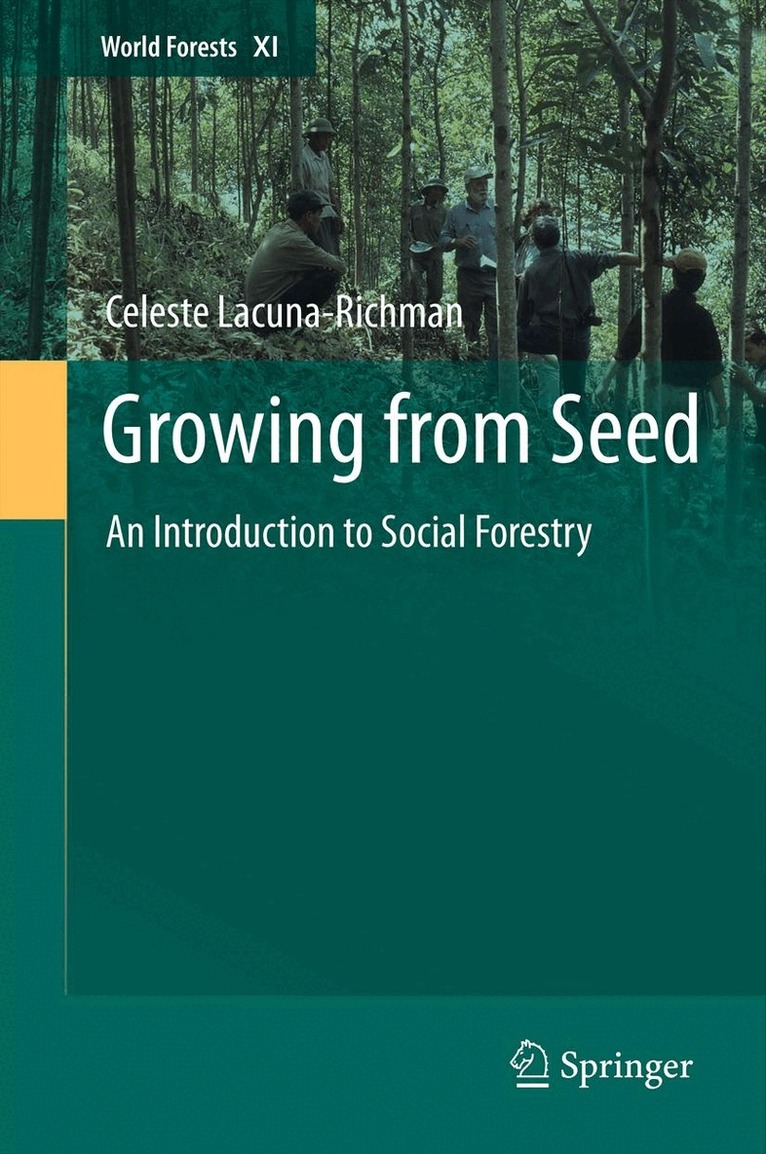
    Growing from Seed

    An Introduction to Social Forestry

    AvCeleste Lacuna-Richman

    Häftad, Engelska, 2013

    Del 11 i serien World Forests

    1 086 kr

    Beställningsvara. Skickas inom 10-15 vardagar. Fri frakt över 249 kr.

    Fler format och utgåvor

    Inbunden

    1 086 kr

    E-bok

    1 413 kr

    Beskrivning

    Social Forestry and its most well-known variant, Community Forestry, have been practiced almost as long as people have used forests. During this time, forests have provided people with countless goods and services, including wood, medicine, food, clean water and recreation. In making use of forest resources, people throughout history have frequently organized themselves and established both formal and informal rules.However, just as the discipline of Forestry had previously limited and concentrated the function of forests to the timber it provides, the popular understanding of Social Forestry has restricted it to a Forestry sub-topic that deals with welfare, without any connection to income-generation, and is practiced only in developing countries.This volume introduces the concepts of Social Forestry to the student, gives examples of its practice around the world and attempts to anticipate developments in its future. It aims to widen the concept of Social Forestry from a sub-practice within Forestry to a practice that will make Forestry relevant in countries where wood production alone is no longer the main reason for keeping land forested, thereby rediscovering and redefining this important topic.

    Produktinformation

    • Utgivningsdatum:2013-11-29
    • Mått:155 x 235 x 7 mm
    • Vikt:184 g
    • Format:Häftad
    • Språk:Engelska
    • Serie:World Forests
    • Antal sidor:100
    • Upplaga:2012
    • Förlag:Springer
    • ISBN:9789400737433

    Utforska kategorier

    • Samhälle och kultur inom Samhälle och politik
    • Sociologi inom Samhälle och politik
    • Biovetenskap inom Naturvetenskap och teknik

    Innehållsförteckning

    • 1. Introduction:  Basic concepts of social forestry.- 2. People and Forests: The relationship betweensociety and natural resources.- 3. Communities in Tropical Forests: Examples of cultures and societies that depend on the forests for their livelihood and sustenance.- 4. Participation:  The methodology of social forestry.- 5. Tailoring forest management to fit local needs. 5.1 Nutrition, food security and livelihood needs. 5.2 Gender, class, religion, age, cultural traditions and other ”unchangeable” factors that affect the use of the resource. 5.3 Land tenure and resource constraints. 5.4 Cooperatives and other community organizations.- 6. Effects of External Organizations on the Community’s Practice of social forestry.- 7. Alternative Strategies:  Adapting to new, unplanned circumstances.- 8. A social forestry approach in Europe.- 9. Concluding Remarks.