• Fri frakt över 249 kr
  • •
  • Snabba leveranser
  • •
  • Billiga böcker
Kundservice

Du är på sajten för privatpersoner.

Företag, bibliotek eller offentlig verksamhet?

Du handlar på classic.bokus.com, där alla dina funktioner finns intakta.
Till classic.bokus.com
Bokus logotyp. Gå till startsidan.
  • Erbjudanden
  • Nyheter
  • Student
  • Topplistor
  • Barn & ungdom
  • Bokus Play
  • E-böcker
  • Pocketböcker
  • Spel & pussel

10% rabatt på allt med kod: NYSTART10 →

Sidfot

Mina sidor

    Hjälp

    • Kundservice
    • Vanliga frågor och svar
    • Frakt och leverans
    • Retur vid ångerrätt
    • Reklamera vara
    • Betalning
    • Köpvillkor
    • Allmänna villkor
    • Information om webbplatsens tillgänglighet

    Om Bokus

    • Om oss
    • Pressrum
    • För studenter
    • För företag
    • För bibliotek och offentlig verksamhet
    • För leverantörer
    • Hållbarhet

    Populärt

    • Aktuella erbjudanden
    • Presentkort
    • Studentlitteratur
    • Nya böcker
    • Topplistor
    • Signerade böcker
    • Engelska böcker

    Inspiration

    • Boktips
    • BookTok
    • Populära bokserier
    • Barnbokskaraktärer
    • Populära författare
    Logotyp för Bokus
    Följ oss på Facebook (extern länk)Följ oss på Instagram (extern länk)Följ oss på YouTube (extern länk)Följ oss på TikTok (extern länk)
    bokus @ CookiesAnpassa cookiesIntegritetspolicyKöpvillkor
    Till Citymail hemsida (extern länk)Till Budbee hemsida (extern länk)Till Postnord hemsida (extern länk)Till Schenker hemsida (extern länk)Till Early Bird hemsida (extern länk)Till Walleys hemsida (extern länk)
    1. Psykologi och pedagogik
    2. Pedagogik
    3. Undervisning i specifika ämnen

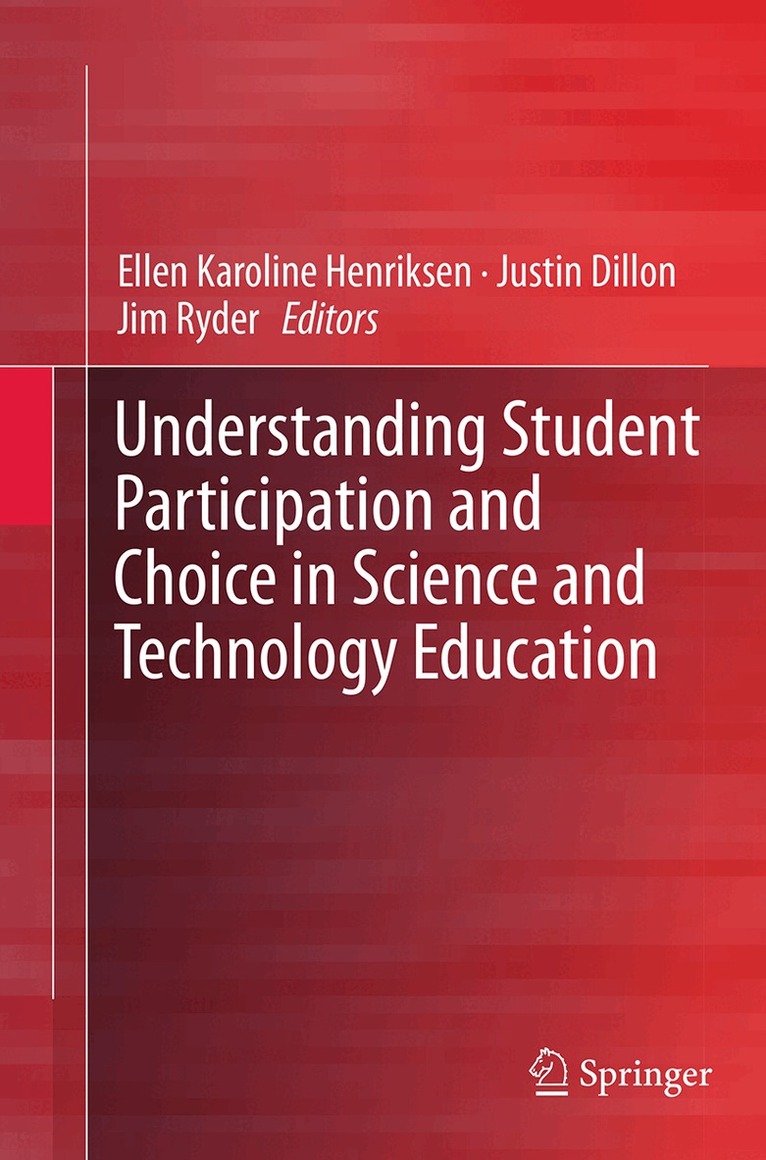
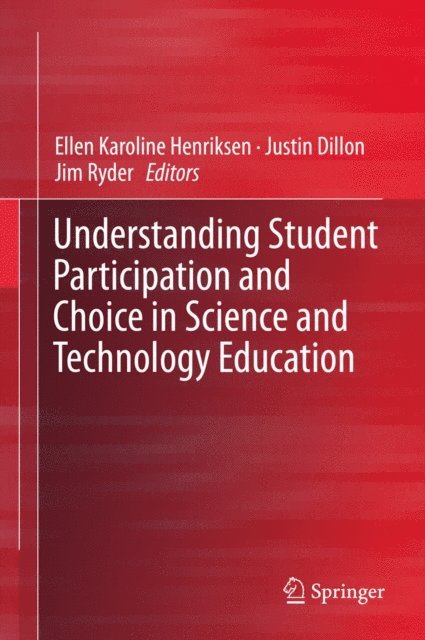
    Understanding Student Participation and Choice in Science and Technology Education

    AvEllen Karoline Henriksen,Justin Dillon

    Inbunden, Engelska, 2014

    1 056 kr

    Beställningsvara. Skickas inom 10-15 vardagar. Fri frakt över 249 kr.

    Beskrivning

    Drawing on data generated by the EU’s Interests and Recruitment in Science (IRIS) project, this volume examines the issue of young people’s participation in science, technology, engineering and mathematics education. With an especial focus on female participation, the chapters offer analysis deploying varied theoretical frameworks, including sociology, social psychology and gender studies. The material also includes reviews of relevant research in science education and summaries of empirical data concerning student choices in STEM disciplines in five European countries.Featuring both quantitative and qualitative analyses, the book makes a substantial contribution to the developing theoretical agenda in STEM education. It augments available empirical data and identifies strategies in policy-making that could lead to improved participation—and gender balance—in STEM disciplines. The majority of the chapter authors are IRIS project members, with additional chapters written by specially invited contributors. The book provides researchers and policy makers alike with a comprehensive and authoritative exploration of the core issues in STEM educational participation.

    Produktinformation

    • Utgivningsdatum:2014-09-26
    • Mått:155 x 235 x 28 mm
    • Vikt:778 g
    • Format:Inbunden
    • Språk:Engelska
    • Antal sidor:412
    • Upplaga:2015
    • Förlag:Springer
    • ISBN:9789400777927

    Utforska kategorier

    • Undervisning i specifika ämnen inom Psykologi och pedagogik

    Innehållsförteckning

    • Introduction: Participation in science and technology education - presenting the challenge and introducing project IRIS.- Section 1:Theoretical perspectives on educational choice.- Chapter 1: Expectancy-value perspectives on STEM choice in late-modern societies.- Chapter 2. A narrative approach to understand students’ identities and choices.- Chapter 3: Gender, STEM studies and educational choices. Insights from feminist perspectives.- Section 2: Interest and participation in STEM from primary school to phD.- Chapter 4: STEM attitudes, interests and career choice.- Chapter 5: Science aspirations and gender identity: Lessons from the ASPIRES project.- Chapter 6: The impact of science curriculum content on students’ subject choices in post-compulsory schooling.- Chapter 7: A place for STEM: Probing the reasons for undergraduate course choices.- Chapter 8: Short stories of educational choice – in the words of science and technology students.- Chapter 9: Understanding declining science participation in Australia: A systemic perspective.- Chapter 10: Choice patterns of PhD students: why should i pursue a PhD?.- Chapter 11: The impact of outreach and out-of-school activities on Norwegian upper secondary students’ STEM motivations.- Section 3: Staying in STEM, leaving STEM?.- Chapter 12: Why do students in stem higher education programmes drop/opt out? Explanations offered from research.- Chapter 13: What makes them leave and where do they go? Non-completion and institutional departures in STEM.- Chapter 14: The first-year experience: Students’ encounter with science and engineering programmes.- Chapter 15: Keeping pace. Educational choice motivations and first-year experiences in the words of Italian students.- Section 4: Applying feminist perspectives to understand STEM participation.- Chapter 16: When research challenges gender stereotypes: Exploring narratives of girls’ educational choices.- Chapter 17: Italian femaleand male students’ choices: STEM studies and motivations.- Chapter 18: Being a woman in a man’s place or being a man in a women’s place: insights into students’ experiences of science and engineering at university.- Chapter 19: Italian students’ ideas about gender and science in late modern societies. interpretations from a feminist perspective.- Section 5: Understanding and improving STEM participation: Conclusions and recommendations.- Chapter 20: Understanding student participation and choice in science and technology education: The contribution of IRIS.- Chapter 21: Improving participation in science and technology higher education: Ways forward.- Appendix: The IRIS questionnaire: Brief account of instrument development, data collection and respondents.