E-bok, Engelska, 2012
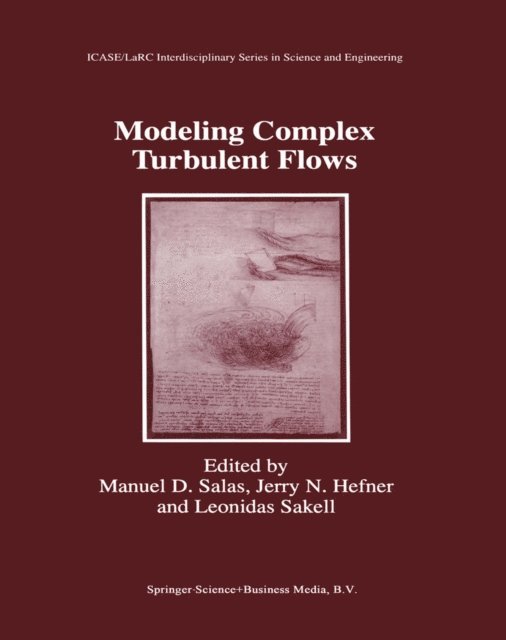
Modeling Complex Turbulent Flows
Av Leonidas Sakell, Jerry N. Hefner, Manuel D. Salas
2111 kr
Skickas måndag 12/10
Beskrivning
Turbulence modeling both addresses a fundamental problem in physics, ''the last great unsolved problem of classical physics,'' and has far-reaching importance in the solution of difficult practical problems from aeronautical engineering to dynamic meteorology. However, the growth of supercom puter facilities has recently caused an apparent shift in the focus of tur bulence research from modeling to direct numerical simulation (DNS) and large eddy simulation (LES). This shift in emphasis comes at a time when claims are being made in the world around us that scientific analysis itself will shortly be transformed or replaced by a more powerful ''paradigm'' based on massive computations and sophisticated visualization. Although this viewpoint has not lacked ar ticulate and influential advocates, these claims can at best only be judged premature. After all, as one computational researcher lamented, ''the com puter only does what I tell it to do, and not what I want it to do. '' In turbulence research, the initial speculation that computational meth ods would replace not only model-based computations but even experimen tal measurements, have not come close to fulfillment. It is becoming clear that computational methods and model development are equal partners in turbulence research: DNS and LES remain valuable tools for suggesting and validating models, while turbulence models continue to be the preferred tool for practical computations. We believed that a symposium which would reaffirm the practical and scientific importance of turbulence modeling was both necessary and timely.
Produktinformation
- Utgivningsdatum: 2012-12-06
- Format: E-bok
- Språk: Engelska
- Förlag: Springer Netherlands
- ISBN: 9789401147248
Utforska kategorier
Betyg & recensioner
0 recensioner
Inga recensioner tillgängliga.