• Fri frakt över 249 kr
  • •
  • Snabba leveranser
  • •
  • Billiga böcker
Kundservice

Du är på sajten för privatpersoner.

Företag, bibliotek eller offentlig verksamhet?

Du handlar på classic.bokus.com, där alla dina funktioner finns intakta.
Till classic.bokus.com
Bokus logotyp. Gå till startsidan.
  • Erbjudanden
  • Nyheter
  • Student
  • Topplistor
  • Barn & ungdom
  • Bokus Play
  • E-böcker
  • Pocketböcker
  • Spel & pussel

10% rabatt på allt med kod: NYSTART10 →

Sidfot

Mina sidor

    Hjälp

    • Kundservice
    • Vanliga frågor och svar
    • Frakt och leverans
    • Retur vid ångerrätt
    • Reklamera vara
    • Betalning
    • Köpvillkor
    • Allmänna villkor
    • Information om webbplatsens tillgänglighet

    Om Bokus

    • Om oss
    • Pressrum
    • För studenter
    • För företag
    • För bibliotek och offentlig verksamhet
    • För leverantörer
    • Hållbarhet

    Populärt

    • Aktuella erbjudanden
    • Presentkort
    • Studentlitteratur
    • Nya böcker
    • Topplistor
    • Signerade böcker
    • Engelska böcker

    Inspiration

    • Boktips
    • BookTok
    • Populära bokserier
    • Barnbokskaraktärer
    • Populära författare
    Logotyp för Bokus
    Följ oss på Facebook (extern länk)Följ oss på Instagram (extern länk)Följ oss på YouTube (extern länk)Följ oss på TikTok (extern länk)
    bokus @ CookiesAnpassa cookiesIntegritetspolicyKöpvillkor
    Till Citymail hemsida (extern länk)Till Budbee hemsida (extern länk)Till Postnord hemsida (extern länk)Till Schenker hemsida (extern länk)Till Early Bird hemsida (extern länk)Till Walleys hemsida (extern länk)
    1. Naturvetenskap och teknik
    2. Teknik och industri
    3. Elektronik och kommunikationer

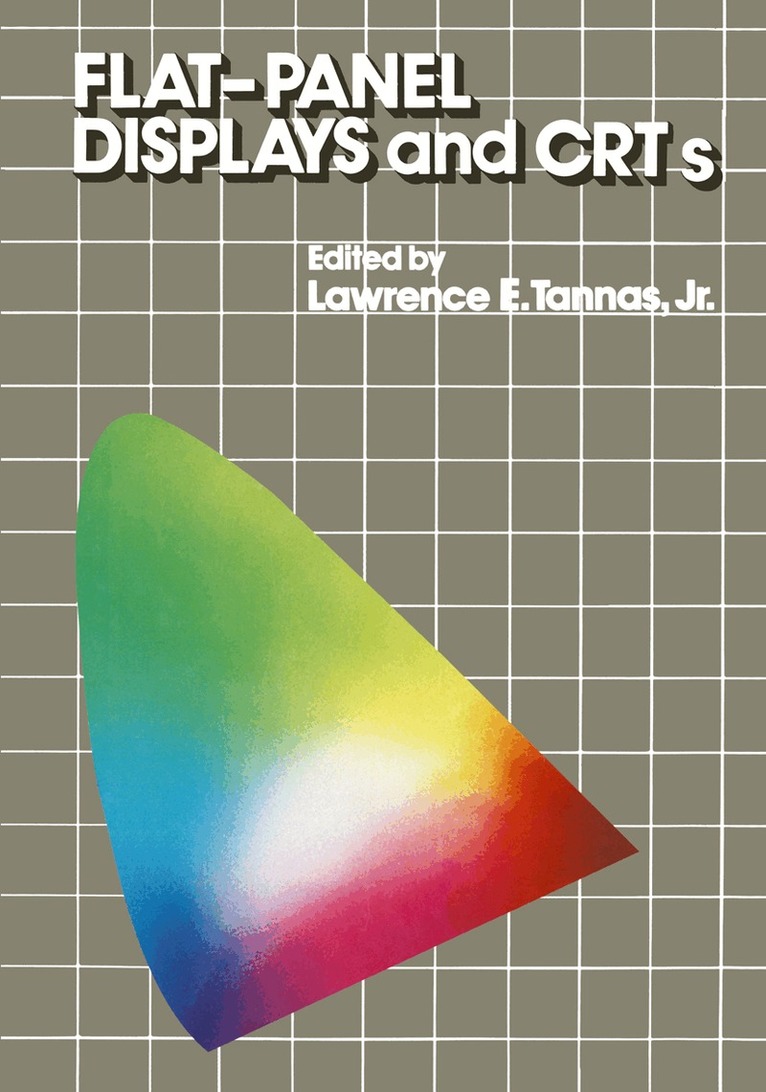
    Flat-Panel Displays and CRTs

    AvLawrence E. Tannas Jr.

    Häftad, Engelska, 2012

    Del i serien Van Nostrand Reinhold Electrical/Computer Science and Engineering Series

    546 kr

    Beställningsvara. Skickas inom 10-15 vardagar. Fri frakt över 249 kr.

    Beskrivning

    Flat-Panel Displays and CRTs, a review of electronic information display devices, is the first sys­ tematic and comprehensive coverage of the subject. It is intended to distill our wealth of knowledge of flat-panel displays and CRTs from their beginnings to the present state of the art. Historical perspective, theory of operation, and specific applications are all thoroughly covered. The field of display engineering is a multidisciplined technical pursuit with the result that its individual disciplines suffer from a lack of communications and limited perspective. Many previ­ ously developed standards for, and general understanding of, one technology are often inappro­ priate for another. Care has been taken here to document the old, incorporate the new, and emphasize commonalities. Criteria for performance have been standardized to enable an expert in one display technology, such as liquid crystals, to compare his device performance with that offered by another technology, such as electroluminescence. This book has been written with a second purpose in mind, to wit, to be the vehicle by means of which a new scientist or engineer can be introduced into the display society. It is organized to be tutorial for use in instructional situations. The first chapters begin with first principles and defini­ tions; the middle chapters set out requirements and criteria; and the last chapters give a complete description of each major technology.

    Produktinformation

    • Utgivningsdatum:2012-03-28
    • Mått:178 x 254 x 27 mm
    • Vikt:916 g
    • Format:Häftad
    • Språk:Engelska
    • Serie:Van Nostrand Reinhold Electrical/Computer Science and Engineering Series
    • Antal sidor:468
    • Förlag:Springer
    • ISBN:9789401170642

    Utforska kategorier

    • Elektronik och kommunikationer inom Naturvetenskap och teknik

    Innehållsförteckning

    • 1. Introduction.- 1.1 History of Electronics for Displays.- 1.2 Electronic Displays.- 1.3 Display Classifications.- 1.4 Display Nomenclature.- 1.5 Classification Nomenclature.- 1.6 Picture Element or Pixel.- 1.7 Display Array.- 1.8 Addressing.- 1.9 Display Device Development.- 1.10 Multidiscipline.- 1.11 Technology Impetus.- 1.12 Conclusion.- References.- 2. System Requirements.- 2.1 Introduction.- 2.2 System Classification.- 2.3 Display Installation Classification.- 2.4 Display Functional Classification.- 2.5 Systems Constraints.- 2.6 Display Subsystems.- 2.7 Transillumination.- 2.8 Photometry.- References.- 3. The Visual System: Capabilities and Limitations.- 3.1 Introduction.- 3.2 Anatomy of the Visual System.- 3.3 Spatial Vision.- 3.4 Temporal Vision.- 3.5 Color Vision.- 3.6 Summary.- References.- 4. Image Quality: Measures and Visual Performance.- 4.1 Introduction.- 4.2 The Modulation Transfer Function.- 4.3 Pixel Error Measures.- 4.4 MTF-Based Measures of Image Quality.- 4.5 Pixel Error Measures of Image Quality.- 4.6 An Empirical Image Quality Model.- 4.7 Problems in Image Quality Measurement.- 4.8 Concepts Related to Image Quality.- References.- 5. Flat-Panel Display Design Issues.- 5.1 Introduction.- 5.2 Power Efficiency.- 5.3 Addressability.- 5.4 Duty Factor.- 5.5 Gray Scale.- 5.6 Color.- 5.7 Cost.- 5.8 Intrinsic Electronic Display Drive.- 5.9 Extrinsic Electronic Display Addressing.- References for Section 5.9.2.- 6. The Challenge of the Cathode-Ray Tube.- 6.1 Introduction.- 6.2 Historical Origins of the CRT.- 6.3 Basic CRT Design and Operation.- 6.4 Electron-Optic Regions of the CRT.- 6.5 Limitations on Electron-Gun Performance.- 6.6 The Viewing System.- 6.7 CRT Resolution and Contrast.- 6.8 The Life of the CRT.- 6.9 Applications and Types of CRTs.- 6.10 Driving the CRT.- 6.11 Overview of CRT Performance.- Reference.- 7. Flat Cathode-Ray Tube Display.- 7.1 Introduction.- 7.2 Motivation and Goals.- 7.3 History.- 7.4 Functional and Technical Discriptions.-7.5 Cathodes for the Flat CRTs.- 7.6 Beam Positioning and Modulation Techniques.- 7.7 Brightness-Enhancement Techniques.- 7.8 Phosphor Screens.- 7.9 Vacuum Envelope and Processing Techniques.- 7.10 Technical Achievements.- 7.11 Summary.- References.- 8. Electroluminescent Displays.- 8.1 Introduction.- 8.2 History.- 8.3 Theory of Operation.- 8.4 AC Thin-Film EL.- 8.5 AC Powder EL.- 8.6 DC Powder EL.- 8.7 DC Thin-Film EL.- 8.8 Luminous Efficiency.- 8.9 Conclusion 281 References.- 9. Light-Emitting Diode Displays.- 9.1 Introduction.- 9.2 History of LED Display Devices.- 9.3 Basic LED Technology.- 9.4 LED Performance-State of the Art.- 9.5 LED Display Devices.- 9.6 LED Performance Parameters.- 9.7 Materials and Processes.- 9.8 Summary and Conclusions.- References.- 10. Plasma Displays.- 10.1 Introduction.- 10.2 History.- 10.3 Basic Electro-Optical Characteristics of the Gas Discharge.- 10.4 Gas-Discharge Physics.- 10.5 Current-Limiting Techniques.- 10.6 DC Plasma Displays.- 10.7 AC PlasmaDisplays.- 10.8 Hybrid AC-DC Plasma Displays.- 10.9 Image Displays.- 10.10 Hybrid Plasma-CRT.- 10.11 Fabrication of Plasma Displays.- 10.12 Future of Plasma Displays.- References.- 11. Nonemissive Displays.- 11.1 Introduction.- 11.2 The Liquid-Crystal Phase.- 11.3 LCD Configurations.- 11.4 Intrinsic Matrix Addressing of LCDs.- 11.5 Extrinsic Matrix Addressing of LCDs.- 11.6 Electrochromic Displays.- 11.7 Colloidal Displays.- 11.8 Electroactive Solids.- 11.9 Electromechanical Displays.- 11.10 Conclusion.- References.