• Fri frakt över 249 kr
  • •
  • Snabba leveranser
  • •
  • Billiga böcker
Kundservice

Du är på sajten för privatpersoner.

Företag, bibliotek eller offentlig verksamhet?

Du handlar på classic.bokus.com, där alla dina funktioner finns intakta.
Till classic.bokus.com
Bokus logotyp. Gå till startsidan.
  • Erbjudanden
  • Student
  • Topplistor
  • Barn & ungdom
  • Bokus Play
  • E-böcker
  • Ljudböcker
  • Pocketböcker
  • Spel och pussel

5% studentrabatt – använd koden KURSBOK27 →

Sidfot

Mina sidor

    Hjälp

    • Kundservice
    • Vanliga frågor och svar
    • Frakt och leverans
    • Retur vid ångerrätt
    • Reklamera vara
    • Betalning
    • Köpvillkor
    • Allmänna villkor
    • Information om webbplatsens tillgänglighet

    Om Bokus

    • Om oss
    • Pressrum
    • För studenter
    • För företag
    • För bibliotek och offentlig verksamhet
    • För leverantörer
    • Hållbarhet

    Populärt

    • Aktuella erbjudanden
    • Presentkort
    • Studentlitteratur
    • Nya böcker
    • Topplistor
    • Signerade böcker
    • Engelska böcker

    Inspiration

    • Boktips
    • BookTok
    • Barnbokskaraktärer
    • Populära författare
    Logotyp för Bokus
    Följ oss på Facebook (extern länk)Följ oss på Instagram (extern länk)Följ oss på YouTube (extern länk)Följ oss på TikTok (extern länk)
    bokus @ CookiesAnpassa cookiesIntegritetspolicyKöpvillkor
    Till Citymail hemsida (extern länk)Till Budbee hemsida (extern länk)Till Postnord hemsida (extern länk)Till Schenker hemsida (extern länk)Till Early Bird hemsida (extern länk)Till Walleys hemsida (extern länk)
    1. Historia och arkeologi
    2. Historia
    3. Asiens historia

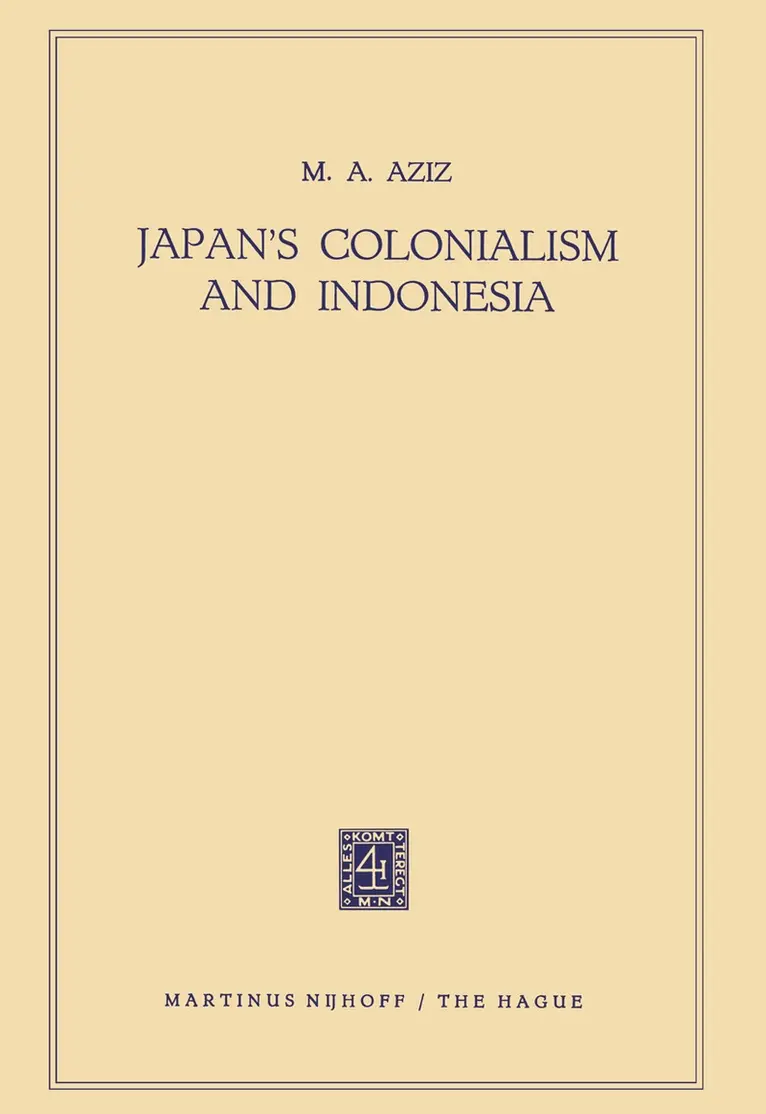
    Japan’s Colonialism and Indonesia

    AvMuhammad Abdul Aziz

    Häftad, Engelska, 1955

    559 kr

    Beställningsvara. Skickas inom 10-15 vardagar. Fri frakt över 249 kr.

    Fler format och utgåvor

    E-bok

    732 kr

    Beskrivning

    The rise and fall of the Japanese empire constitutes one of the most dramatic episodes of modern history. Within the short span of fifty years Japan grew out of political backwardness into a position of tremendous power. Japan's rise to power challenged Europe's hegemony over Asia, but, paradoxically, it was Japan's fall that caused the irreparable ruin of the colonial system over Eastern lands. Japan went to war against the West under the battlecry of Asia's liberation from European colonialism. In reality, for forty years, beginning with her first war against China, she had striven to imitate this colonialism, as she had endeavoured to imitate the political, military and economic achievements of Europe. A thorough understanding of the imitative character of the Japanese Empire might well have induced the leaders of the nation to side with the conservative trend of political thought in the Western world in order to maintain the existing world-wide political system of which colonial rule was an accepted part. They might have understood that an adventurous, revolutionary policy was bound to result in grave dangers for their own state and most conservative structure. Japan might have continued to grow and to expand if she had succeeded to play the role of the legitimate heir to Europe's decaying power in Asia. By violently opposing that power, she undermined the very foun­ dations of her own rule outside the home-islands.

    Produktinformation

    • Utgivningsdatum:1955-01-01
    • Mått:170 x 244 x 16 mm
    • Vikt:495 g
    • Format:Häftad
    • Språk:Engelska
    • Antal sidor:264
    • Upplaga:1955
    • Förlag:Springer
    • ISBN:9789401185004

    Utforska kategorier

    • Asiens historia inom Historia och arkeologi

    Innehållsförteckning

    • I.- I. Japan starts conquering dependencies.- II. Policy in Formosa and Korea.- III. Plans for further conquest (1911–1930).- IV. Policy in Manchuria.- V. Internal preparations for further expansion (1931–1936).- VI. Japanese blueprint (1937–1941).- II.- I. Plans for Indonesia.- II. Preparations for conquest: negotiations.- III. Conquest and occupation policy.- IV. Conquest and occupation policy II. Policy towards the Indonesian people.- Literature cited.