• Fri frakt över 249 kr
  • •
  • Snabba leveranser
  • •
  • Billiga böcker
Kundservice

Du är på sajten för privatpersoner.

Företag, bibliotek eller offentlig verksamhet?

Du handlar på classic.bokus.com, där alla dina funktioner finns intakta.
Till classic.bokus.com
Bokus logotyp. Gå till startsidan.
  • Erbjudanden
  • Nyheter
  • Student
  • Topplistor
  • Barn & ungdom
  • Bokus Play
  • E-böcker
  • Pocketböcker
  • Spel & pussel

10% rabatt på allt med kod: NYSTART10 →

Sidfot

Mina sidor

    Hjälp

    • Kundservice
    • Vanliga frågor och svar
    • Frakt och leverans
    • Retur vid ångerrätt
    • Reklamera vara
    • Betalning
    • Köpvillkor
    • Allmänna villkor
    • Information om webbplatsens tillgänglighet

    Om Bokus

    • Om oss
    • Pressrum
    • För studenter
    • För företag
    • För bibliotek och offentlig verksamhet
    • För leverantörer
    • Hållbarhet

    Populärt

    • Aktuella erbjudanden
    • Presentkort
    • Studentlitteratur
    • Nya böcker
    • Topplistor
    • Signerade böcker
    • Engelska böcker

    Inspiration

    • Boktips
    • BookTok
    • Populära bokserier
    • Barnbokskaraktärer
    • Populära författare
    Logotyp för Bokus
    Följ oss på Facebook (extern länk)Följ oss på Instagram (extern länk)Följ oss på YouTube (extern länk)Följ oss på TikTok (extern länk)
    bokus @ CookiesAnpassa cookiesIntegritetspolicyKöpvillkor
    Till Citymail hemsida (extern länk)Till Budbee hemsida (extern länk)Till Postnord hemsida (extern länk)Till Schenker hemsida (extern länk)Till Early Bird hemsida (extern länk)Till Walleys hemsida (extern länk)
    1. Naturvetenskap och teknik
    2. Teknik och industri
    3. Energiteknik

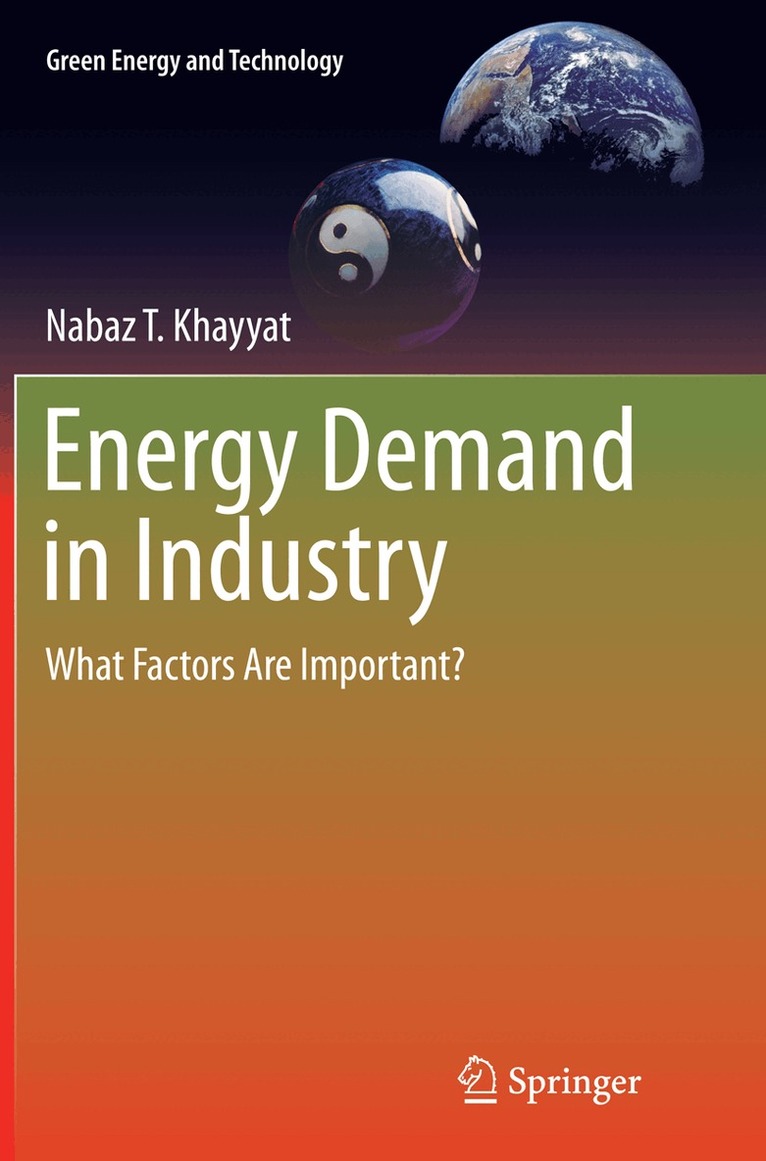
    Energy Demand in Industry

    What Factors Are Important?

    AvNabaz T Khayyat

    Inbunden, Engelska, 2015

    Del i serien Green Energy and Technology

    1 086 kr

    Beställningsvara. Skickas inom 10-15 vardagar. Fri frakt över 249 kr.
    Fler format och utgåvor

    E-bok

    1 413 kr

    Häftad

    1 086 kr

    Beskrivning

    The book presents a stochastic analysis based on production risk and application of this method in the industrial sector under production risk where energy use is an input factor. Using South Korea as a case study, the book empirically models energy demand at the industrial level and analyzes the results to identify key determinants of energy demand, productions level, productions risk and energy usage efficiency.Particular attention is paid to the factors that enhance production risk or increase variations in energy input during production. A dynamic panel model is specified and applied to 25 Korean industrial sectors over the period 1970-2007. The determinants of energy usage are identified and their effects in the form of elasticities of energy usage are estimated. In addition the structural changes in the energy demand pattern are explored. Stochastic production technology is applied to create two primary models: A production model where the energy usage is a determinant of output and an energy demand model based on an inverted factor demand model where demand is a key determinant of the level of energy usage.The findings reveal that: First, there are large variations in the degree of overuse or inefficiency in energy usage among the individual industries and over time; second, ICT (information and communication technology) capital and labor are substituting energy; third, ICT capital and value added services are two input factors decreasing the variability of energy demand while non-ICT capital, material and labor are increasing the variability of energy demand.  Finally, the results suggest that technical progress contributes more to the increase of mean of energy demand than to the reduction of the level of risk. An emerging recommendation is that industries increase the level of ICT capital and digitalization and invest more in R&D activities and value added services to reduce the uncertainty related to their demand for energy.This study forms the structure of the demand for energy under stochastic production risk for the South Korean industrial sector. Public research programs aimed at the industrial sector should be concerned about both mean and risk properties in research on new technologies and in the investigation of possible alternative energy inputs. This book describes the state of the art in energy usage analysis and production risk, applying factor requirement methodology. It will be of use as a main or supplementary text in the teaching of advanced graduate courses but also as a reference for those working on empirically advanced research. The book is an important addition to the existing literature on industrial development, with its focus on energy as a core production input.

    Produktinformation

    • Utgivningsdatum:2015-08-19
    • Mått:155 x 235 x 18 mm
    • Vikt:494 g
    • Format:Inbunden
    • Språk:Engelska
    • Serie:Green Energy and Technology
    • Antal sidor:196
    • Upplaga:15001
    • Förlag:Springer
    • ISBN:9789401799522

    Utforska kategorier

    • Energiteknik inom Naturvetenskap och teknik
    • Industrier och branscher inom Ekonomi och Ledarskap

    Mer om författaren

    Nabaz T. Khayyat, a Kurdish citizen, an Engineering Economist, has a PhD in economics, from Swiss Management University, Zurich, Switzerland and a PhD in Engineering and IT Policy from Seoul National University, South Korea. He worked for the United Nations Mine Action Program for many years where he acquired the knowledge and managerial skills in mine action information systems. His research interest are mainly in the areas of energy economics, demand forecasting, productivity analysis and production risk. He has a number of published books and journal articles.

    Innehållsförteckning

    • 1 Overview.- 2 History Of Economic Development In South Korea.- 3 Survey Of Existing Researches Related To Energy Demand.- 4 Survey Of Existing Researches Related To Production Risk.- 5 Econometrics Of Panel Data Estimation.- 6 Energy Demand Data.- 7 Energy Demand Models Estimation.- 8 Energy Demand Model I.- 9 Energy Demand Model Ii.- 10 Summary And Conclusion.