• Fri frakt över 249 kr
  • •
  • Snabba leveranser
  • •
  • Billiga böcker
Kundservice

Du är på sajten för privatpersoner.

Företag, bibliotek eller offentlig verksamhet?

Du handlar på classic.bokus.com, där alla dina funktioner finns intakta.
Till classic.bokus.com
Bokus logotyp. Gå till startsidan.
  • Erbjudanden
  • Nyheter
  • Student
  • Topplistor
  • Barn & ungdom
  • Bokus Play
  • E-böcker
  • Pocketböcker
  • Spel & pussel

10% rabatt på allt med kod: NYSTART10 →

Sidfot

Mina sidor

    Hjälp

    • Kundservice
    • Vanliga frågor och svar
    • Frakt och leverans
    • Retur vid ångerrätt
    • Reklamera vara
    • Betalning
    • Köpvillkor
    • Allmänna villkor
    • Information om webbplatsens tillgänglighet

    Om Bokus

    • Om oss
    • Pressrum
    • För studenter
    • För företag
    • För bibliotek och offentlig verksamhet
    • För leverantörer
    • Hållbarhet

    Populärt

    • Aktuella erbjudanden
    • Presentkort
    • Studentlitteratur
    • Nya böcker
    • Topplistor
    • Signerade böcker
    • Engelska böcker

    Inspiration

    • Boktips
    • BookTok
    • Populära bokserier
    • Barnbokskaraktärer
    • Populära författare
    Logotyp för Bokus
    Följ oss på Facebook (extern länk)Följ oss på Instagram (extern länk)Följ oss på YouTube (extern länk)Följ oss på TikTok (extern länk)
    bokus @ CookiesAnpassa cookiesIntegritetspolicyKöpvillkor
    Till Citymail hemsida (extern länk)Till Budbee hemsida (extern länk)Till Postnord hemsida (extern länk)Till Schenker hemsida (extern länk)Till Early Bird hemsida (extern länk)Till Walleys hemsida (extern länk)
    1. Skönlitteratur
    2. Litteraturvetenskap
    3. Litteraturvetenskap

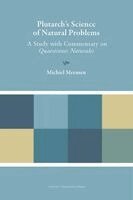
    Plutarch's Science of Natural Problems

    A Study with Commentary on "Quaestiones Naturales"

    AvMichiel Meeusen

    Inbunden, Engelska, 2017

    Del i serien Plutarchea Hypomnemata

    1 226 kr

    Beställningsvara. Skickas inom 5-8 vardagar. Fri frakt över 249 kr.

    Beskrivning

    The role of natural science in the Roman Imperial Era In his Quaestiones naturales, Plutarch unmistakeably demonstrates a huge interest in the world of natural phenomena. The work of this famous intellectual and philosopher from Chaeronea consists of forty-one natural problems that address a wide variety of questions, sometimes rather peculiar ones, and answers pertaining to ancient Greek physics, including problems related to the fields of zoology, botany, meteorology and their respective subdisciplines. By providing a thorough study of and commentary on this generally neglected text, written by one of the most influential and prolific writers from Antiquity, this book contributes to our better understanding of Plutarch’s natural scientific programme and, the condition and role of ancient natural science in the Roman Imperial Era in general. This publication is GPRC-labeled (Guaranteed Peer-Reviewed Content).

    Produktinformation

    • Utgivningsdatum:2017-02-10
    • Mått:160 x 239 x 35 mm
    • Vikt:1 361 g
    • Format:Inbunden
    • Språk:Engelska
    • Serie:Plutarchea Hypomnemata
    • Antal sidor:570
    • Förlag:Leuven University Press
    • ISBN:9789462700840
    • Utmärkelser:Winner of Jan Gillis-prijs 2018 (Belgium)

    Utforska kategorier

    • Litteraturvetenskap inom Skönlitteratur
    • Litteraturteori inom Skönlitteratur

    Mer om författaren

    Michiel Meeusen is British Academy Postdoctoral Research Associate at King's College London, Department of Classics.

    Recensioner i media

    Em conclusão, Meeusen dá um contributo muito relevante para a reflexão sobre a ciência na Antiguidade Clássica, em especial sobre a etiologia filosófica dos problemata em Plutarco e a sua relação com a tradição. A forma como se abordam as dificuldades de interpretação colocadas pelas QN, levam, sem dúvida, o leitor a deixar-se seduzir pela intertextualidade plutarqueana. Saliente-se, ainda, o facto de este livro está profusamente anotado, com bibliografia específica e muito actualizada. Apesar das várias repetições, muito por causa da metodologia estrutural que foi definida, com conclusões no final de cada secção, estamos na presença de um livro com enorme valor filológico e cultural.Joaquim Pinheiro, Asclepio. 71(2), julio-diciembre 2019, p284. ISSN-L: 0210-4466, http://asclepio.revistas.csic.es

    Innehållsförteckning

    • Contents Acknowledgements Prologue Plutarch and the history of science: the case of Quaestiones naturales 1. Plato, Plutarch and scientific infancy 2. Date and chronology of Quaestiones naturales: a ‘life’s work’? 3. The value of Plutarch’s natural problems 4. Classical philology and the petrification of science 5. Status quaestionis 6. Note on translations and abbreviations Introduction 1. Problems, problems, problems (and Aristotelian precedents) 1.1. Quaestiones naturales and the Aristotelian genre and tradition of natural problems 1. Preliminary remarks on Plutarch’s Naturwissenschaft 2. Quaestiones naturales: the work of a Plutarchus Aristotelicus? 3. The genre of problems and the Aristotelian tradition of natural problems 4. Internal organisation of Plutarch’s natural problems (microstructure) 5. Coherent reading in Quaestiones naturales and convivales (macrostructure) 6. The title and its programmatic value 1 1.2. Problems related to Plutarch’s scientific discourse 1. Trifles unworthy of Plutarch? Some remarks on authenticity 2. The rhetoric of scientific discourse according to Plutarch 3. The problem of style 4. The problem of morality 5. A ‘generic’ solution 6. Conclusion and new questions 2. The position of Quaestiones naturales in the corpus Plutarcheum 2.1. Scientific traits in the corpus Plutarcheum 1. Intellectual and literary interest of natural phenomena 2. Cluster analysis in Quaestiones naturales 3. Scientific digressions in the Vitae 4. Indirect references to Quaestiones naturales 2.2. A comparative study of Quaestiones naturales and Quaestiones convivales 1. The level of elocutio 2. The level of dispositio 3. The level of inventio 2.3. Hypomnematic text genetics of Quaestiones naturales and Quaestiones convivales 1. Historicity and fiction in Quaestiones convivales 2. Problems and personal notes 3. Zetetic autonomy in Quaestiones naturales 2.4. Opening up Plutarch’s zetetic archive 1. The issue of publication: problems as functional literature 2. Classification and overlap 3. Conclusion and new questions 3. Quaestiones naturales and zetetic παιδεία 3.1. Sitz im Leben: readership and educational context 1. Natural problems and philosophical σχολή 2. Plutarch’s academy 3. Digestive discussions and problematic promenades 4. Quaestiones naturales as school text: technicality and complexity 5. The dialogue between author and reader: vivacity and historicity 3.2. Quaestiones naturales as a preamble to metaphysics 1. Natural problems as a means of exercising the mind 2. Natural problems as a means of easing the mind 3. Conclusion and new questions 4. Plutarch’s Platonic world view: the aetiological design of Quaestiones naturales and its scientific context 4.1. Science and its foes? The ancient scientific value of Quaestiones naturales 4.1.1. Saving popular beliefs: the wonders and paradoxes of nature 1. Natural problems and the fabric of strangeness 2. Democritus and the cucumber 3. Plutarch’s popular beliefs: anti-Aristotelian and anti-Stoic dynamics 4.1.2. Plutarch’s dualistic causality: rationalising the divine and the use of myth and poetry 1. Plato’s scientific revolution 2. Science, religion and mythology 3. Science and poetry 4.2. Constructing scientific authority: between continuity, ingenuity and innovation 4.2.1. Character and use of the scientific tradition 1. Quotations from scientific prose authors 2. Problematisation of scientific knowledge 4.2.2. Scientific innovation and performance 1. A note on the sociology of knowledge and παιδεία 2. The pragmatics of Plutarch’s scientific ingenuity and creativity 4.3. Plutarch’s scientific methodology: a rough guide to explaining natural phenomena 4.3.1. Material principles and natural processes 1. Material principles 2. Natural processes 4.3.2. Towards the limits of natural science 1. A ‘sceptical’ Plutarch: ἐμπειρία, ἐποχή and εὐλάβεια 2. Truth and probability in Quaestiones naturales 3. Sense perception and the issue of autopsy in Quaestiones naturales 4.3.3. Logical-rhetorical dynamics 1. Contradiction, non-contradiction and aetiological freedom 2. Aetiological comprehensiveness and pluricausality 3. Aetiological subtlety and sophistication 4.3.4. Uniformity and technicality of the scientific terminology 1. Let’s talk science: the birth and use of technical vocabulary 2. Big words? High-tech vs. low-tech vocabulary 3. Conclusion: Plutarch, Plato and Aristotle (again) Commentary 0. Approach and structure 1. Salt and water (Q.N. 1–13) 2. Wheat and barley (Q.N. 14–16) 3. Sea animals and fishing (Q.N. 17–19) 4. Land animals and hunting (Q.N. 20–28) 5. Viniculture (Q.N. 30–31) 6. Longolius (Q.N. 32–39) 7. Psellus (Q.N. 40–41) Synopsis Bibliography Index Locorum