• Fri frakt över 249 kr
  • •
  • Snabba leveranser
  • •
  • Billiga böcker
Kundservice

Du är på sajten för privatpersoner.

Företag, bibliotek eller offentlig verksamhet?

Du handlar på classic.bokus.com, där alla dina funktioner finns intakta.
Till classic.bokus.com
Bokus logotyp. Gå till startsidan.
  • Erbjudanden
  • Nyheter
  • Student
  • Topplistor
  • Barn & ungdom
  • Bokus Play
  • E-böcker
  • Pocketböcker
  • Spel & pussel

10% rabatt på allt med kod NYSTART10 →

Sidfot

Mina sidor

    Hjälp

    • Kundservice
    • Vanliga frågor och svar
    • Frakt och leverans
    • Retur vid ångerrätt
    • Reklamera vara
    • Betalning
    • Köpvillkor
    • Allmänna villkor
    • Information om webbplatsens tillgänglighet

    Om Bokus

    • Om oss
    • Pressrum
    • För studenter
    • För företag
    • För bibliotek och offentlig verksamhet
    • För leverantörer
    • Hållbarhet

    Populärt

    • Aktuella erbjudanden
    • Presentkort
    • Studentlitteratur
    • Nya böcker
    • Topplistor
    • Signerade böcker
    • Engelska böcker

    Inspiration

    • Boktips
    • BookTok
    • Populära bokserier
    • Barnbokskaraktärer
    • Populära författare
    Logotyp för Bokus
    Följ oss på Facebook (extern länk)Följ oss på Instagram (extern länk)Följ oss på YouTube (extern länk)Följ oss på TikTok (extern länk)
    bokus @ CookiesAnpassa cookiesIntegritetspolicyKöpvillkor
    Till Citymail hemsida (extern länk)Till Budbee hemsida (extern länk)Till Postnord hemsida (extern länk)Till Schenker hemsida (extern länk)Till Early Bird hemsida (extern länk)Till Walleys hemsida (extern länk)
    1. Språk och ordböcker
    2. Språkvetenskap och lingvistik

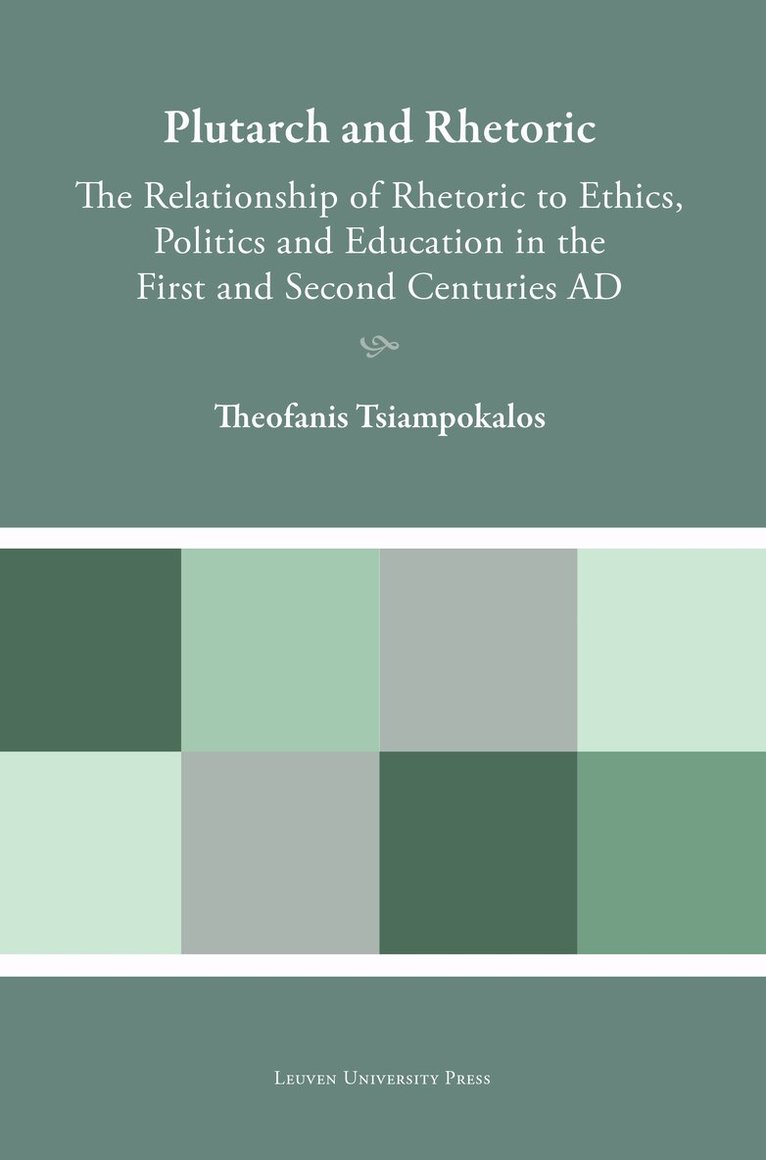
    Plutarch and Rhetoric

    The Relationship of Rhetoric to Ethics, Politics and Education in the First and Second Centuries AD

    AvTheofanis Tsiampokalos

    Inbunden, Engelska, 2024

    Del i serien Plutarchea Hypomnemata

    1 143 kr

    Beställningsvara. Skickas inom 5-8 vardagar. Fri frakt över 249 kr.

    Beskrivning

    A fundamental reappraisal of Plutarch’s attitude towards rhetoric.Plutarch was not only a skilled writer, but also lived during the Second Sophistic, a period of cultural renaissance. This book offers new insights into Plutarch’s seemingly moderate attitude towards rhetoric. The hypothesis explored in this study introduces, for the first time, the broader literary and cultural contexts that influenced and restricted the scope of Plutarch’s message. When these contexts are considered, a new perspective emerges that differs from that found in earlier studies. It paints a picture of a philosopher who may not regard rhetoric as a lesser means of persuasion, but who faces challenges in openly articulating this stance in his public discourse.Ebook available in Open Access.This publication is GPRC-labeled (Guaranteed Peer-Reviewed Content).

    Produktinformation

    • Utgivningsdatum:2024-05-29
    • Mått:155 x 233 x 16 mm
    • Vikt:907 g
    • Format:Inbunden
    • Språk:Engelska
    • Serie:Plutarchea Hypomnemata
    • Antal sidor:500
    • Förlag:Leuven University Press
    • ISBN:9789462704190

    Utforska kategorier

    • Språkvetenskap och lingvistik inom Språk och ordböcker
    • Litteraturvetenskap inom Skönlitteratur

    Mer om författaren

    Theofanis Tsiampokalos is research associate in classics at Trier University.

    Recensioner i media

    It will undoubtedly become the most widely read and influential monograph on Plutarch and rhetoric in print, and has much to say to scholars of the so-called Second Sophistic as well as to everyone interested in the position of rhetoric in antiquity and its relationship with other branches of knowledge, such as philosophy. – Chrysanthos S. Chrysanthou, Assistant Professor of Ancient Greek, University of Cyprus

    Innehållsförteckning

    • Acknowledgements Note to the Reader Introduction 1. Plutarch and Rhetoric 2. A ‘conversion’ from rhetoric to philosophy? 3. The texts at issue and related problems 4. The analytical scope of the present study Teaching and Persuasion 1. Introduction 2. Philosophical teaching: its content and political dimension 3. Persuasion in the service of teaching 4. Examples of individuals who persuade and teach 5. Parrhesia and trust 6. Conclusion Character and Speech1. Introduction 2. Character as a means of persuasion 3. The subsidiary role of rhetoric 4. ConclusionRhetoric and Beneficence 1. Introduction 2. Other means of exercising power 3. Rhetoric in place of beneficence 4. Why rhetoric? 5. Conclusion The Philosopher and the Sophists 1. Introduction 2. The critique of the sophists 3. The direct confrontation in the lecture hall 4. The indirect confrontation in the political arena 5. The reception of the confrontation in subsequent generations 6. Conclusion Conclusion Bibliography Index Locorum Index Nominum et Rerum