• Fri frakt över 249 kr
  • •
  • Snabba leveranser
  • •
  • Billiga böcker
Kundservice

Du är på sajten för privatpersoner.

Företag, bibliotek eller offentlig verksamhet?

Du handlar på classic.bokus.com, där alla dina funktioner finns intakta.
Till classic.bokus.com
Bokus logotyp. Gå till startsidan.
  • Erbjudanden
  • Nyheter
  • Student
  • Topplistor
  • Barn & ungdom
  • Bokus Play
  • E-böcker
  • Pocketböcker
  • Spel & pussel

10% studentrabatt med kod TERM26

Sidfot

Mina sidor

    Hjälp

    • Kundservice
    • Vanliga frågor och svar
    • Frakt och leverans
    • Retur vid ångerrätt
    • Reklamera vara
    • Betalning
    • Köpvillkor
    • Allmänna villkor
    • Information om webbplatsens tillgänglighet

    Om Bokus

    • Om oss
    • Pressrum
    • För studenter
    • För företag
    • För bibliotek och offentlig verksamhet
    • För leverantörer
    • Hållbarhet

    Populärt

    • Aktuella erbjudanden
    • Presentkort
    • Studentlitteratur
    • Nya böcker
    • Topplistor
    • Signerade böcker
    • Engelska böcker

    Inspiration

    • Boktips
    • BookTok
    • Populära bokserier
    • Barnbokskaraktärer
    • Populära författare
    Logotyp för Bokus
    Följ oss på Facebook (extern länk)Följ oss på Instagram (extern länk)Följ oss på YouTube (extern länk)Följ oss på TikTok (extern länk)
    bokus @ CookiesAnpassa cookiesIntegritetspolicyKöpvillkor
    Till Citymail hemsida (extern länk)Till Budbee hemsida (extern länk)Till Postnord hemsida (extern länk)Till Schenker hemsida (extern länk)Till Early Bird hemsida (extern länk)Till Walleys hemsida (extern länk)
    1. Historia och arkeologi
    2. Historia
    3. Historia: särskilda händelser och ämnen
    4. Socialhistoria och kulturhistoria

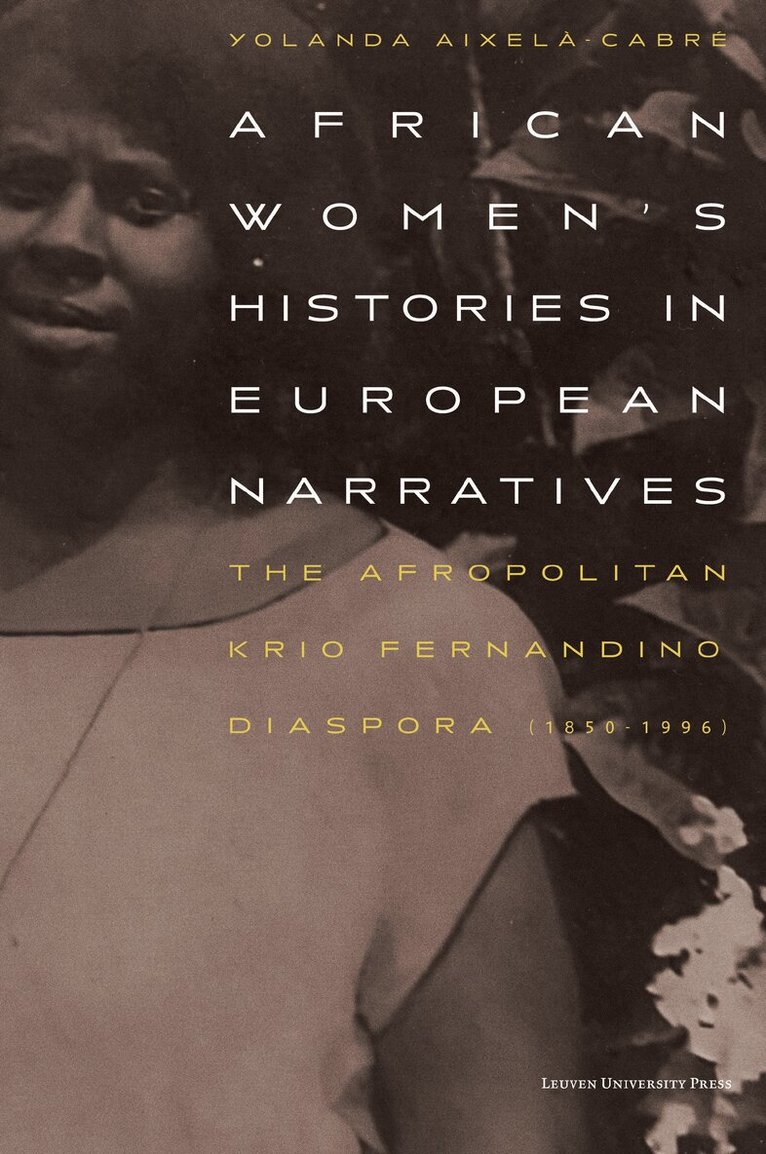
    African Women's Histories in European Narratives

    The Afropolitan Krio Fernandino Diaspora (1850-1996)

    AvYolanda Aixelà-Cabré

    Häftad, Engelska, 2025

    600 kr

    Beställningsvara. Skickas inom 5-8 vardagar. Fri frakt över 249 kr.

    Beskrivning

    The Krio Fernandino women, pioneers of Europe’s African diaspora in the 19th Century.Little is known about the African women who came to Europe from the 1870s onwards, nor do we dare to imagine them as wealthy, elegantly dressed individuals with refined tastes and fluent in several languages. The Krio Fernandino represented a multisited, multilocal, transnational, transcontinental and Afropolitan community that lived between Africa and Europe from the late 19th century onwards. This book explains how the Krio Fernandino, and particularly their women, transcended the barriers of race and gender in colonial Africa and in Spain. Aixelà-Cabré highlights a fascinating journey across cultures and continents, unearthing a compelling narrative of African women’s empowerment in their home continent and in Catalonia. This research highlights a women’s history that resonates on regional, national and transcontinental levels; a genuine Euro-African and Afro-European legacy to be preserved for future generations.This book will be made open access within three years of publication thanks to Path to Open, a program developed in partnership between JSTOR, the American Council of Learned Societies (ACLS), University of Michigan Press, and The University of North Carolina Press to bring about equitable access and impact for the entire scholarly community, including authors, researchers, libraries, and university presses around the world. Learn more at https://about.jstor.org/path-to-open/Listen to an interview with Yolanda Aixelà-Cabré at New Books Network

    Produktinformation

    • Utgivningsdatum:2025-06-03
    • Mått:155 x 233 x undefined mm
    • Vikt:454 g
    • Format:Häftad
    • Språk:Engelska
    • Antal sidor:282
    • Förlag:Leuven University Press
    • ISBN:9789462704619

    Utforska kategorier

    • Socialhistoria och kulturhistoria inom Historia och arkeologi
    • Afrikas historia inom Historia och arkeologi

    Mer om författaren

    Yolanda Aixelà-Cabré is Senior Researcher in Anthropology at the IMF center of the Spanish Council for Scientific Research-CSIC, where she co-coordinates the Inclusive Societies Program and leads the R&D Project “Black Spain”.

    Recensioner i media

    'This work examines the roles in colonial and postcolonial contexts of Krio Fernandino women, highlighting their unique position as intermediaries between European colonizers and African societies and showcasing the intersectionality of their experiences as an elite African diaspora navigating colonial pressures and societal expectations. The book also addresses the erasure of African women’s histories in European narratives, emphasizing the need to decolonize perspectives by integrating African voices. Finally, it provides a detailed analysis of the impact of colonial legacies and the challenges of racialized migration in Europe.' – Max Doppelbauer, University of Vienna

    Innehållsförteckning

    • Chapter 1. African women’s histories in European narratives – Introduction 1.1. Premise 1.2. Hypothesis 1.3. Academic aims and state of the art 1.4. MethodologyChapter 2. Fernandino women in colonial Santa Isabel and independent Malabo 2.1. The African context and Europe: English and Spanish presence in Fernando Poo and Santa Isabel 2.2. The Krio Fernandino community and Amelia Barleycorn de Vivour 2.3. Everyday life in Santa Isabel 2.4. Tensions and conflicts: surviving under colonial repression 2.5. The connection between Malabo and Barcelona since 1968: Equatorial Guinean exile 2.6. Conclusions Chapter 3. The Fernandino in Barcelona during colonisation and post-independence 3.1. Barcelona and Santa Isabel 3.2. Amelia Barleycorn heading to Europe 3.3. Life in Barcelona 3.4. The Krio Fernandino: trade, health and social life 3.5. Barcelona, missionary actions and student intake aimed at Equatorial Guineans 3.6. Krio Fernandino intersectionality: class, gender and race 3.7. Spain’s collective amnesia post-1968 and the onset of racism during the 1990s 3.8. Conclusions Chapter 4. Decolonising the African past from a gender perspective 4.1. Amelia Barleycorn de Vivour v. Spanish Government (1911): marriage, nationality, gender and religion 4.2. Fernandino women: between bourgeois elitism and colonial power 4.3. The domestic service used by the Krio Fernandino community or how to (de)racialise class from intersectionality 4.4. The status and social presentation of the body as a formula of distinction Fernandino 4.5. Fernandino women mixing cultures and continents (Africa, America and Europe) 4.6. The impact of Spanish colonialism and Fernandino decline 4.7. Conclusion Chapter 5. A past forged in the present : the collective memory of Krio Fernandino women – Closing notes Notes Primary and secondary sources Primary sources Secondary sources Index