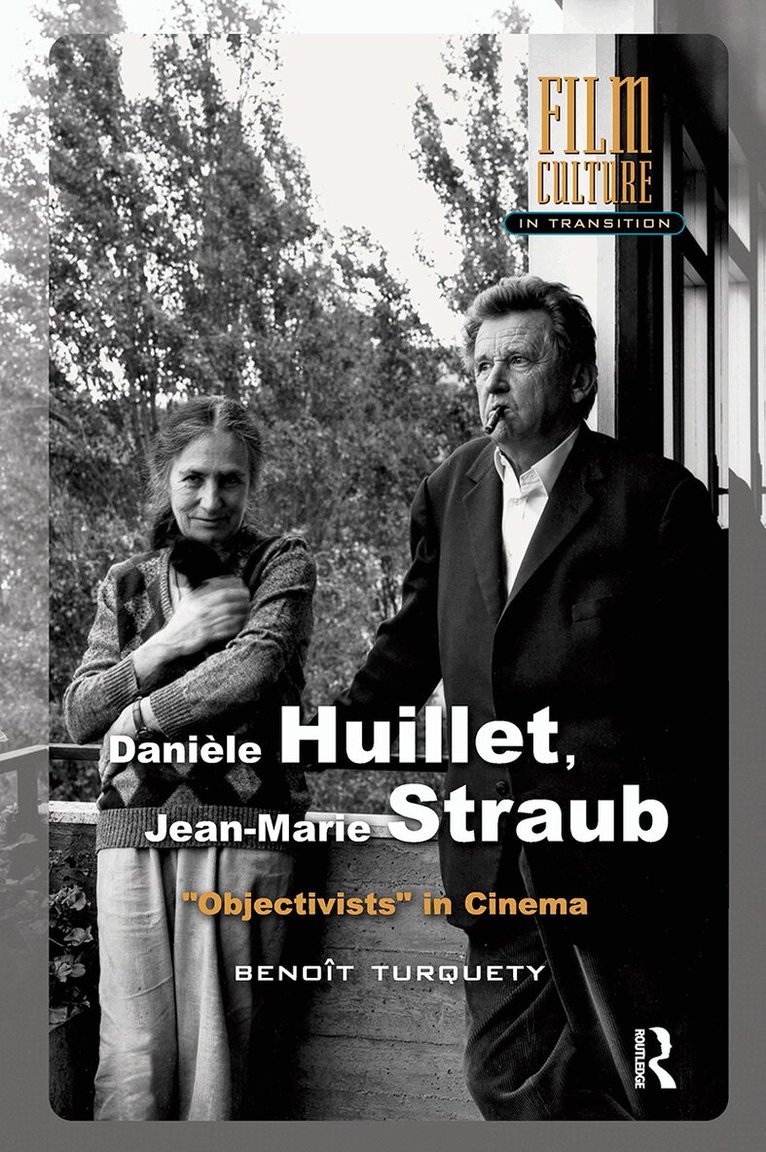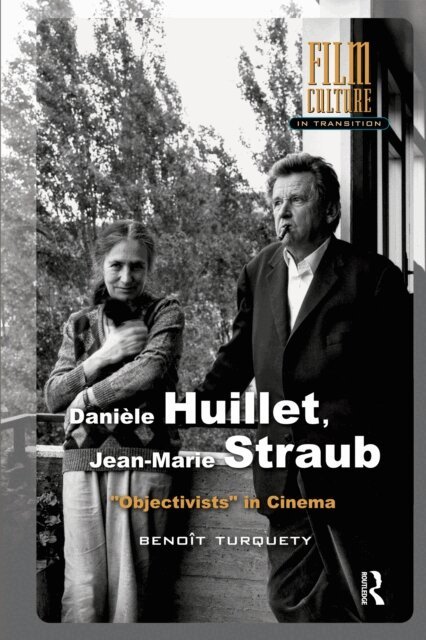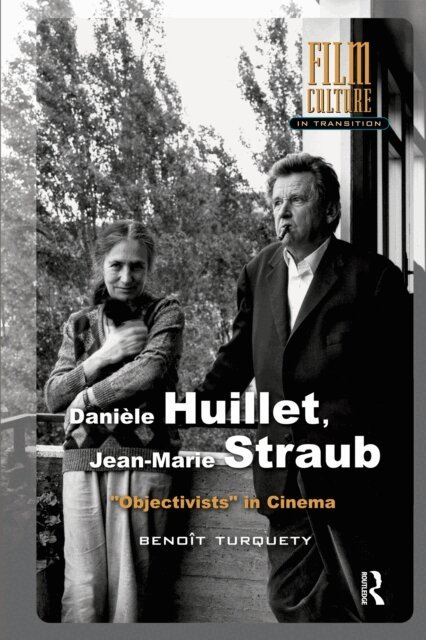
Through a detailed analysis of the films of Straub and Huillet, the works they adapted, and Objectivist poems and essays, Benoît Turquety locates the impact of their work from a search for radical objectivity.
Benoît Turquety is a professor in the film department at the University of Lausanne and director of the SNF research project on Bolex and amateur cinema. He is a founding member of the Material Archival Studies Network, and a member of the Dispositives research group, of the Network for Experimental Media Archaeology, and the Technology and the Humanities project. Ted Fendt is a translator, editor, filmmaker, and projectionist based in New York. He is the editor of Jean-Marie Straub & Danièle Huillet (Austrian Film Museum, 2016), has translated English subtitles for the films of Jean-Marie Straub since 2013, and his translations of film criticism have appeared in print and online in publications including Cinema Scope, Mubi Notebook, Lola Journal and Robert Bresson (Revised) (ed. James Quandt, 2013).
Innehållsförteckning
INTRODUCTION PART ONE: FOUNDATIONS I. EROTIC BARBARITY: OTHON 1. A Play, A Film 2. Principles 3. Tradition and Opacity II. OBJECTIVITY AND OBJECTIVITIES 1. Huillet and Straub-style 'Objectivity' 2. Objectivities 3. The Objectivists: A History 4. Objectivist Poetic Theory PART TWO: LANGUAGE/AUTHORITY III. THE POWER OF SPEECH (OR THE VOICE), OF SEEING AND THE PATH: MOSES AND AARON 1. Moses, Aaron, Schoenberg, Huillet & Straub 2. The Cinematic Form of (the Absence of) God: 'The Calling of Moses' 3. Language Remains 4. Birth of a Nation: Act II and End 5. Objective on Objective: Huillet and Straub's Position IV. SPEECH AGAINST POWER, OR POETRY, LOVE, AND REVOLUTION: 'A'-9 1. A Poem, History 2. The Form of 'A'-9 3. Value and Meaning: Capitalism and Abstraction 4. Love as a Poetic/Revolutionary Technique PART THREE: INTERRUPTIONS V. CINEMA, POETRY, HISTORY: IMMOBILIZATIONS 1. Introduction to Arnold Schoenberg's 'Musical Accompaniment to a Cinematographic Scene': Motion and Pause, Cinema as History 2. From Ideogram to Fugue: Poetry/Cinema 3. Interruptions 4. Continuities 5. History Without a Name 6. Braiding, Cutting PART FOUR: TRIALS, SERIES VI. INDUSTRIAL CIVILIZATION FOR THE LAST TIME: CLASS RELATIONS 1. Trials 2. On Space VII. ON DISSOLUTION 1. Speech Without Authority: The Death of Empedocles 2. On Dismantling: Testimony and Workers, Peasants CONCLUSION INDEX