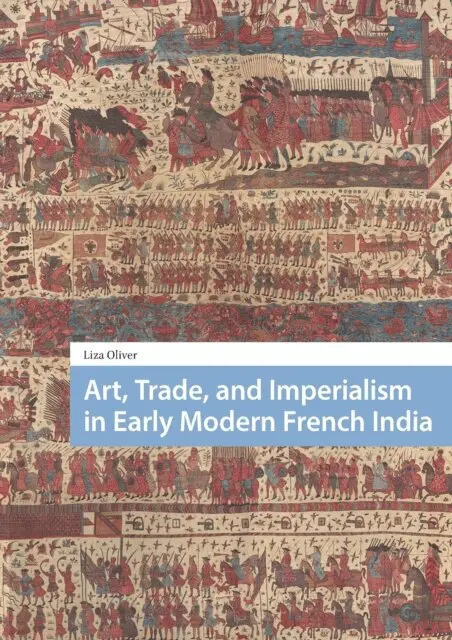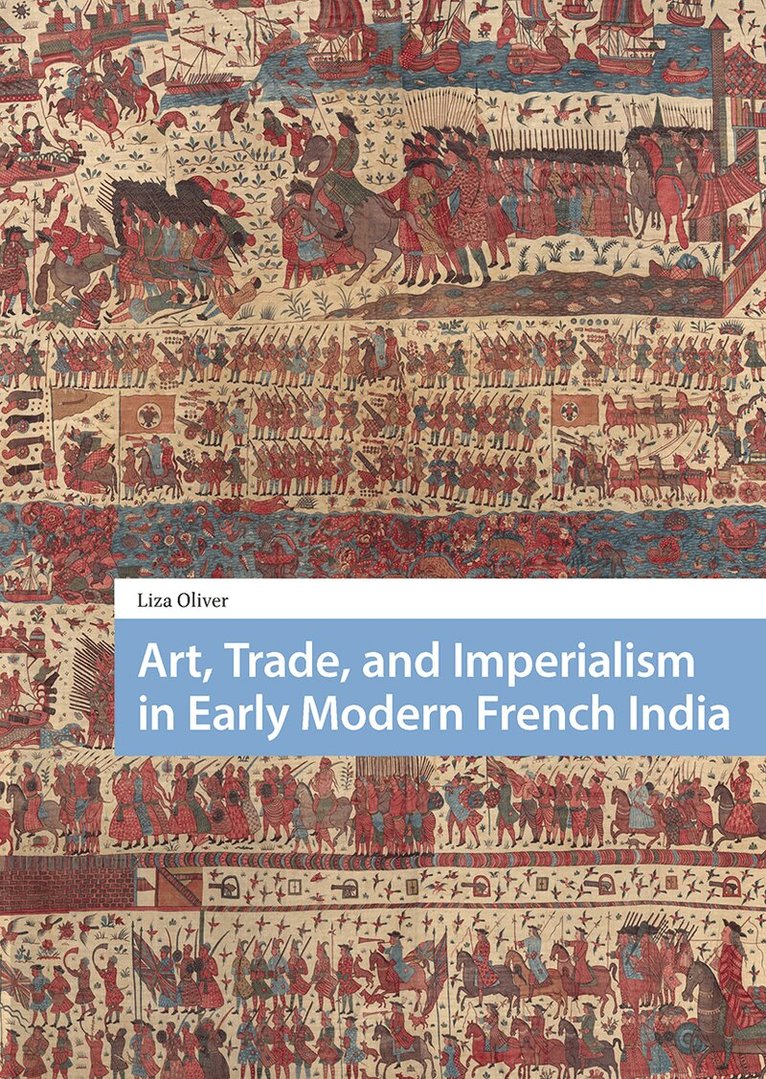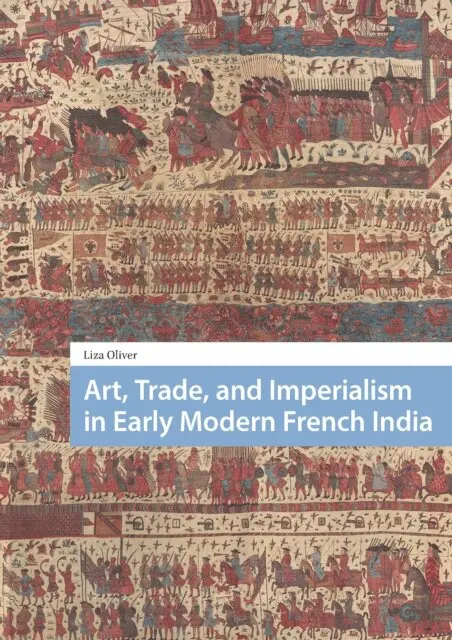
This book focuses on the integration of the Coromandel textile industries with French colonies in India from the founding of the French East India Company in 1664 to its debilitating defeat by the British during the Seven Years War.
Liza Oliver is the Diana Chapman Walsh Assistant Professor in Art History and South Asia Studies at Wellesley College.
Recensioner i media
"Drawing on a dazzling range of visual evidence, Oliver provides a pathbreaking account of how the commerce in textiles shaped the visual, cultural, and political histories of France and India. Deeply researched, theoretically informed, and compellingly argued, Oliver's transregional analysis challenges existing art historical models of cultural encounter and revolutionizes our understanding of eighteenth-century visual culture in both France and India."- Amy Freund, Southern Methodist University "Paying equal attention to South Indian and French actors and addressing a remarkably wide range of objects and practices--from painted textiles to botanical illustrations to gift giving and iconoclasm--Oliver brings vividly into view the complex entanglements of things and people in French India in a period of expanding long-distance trade and growing imperial ambition."- Kristel Smentek, Massachusetts Institute of Technology
Innehållsförteckning
Note on Transliteration and Translation, Note on Currency Conversion, List of Abbreviations, List of Figures, Acknowledgements, Introduction 1: The Threads that Bind: South Asian Textiles and Networks of Exchange between India, France, and the West Indies A Homespun Empire: Indian Textiles in Their Local Contexts Eastern Persuasions Trade Goods as Cross-Cultural Interlocutors Of Aristocrats and Slaves: The Double Life of Guinea Cloth The Antecedents of Industrialization 2. Coromandel Craft and European Natural History: Lessons Learned and Lost in Mutual Intelligibility across Cultures Botanical Beginnings Antoine de Jussieu and the Ambitions of French Bioprospecting Nature in Images/The Nature of Images: Tapping Local Medical Knowledge in Early Modern India Uncommon Ground: South Asian Aesthetics and L'Empereur's Jardin de Lorixa Jungles and Gardens 3: Shifting Terrains: Negotiating Kingship as a Tamil Dubash in Eighteenth-Century Pondichéry Travails and Portrayals of the Family Pillai Ananda, N?yak of Pondichéry 4: Faith and Fortunes: The Use and Abuse of Material Artifacts in the Evolving Coromandel Seeing and Believing: Iconoclasm, or the Limits of Mutual Intelligibility Obligatory Presents: The Evolution of Gifting Epilogue: Crosscurrents in the Wake of the Seven Years War Appendix 1: Glossary Appendix 2: French Governors of Pondichéry, Bibliography, Index