• Fri frakt över 249 kr
  • •
  • Snabba leveranser
  • •
  • Billiga böcker
Kundservice

Du är på sajten för privatpersoner.

Företag, bibliotek eller offentlig verksamhet?

Du handlar på classic.bokus.com, där alla dina funktioner finns intakta.
Till classic.bokus.com
Bokus logotyp. Gå till startsidan.
  • Erbjudanden
  • Nyheter
  • Student
  • Topplistor
  • Barn & ungdom
  • Bokus Play
  • E-böcker
  • Pocketböcker
  • Spel & pussel

10% rabatt på allt med kod: NYSTART10 →

Sidfot

Mina sidor

    Hjälp

    • Kundservice
    • Vanliga frågor och svar
    • Frakt och leverans
    • Retur vid ångerrätt
    • Reklamera vara
    • Betalning
    • Köpvillkor
    • Allmänna villkor
    • Information om webbplatsens tillgänglighet

    Om Bokus

    • Om oss
    • Pressrum
    • För studenter
    • För företag
    • För bibliotek och offentlig verksamhet
    • För leverantörer
    • Hållbarhet

    Populärt

    • Aktuella erbjudanden
    • Presentkort
    • Studentlitteratur
    • Nya böcker
    • Topplistor
    • Signerade böcker
    • Engelska böcker

    Inspiration

    • Boktips
    • BookTok
    • Populära bokserier
    • Barnbokskaraktärer
    • Populära författare
    Logotyp för Bokus
    Följ oss på Facebook (extern länk)Följ oss på Instagram (extern länk)Följ oss på YouTube (extern länk)Följ oss på TikTok (extern länk)
    bokus @ CookiesAnpassa cookiesIntegritetspolicyKöpvillkor
    Till Citymail hemsida (extern länk)Till Budbee hemsida (extern länk)Till Postnord hemsida (extern länk)Till Schenker hemsida (extern länk)Till Early Bird hemsida (extern länk)Till Walleys hemsida (extern länk)
    1. Historia och arkeologi
    2. Arkeologi
    3. Arkeologiska perioder och områden

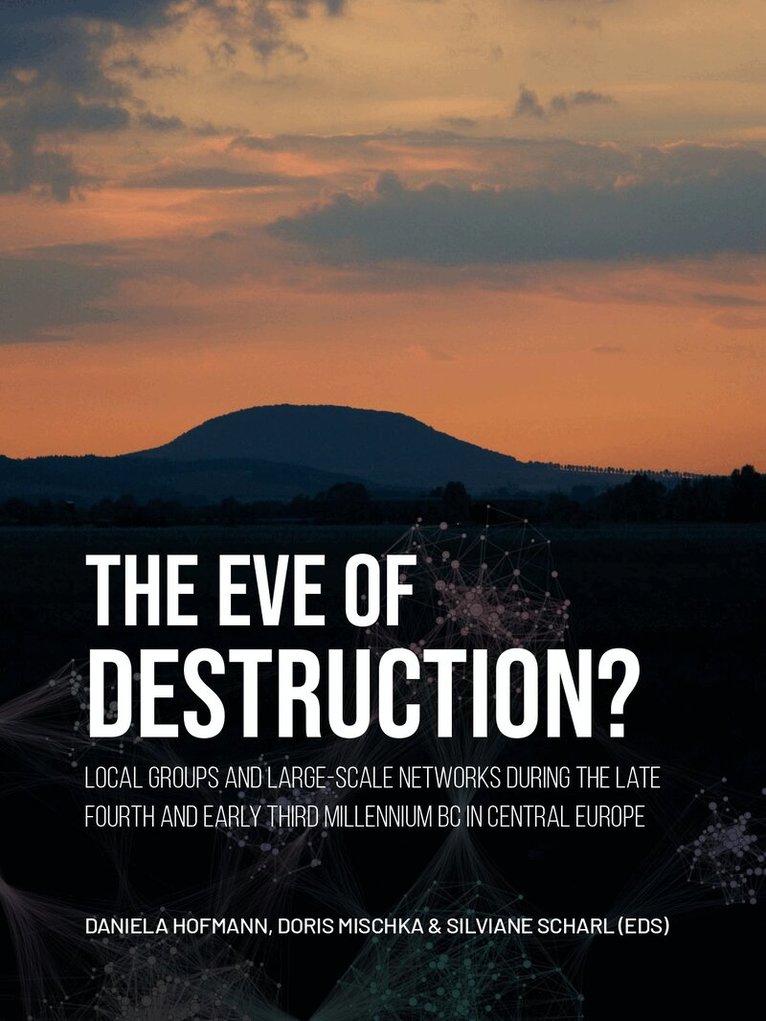
    eve of destruction?

    Local groups and large-scale networks during the late fourth and early third millennium BC in central Europe

    AvDaniela Hofmann,Doris Mischka

    Häftad, Engelska, 2025

    1 067 kr

    Beställningsvara. Skickas inom 3-6 vardagar. Fri frakt över 249 kr.

    Beskrivning

    This volume collects papers on the pre-Corded Ware horizon in central Europe and adjacent areas (i.e. from c. 3500 – 2800 BC). This phase is very patchily researched, partly also because certain kinds of evidence, notably domestic architecture and burials, are rare or absent in many regions. This has occasionally been interpreted as signs of a major crisis and population bottleneck, which in turn facilitated the migration of new populations from the steppe, bringing with them amongst others new economic regimes, ideologies and settlement patterns.Research over the last few years has shown that this scenario needs to be nuanced. Although evidence remains scattered, a picture of regional diversity is emerging, with probably mobile but well-connected Late Neolithic societies undergoing social changes of their own, and instituting several key innovations long before the appearance of the Corded Ware. This volume offers a selection of such case studies, comprising amongst others an overview over the steppe background of new mortuary practices, contributions on settlement and changing networks in Switzerland, Poland and several regions of Germany, as well as discussions on the spread of pottery innovations and lithic material, the possible effect of droughts on Late Neolithic societies, new patterns of monumentality and figurative expression, the social role of battle axes, networks of influences visible in burial rites, and the possibility for “parallel societies” with different modes of life. An introductory chapter draws out central themes.Together, these contributions show that the transition to the Corded Ware culture was a diverse and multi-facetted process, with many continuities across the transition.

    Produktinformation

    • Utgivningsdatum:2025-08-15
    • Mått:210 x 280 x 22 mm
    • Vikt:1 184 g
    • Format:Häftad
    • Språk:Engelska
    • Antal sidor:300
    • Upplaga:25001
    • Förlag:Sidestone Press
    • ISBN:9789464263114

    Utforska kategorier

    • Arkeologiska perioder och områden inom Historia och arkeologi

    Mer om författaren

    Daniela Hofmann is Professor of Archaeology at Bergen University, where she teaches and researches mainly on the Neolithic of Europe. Her current interests include migration, kinship, ritual, social inequality and resistance to it, as well as social contacts and change (see the forthcoming co-authored volume Negotiating migrations. The archaeology and politics of mobility, 2024, and the co-edited outreach publication Migration narratives in archaeology, 2023). In her projects, she tries to combine theoretical considerations with a variety of methods, including bioarchaeological information, in an effort to write narratives that take into account different perspectives. She hopes that knowing about diversity in the past could help us create a fairer society today, but has doubts on whether this is actually working. Doris Mischka is Professor for Prehistoric Archaeology at the Friedrich-Alexander Universität Erlangen-Nürnberg. Previously, she worked at the Universities of Göttingen, Kiel, Bologna and Cologne. Her publications are devoted mainly to the Linear Pottery culture, the Funnel Beaker culture and Cucuteni-Tripyllia. She is also interested in landscape archaeology and has worked on lithics and pottery. Her most recent publications include an exhaustive study of the Neolithic burials in Flintbek (Das Neolithikum in Flintbek, Kr. Rendsburg-Eckernförde, Schleswig-Holstein. Eine feinchronologische Studie zur Besiedlungsgeschichte anhand von Gräbern, 2022), and co-editorship of a landmark introductory work on the Neolithic of Bavaria (Steinzeit in Bayern. Das Handbuch in 2 Bänden, 2023, with T. Uthmeier). Currently she conducts fieldwork in Romania. Silviane Scharl is Professor for Prehistoric Archaeology at the University of Cologne. One focus of her research is on the central European Neolithic, where she has published extensively on networks of innovation and on human mobility (see e.g. Human mobility and the spread of innovations – case studies from Neolithic Central and Southeast Europe. Open Archaeology 9/1, 2023). She has also written an introductory volume on the Neolithic in central Europe (Jungsteinzeit – Wie die Menschen sesshaft wurden, 2021). In her current project, she explores the Late Neolithic in the Rhineland in western Germany.

    Innehållsförteckning

    • The pre-Corded Ware horizon in central Europe and why it matters – an introduction to the volumeDaniela Hofmann, Doris Mischka and Silviane ScharlThe times they are a-changin’. The Final Copper Age between the eastern Carpathians and the Don riverElke KaiserThe arrival of the Corded Ware in eastern Switzerland. A settlement archaeological viewNiels BleicherPots without plots? Danubian and other non-local finds in Horgen cultural contexts of the thirty-second century BC and beyond at Lake Constance and in Upper SwabiaJoachim KöningerThe time of the cord rollers. Textile-roughened pottery of the early third millennium BC and cultural transmission networks from a south-western German perspectivePhilipp GleichDecades of drought in the twenty-eighth century BC and its effects on settlement and cultureJoachim Pechtl and Alexander LandIn the middle of nowhere – Burgerroth and the Early Final Neolithic in FranconiaThomas LinkNetworks at the turn of the millennium — the situation in northern BavariaMartin NadlerLong barrows, causewayed enclosures and the long term spiritual continuity in ritual landscape around Mount Říp in Bohemia (Czech Republic)Jan Turek, Petr Krištuf and Ondřej ŠvejcarThe third millennium BC in the German lower mountain ranges: Are social ties falling apart?Clara DrummerLithics, Lousberg axes and no settlements. In search of the late fourth millennium BC in the Lower Rhine areaSilviane Scharl and Ingrid KochIn varietate concordia — united in diversity. Battle axes, coarse ware pottery and burial rituals during the Late Neolithic of western and central Europe and their meaning for the deconstruction of Final Neolithic narrativesSebastian SchultrichContinuation and change in settlement of the Polish Lowland in the period 3300–2700 BCMarzena SzmytSocietal rise, dissolution and diversity: from Funnel Beaker (TRB) societies to Single Grave groups on the North European Plain (c. 3300–2700 BC)Jan Piet BrozioGlobal transformation? Globular Amphora sedentary pastoralists 3200–2700 BCJohannes MüllerParallel societies: evidence for the co-existence of Late Funnel Beaker West and Early Corded Ware communitiesQuentin P.J. Bourgeois, Erik J. Kroon and S. Louise OlerudSame old, same old? Fisher-hunter-gatherer graves, burials and mortuary practices in the late fourth and early third millennium BC northern and eastern Baltic Sea regionMarja Ahola