• Fri frakt över 249 kr
  • •
  • Snabba leveranser
  • •
  • Billiga böcker
Kundservice

Du är på sajten för privatpersoner.

Företag, bibliotek eller offentlig verksamhet?

Du handlar på classic.bokus.com, där alla dina funktioner finns intakta.
Till classic.bokus.com
Bokus logotyp. Gå till startsidan.
  • Erbjudanden
  • Nyheter
  • Student
  • Topplistor
  • Barn & ungdom
  • Bokus Play
  • E-böcker
  • Pocketböcker
  • Spel & pussel

10% rabatt på allt med kod: NYSTART10 →

Sidfot

Mina sidor

    Hjälp

    • Kundservice
    • Vanliga frågor och svar
    • Frakt och leverans
    • Retur vid ångerrätt
    • Reklamera vara
    • Betalning
    • Köpvillkor
    • Allmänna villkor
    • Information om webbplatsens tillgänglighet

    Om Bokus

    • Om oss
    • Pressrum
    • För studenter
    • För företag
    • För bibliotek och offentlig verksamhet
    • För leverantörer
    • Hållbarhet

    Populärt

    • Aktuella erbjudanden
    • Presentkort
    • Studentlitteratur
    • Nya böcker
    • Topplistor
    • Signerade böcker
    • Engelska böcker

    Inspiration

    • Boktips
    • BookTok
    • Populära bokserier
    • Barnbokskaraktärer
    • Populära författare
    Logotyp för Bokus
    Följ oss på Facebook (extern länk)Följ oss på Instagram (extern länk)Följ oss på YouTube (extern länk)Följ oss på TikTok (extern länk)
    bokus @ CookiesAnpassa cookiesIntegritetspolicyKöpvillkor
    Till Citymail hemsida (extern länk)Till Budbee hemsida (extern länk)Till Postnord hemsida (extern länk)Till Schenker hemsida (extern länk)Till Early Bird hemsida (extern länk)Till Walleys hemsida (extern länk)
    1. Historia och arkeologi
    2. Arkeologi

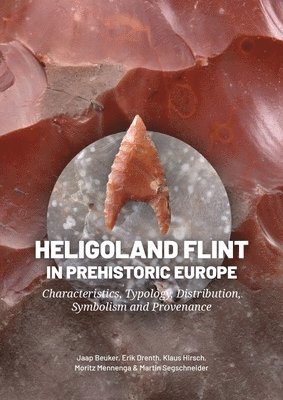
    Heligoland Flint in Prehistoric Europe

    Characteristics, Typology, Distribution, Symbolism and Provenance

    AvJaap Beuker,Erik Drenth

    Häftad, Engelska, 2025

    748 kr

    Beställningsvara. Skickas inom 3-6 vardagar. Fri frakt över 249 kr.

    Beskrivning

    During a considerable part of prehistory stone tools were indispensable. Flint in particular had properties that made it very suitable for making razor-sharp implements and could often, but not always, be collected locally. Hunters, gatherers and fishers mostly used small tools but with the transition to an agricultural way of living this situation changed, as larger implements became necessary, to cut down trees and work wood for instance. The raw material suitable for this was often not available locally, so was imported from areas where good raw material was available. It was sometimes extracted on an almost industrial scale and even by underground mining. There are many known places in Europe where this extraction took place thousands of years ago. In the first half of the 1980s it became clear that the island of Heligoland also played a role as a large-scale supplier of flint.Prehistoric tools made from red Heligoland flint and also from tabular Heligoland flint have been found in Denmark, Germany and the Netherlands, sometimes at a distance of more than 300 km from Heligoland. In this book we will describe the research undertaken on various aspects of the use of this flint. The characteristics of the different types, as distinct from flint that does not come from Heligoland, will be discussed. Furthermore, the tools that were made from it, their dating, their possible social and symbolic meanings, and the transport that took place partly by sea, more than 5000 years ago, will be described. This book is intended for archaeologists, archaeological curators but also for anybody else who has an interest in the story of a fascinating prehistoric flint source.

    Produktinformation

    • Utgivningsdatum:2025-12-04
    • Mått:178 x 254 x 14 mm
    • Vikt:594 g
    • Format:Häftad
    • Språk:Engelska
    • Antal sidor:240
    • Upplaga:25001
    • Förlag:Sidestone Press
    • ISBN:9789464264128

    Utforska kategorier

    • Arkeologi inom Historia och arkeologi
    • Arkeologiska perioder och områden inom Historia och arkeologi

    Mer om författaren

    Jaap Beuker (1952) was curator of archaeology and head curator at the Drents Museum in Assen (Netherlands). Since his retirement in 2017 he has carried out research on various archaeological subjects such as flint technology and prehistoric use of exotic materials. Since the mid-1980s he has worked on the prehistoric import of flint from Heligoland. He has written several articles and books on stone artefacts and especially about the use of red and tabular Heligoland flint. Erik Drenth works as a specialist in prehistoric inorganic material culture (flint, hand-made pottery, metal and stone) at the Dutch archaeological research company BAAC. He has written numerous articles, including contributions to several handbooks on Dutch archaeology, such as ‘Nederland in de prehistorie’. Klaus Hirsch (1964) has worked since 2006 as a field archaeologist in the archaeological department of Museum Sønderjylland in Haderslev, Southern Jutland (Denmark). Prior to his work in Denmark, he was employed as a field archaeologist in the State of Mecklenburg-Vorpommern in northeastern Germany. He is a trained prehistoric archaeologist with a special interest in the Late Palaeolithic as well as experimental archaeology, flint sourcing and the prehistoric distribution and exchange of flint in Northern Europe. He has written several articles on various topics, such as experimental archaeology. Moritz Mennenga (1985) is an archaeologist with a focus on the Neolithic of Northern and Northwestern Europe and a research associate at the Lower Saxony Institute for Historical Coastal Research (NIhK) in Wilhelmshaven. He conducts research on the Neolithic settlement and burial landscape in particular, with a special focus on the analysis of Stone Age sites, landscape reconstruction and human-land relationships. In addition to his archaeological focus, he works in the field of digital archaeology. Dr. Martin Segschneider (1966) specialises in coastal and maritime archaeology and works as a senior researcher at the Lower Saxony Institute for Historical Coastal Research (NIhK) in Wilhelmshaven/Germany. He has published various articles and books about the archaeology of the North Frisian Islands and Heligoland, including the topics of the historic role of Heligoland red flint and prehistoric seafaring.

    Innehållsförteckning

    • 1 Introduction (Jaap Beuker)2 Research history (Jaap Beuker)3 Characteristics of different types of Heligoland flint in comparison with other northern Flint types (Jaap Beuker)3.1 Type 1 Red Heligoland flint3.1.1 Resemblances and differences between red Heligoland flint and patinated and burnt other flint types 3.2 Type 2 Yellow-brown Heligoland flint3.3 Type 3 Heligoland scar flint3.4 Type 4 Heligoland bone flint3.5 Type 5 Tabular Heligoland flint3.6 Other northern flint types3.6.1 Speckled Senonian flint and Scandinavian Senonian flint versus tabular Heligoland flint3.7 Scientific research4 Geology and occurrence of red Heligoland flint and tabular Heligoland flint (Jaap Beuker)4.1 Is red flint only found on Heligoland?4.2 Is tabular flint of the Heligoland type only found on Heligoland?4.3 Possible occurrence of Heligoland flint in glacial depositions5 Typology, dating and geographical distribution of artefacts from red Heligoland flint, tabular Heligoland flint and Heligoland scar flint5.1 Red Heligoland flint (Jaap Beuker and Erik Drenth)5.1.1 The Netherlands (Jaap Beuker and Erik Drenth)5.1.2 Germany (Martin Segschneider and Moritz Mennenga)5.1.3 Denmark (Klaus Hirsch)5.2. Tabular Heligoland flint and Heligoland scar flint (Jaap Beuker)5.2.1 Tabular Heligoland flint sickles5.2.2 Tabular Heligoland flint daggers5.2.3 Tabular Heligoland flint axes and chisels5.2.4 Tabular Heligoland flint blades5.2.5 Miscellanea5.2.6 Finds of artefacts of tabular Heligoland flint and Heligoland scar flint in Drenthe, Netherlands5.2.6.1 Tabular Heligoland flint artefacts5.2.6.2 Tabular Heligoland flint together with red Heligoland flint5.2.6.3 Artefacts of Heligoland scar flint5.2.7 Finds of tabular Heligoland flint artefacts in North Germany (Martin Segschneider and Moritz Mennenga)5.2.8 Finds of tabular Heligoland flint artefacts in Denmark (Klaus Hirsch)6 Extraction and knapping of Heligoland flint (Jaap Beuker)6.1 Artefact production and finds of flint artefacts on Heligoland6.2 Artefact production on the mainland6.2.1 Emmen, Netherlands, Drenthe6.2.2 Midlum, Germany, Lower Saxony7 Social and symbolic significance of Heligoland flint artefacts (Erik Drenth)7.1 Introductory remarks7.2 Red Heligoland flint: the question of colour and symbolic meaning7.3 The TRB West Group and the colour red7.4 Red Heligoland flint: its social meaning from the perspective of cultural and geographical distribution7.5 Conclusions8 Maritime transport and navigation (Martin Segschneider and Moritz Mennenga)9 Conclusions and final remarks, especially with regard to red Heligoland flint (Erik Drenth and Jaap Beuker)10 Catalogues of artefacts of red Heligoland flint and tabular Heligoland flint10.1 Catalogue of artefacts of red Heligoland flint in the Netherlands, Denmark and Germany (Jaap Beuker, Erik Drenth, Klaus Hirsch, Moritz Mennenga and Martin Segschneider)10.2 Catalogue of artefacts of tabular Heligoland flint in Drenthe, Netherlands (Jaap Beuker)10.3 Catalogue of artefacts of tabular Heligoland flint in Germany (Martin Segschneider and Moritz Mennenga)10.4 Catalogue of artefacts of tabular Heligoland flint in Denmark (Klaus Hirsch)LiteratureAppendix 1 Chronological schemes of the Netherlands, Germany and Denmark (Erik Drenth, Martin Segschneider and Klaus Hirsch)Appendix 2 Publications with information about the archaeology and geology of Heligoland flint (Jaap Beuker)Appendix 3 Typological remarks (Jaap Beuker and Erik Drenth)Image creditsAcknowledgements