• Fri frakt över 249 kr
  • •
  • Snabba leveranser
  • •
  • Billiga böcker
Kundservice

Du är på sajten för privatpersoner.

Företag, bibliotek eller offentlig verksamhet?

Du handlar på classic.bokus.com, där alla dina funktioner finns intakta.
Till classic.bokus.com
Bokus logotyp. Gå till startsidan.
  • Erbjudanden
  • Nyheter
  • Student
  • Topplistor
  • Barn & ungdom
  • Bokus Play
  • E-böcker
  • Pocketböcker
  • Spel & pussel

10% rabatt på allt med kod: NYSTART10 →

Sidfot

Mina sidor

    Hjälp

    • Kundservice
    • Vanliga frågor och svar
    • Frakt och leverans
    • Retur vid ångerrätt
    • Reklamera vara
    • Betalning
    • Köpvillkor
    • Allmänna villkor
    • Information om webbplatsens tillgänglighet

    Om Bokus

    • Om oss
    • Pressrum
    • För studenter
    • För företag
    • För bibliotek och offentlig verksamhet
    • För leverantörer
    • Hållbarhet

    Populärt

    • Aktuella erbjudanden
    • Presentkort
    • Studentlitteratur
    • Nya böcker
    • Topplistor
    • Signerade böcker
    • Engelska böcker

    Inspiration

    • Boktips
    • BookTok
    • Populära bokserier
    • Barnbokskaraktärer
    • Populära författare
    Logotyp för Bokus
    Följ oss på Facebook (extern länk)Följ oss på Instagram (extern länk)Följ oss på YouTube (extern länk)Följ oss på TikTok (extern länk)
    bokus @ CookiesAnpassa cookiesIntegritetspolicyKöpvillkor
    Till Citymail hemsida (extern länk)Till Budbee hemsida (extern länk)Till Postnord hemsida (extern länk)Till Schenker hemsida (extern länk)Till Early Bird hemsida (extern länk)Till Walleys hemsida (extern länk)
    1. Medicin
    2. Medicin: icke kliniska discipliner
    3. Reproduktionsmedicin

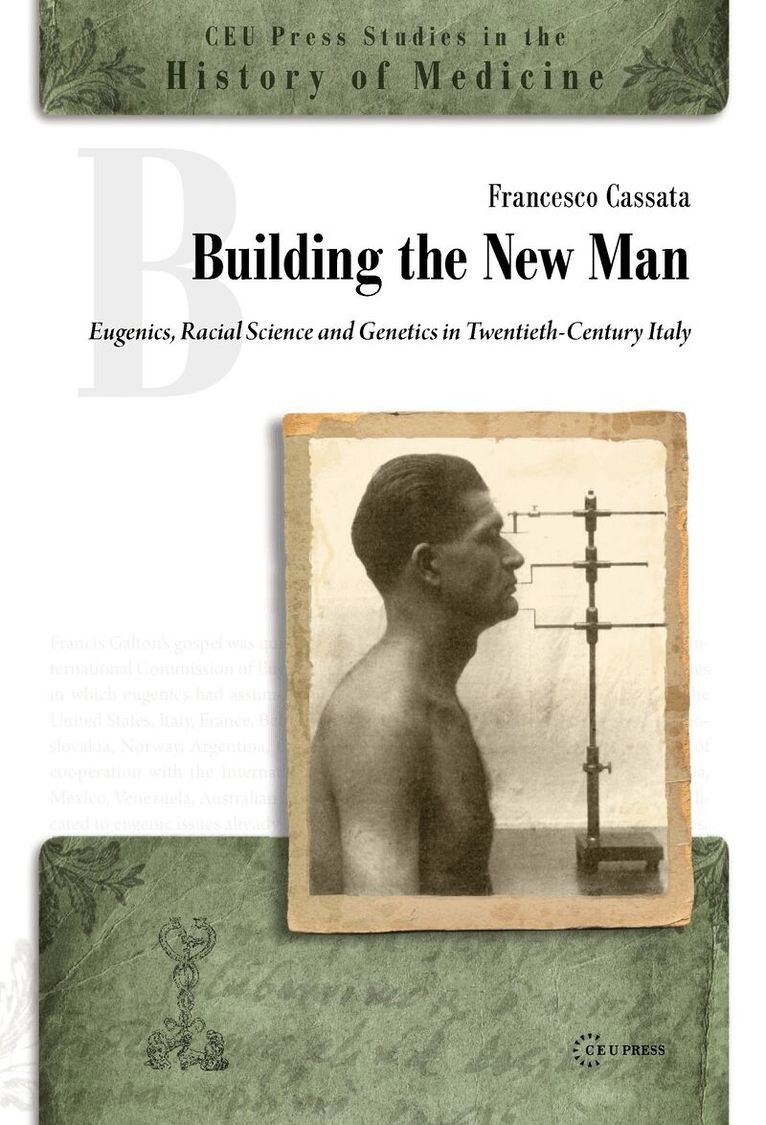
    Building the New Man

    Eugenics, Racial Science and Genetics in Twentieth-Century Italy

    AvFrancesco Cassata

    Inbunden, Engelska, 2011

    Del i serien CEU Press Studies in the History of Medicine

    2 059 kr

    Beställningsvara. Skickas inom 10-15 vardagar. Fri frakt över 249 kr.

    Beskrivning

    Based on previously unexplored archival documentation, this book offers the first general overview of the history of Italian eugenics, not limited to the decades of Fascist regime, but instead ranging from the beginning of the 1900s to the first half of the 1970s. Discusses several fundamental themes of the comparative history of eugenics: the importance of the Latin eugenic model; the relationship between eugenics and fascism; the influence of Catholicism on the eugenic discourse and the complex links between genetics and eugenics. It examines the Liberal pre-fascist period and the post-WW2 transition from fascist and racial eugenics to medical and human genetics. As far as fascist eugenics is concerned, the book provides a refreshing analysis, considering Italian eugenics as the most important case-study in order to define Latin eugenics as an alternative model to its Anglo-American, German and Scandinavian counterparts. Analyses in detail the nature-nurture debate during the State racist campaign in fascist Italy (1938–1943) as a boundary tool in the contraposition between the different institutional, political and ideological currents of fascist racism.

    Produktinformation

    • Utgivningsdatum:2011-05-15
    • Mått:159 x 234 x 30 mm
    • Vikt:788 g
    • Format:Inbunden
    • Språk:Engelska
    • Serie:CEU Press Studies in the History of Medicine
    • Antal sidor:438
    • Förlag:Central European University Press
    • ISBN:9789639776838

    Utforska kategorier

    • Reproduktionsmedicin inom Medicin

    Mer om författaren

    Francesco Cassata received his PhD in Contemporary History from the University of Turin. He published extensively on the ideology of Italian fascism and neo-fascism, and on the history of fascist racism. He is also author of the first in-depth study of Lysenkoism in Italy. His current research project concerns the Italian geneticist Adriano Buzzati-Traverso and the development of molecular biology in Italy.

    Recensioner i media

    "Cassata’s monograph is a long overdue and very welcome addition to the literature. It is an amalgamation of work that he has published in Italian—on Corrado Gini and related topics—and, significantly, an expansion of his Molti, sani e forti: L’eugenetica in Italia (Turin, 2006). Building the New Man is a serious and important study of an aspect of modern Italian history that remains relatively underresearched. New regional, national, and transnational case studies of eugenics in recent years have counterbalanced the Anglo-American and Nazi-centric bias in the historiography. Cassata’s book contributes exceedingly well to this ongoing and worthy project on global eugenics. The great strength of this work lies in the depth of its scholarship. Based on extensive archival research, his narrative shows great sensitivity to the plurality of approaches within Italian eugenics. Italian eugenics found a home not just in biomedicine, as was commonly the case, but also in the social sciences. The author rightly emphasizes that, despite this diversity, there was an overwhelming consensus of opinion within Italian medicine, science, and the state about the positive role that the environment, welfare, and society could play in engineering racial improvements over time. While accounts of eugenics more commonly stop in 1945, Cassata extends his chronological reach well into the 1960s. The wisdom of this choice is amply rewarded by that fact that he is thereby able to make a major contribution to one of the more interesting avenues of current scholarship on eugenics: that which is concerned to illuminate the relationship between the old and the new. Cassata examines the crucial issue of continuity in scientific and political discourses about race, and as he ably shows, the eugenetic project did not end with the fall of Fascism. No longer benefiting from Fascist state patronage, postwar Italian eugenics fell victim to discord and lost its relevance and purpose."

    Innehållsförteckning

    • Acknowledgements Introduction CHAPTER I Between Lombroso and Pareto: the Italian Way to Eugenics 1. Lombroso’s Way: the Problem of Degeneration 2. Pareto’s Way: the Problem of the Elite 3. The Italian Committee of Eugenic Studies CHAPTER II Eugenics and Dysgenics of War 1. The War as Counter-selection 2. The War as Gymnasium 3. The War as Laboratory 4. Eugenics and the “Sons of the Enemy” CHAPTER III Regenerating Italy (1919–1924) 1. Ettore Levi and the IPAS Campaign for Birth Control 2. A Concrete Proposal: Premarital Certificates 3. Sterilization and Euthanasia 4. The Work of the “Useless”: Mental Hygiene in Italy CHAPTER IV Quality through Quantity: Eugenics in Fascist Italy 1. Corrado Gini’s Hegemony 2. Constitutionalism and Latin Eugenics 3. Demography and Biotypology CHAPTER V Eugenics and Racism (1938–1943) 1. Biological Racism and Hereditarian Eugenics 2. Environmentalist Eugenics 3. Esoteric-traditionalist Racism and Eugenics 4. Assortative Mating and Racism 5. Toward a National Genetic Center CHAPTER VI Toward a New Eugenics 1. SIGE Schisms 2. From Premarital Examination to Genetic Counseling 3. Eugenics and Catholic Medical Genetics CHAPTER VII Against UNESCO: Italian Eugenics and American Scientific Racism 1. The IAAEE and The Mankind Quarterly (1959–1965) 2. Meticciato di Guerra: Luigi Gedda and Reginald Ruggles Gates 3. Corrado Gini and the “Guerrilla War” against UNESCO 4. Epilogue: “Race and Modern Science” Conclusions Bibliography Index