Francesco Cassata – författare
Visar alla böcker från författaren Francesco Cassata. Handla med fri frakt och snabb leverans.
5 produkter
Racism and Antisemitism in Fascist Italy
The Politics, Ideology, and Imagery of ‘La Difesa della razza’
Inbunden, 2024
2504 kr
Lägg i varukorg
The racism and antisemitism of Fascist Italy have often been described as ‘mild’, ‘cultural’, ‘spiritual’, and essentially non-violent, especially in comparison with the racial ideology of Nazi Germany. This book challenges this simplistic interpretation with a thorough analysis of the texts and …
Racism and Antisemitism in Fascist Italy
The Politics, Ideology, and Imagery of ‘La Difesa della razza’
Häftad, 2026
704 kr
Lägg i varukorg
The racism and antisemitism of Fascist Italy have often been described as ‘mild’, ‘cultural’, ‘spiritual’, and essentially non-violent, especially in comparison with the racial ideology of Nazi Germany. This book challenges this simplistic interpretation with a thorough analysis of the texts and …
Racism and Antisemitism in Fascist Italy
The Politics, Ideology, and Imagery of ‘La Difesa della razza’
E-bok, 2024
829 kr
Lägg i varukorg
The racism and antisemitism of Fascist Italy have often been described as ‘mild’, ‘cultural’, ‘spiritual’, and essentially non-violent, especially in comparison with the racial ideology of Nazi Germany. This book challenges this simplistic interpretation with a thorough analysis of the texts and …
Racism and Antisemitism in Fascist Italy
The Politics, Ideology, and Imagery of ‘La Difesa della razza’
E-bok, 2024
838 kr
Lägg i varukorg
The racism and antisemitism of Fascist Italy have often been described as ‘mild’, ‘cultural’, ‘spiritual’, and essentially non-violent, especially in comparison with the racial ideology of Nazi Germany. This book challenges this simplistic interpretation with a thorough analysis of the texts and …
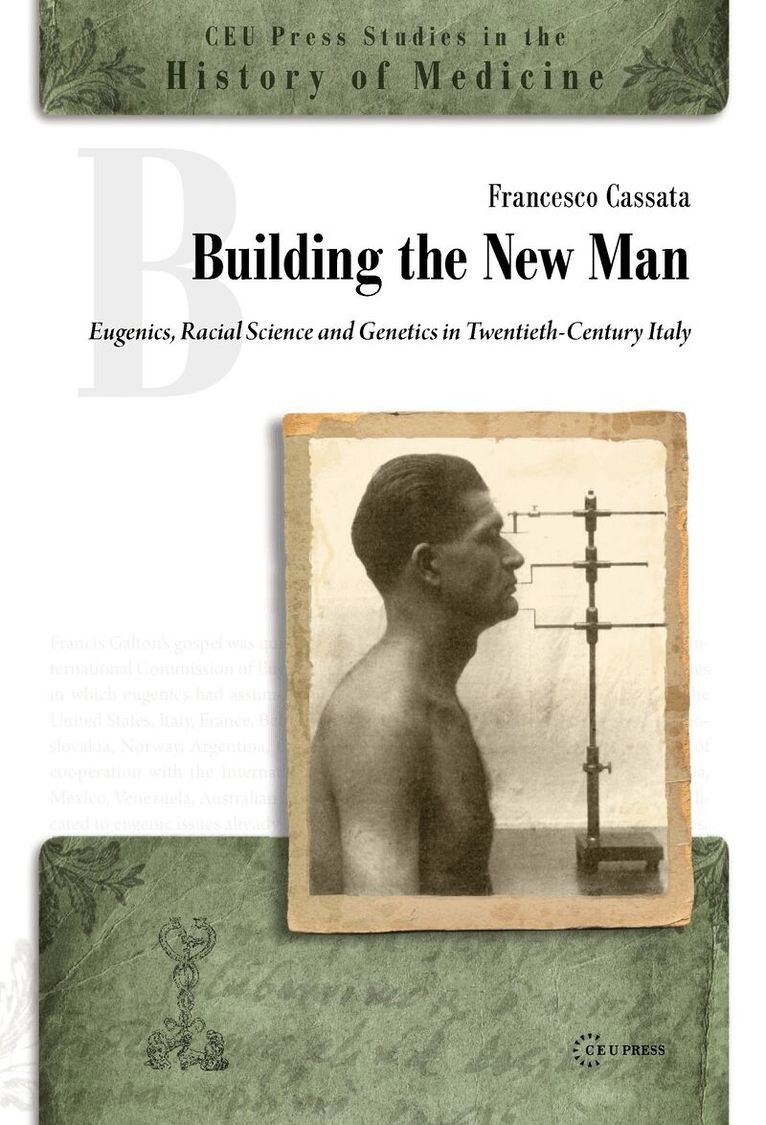
Building the New Man
Eugenics, Racial Science and Genetics in Twentieth-Century Italy
Inbunden, 2011
2130 kr
Lägg i varukorg
Based on previously unexplored archival documentation, this book offers the first general overview of the history of Italian eugenics, not limited to the decades of Fascist regime, but instead ranging from the beginning of the 1900s to the first half of the 1970s. Discusses several fundamental …