• Fri frakt över 249 kr
  • •
  • Snabba leveranser
  • •
  • Billiga böcker
Kundservice

Du är på sajten för privatpersoner.

Företag, bibliotek eller offentlig verksamhet?

Du handlar på classic.bokus.com, där alla dina funktioner finns intakta.
Till classic.bokus.com
Bokus logotyp. Gå till startsidan.
  • Erbjudanden
  • Nyheter
  • Student
  • Topplistor
  • Barn & ungdom
  • Bokus Play
  • E-böcker
  • Pocketböcker
  • Spel & pussel

10% rabatt på allt med kod: NYSTART10 →

Sidfot

Mina sidor

    Hjälp

    • Kundservice
    • Vanliga frågor och svar
    • Frakt och leverans
    • Retur vid ångerrätt
    • Reklamera vara
    • Betalning
    • Köpvillkor
    • Allmänna villkor
    • Information om webbplatsens tillgänglighet

    Om Bokus

    • Om oss
    • Pressrum
    • För studenter
    • För företag
    • För bibliotek och offentlig verksamhet
    • För leverantörer
    • Hållbarhet

    Populärt

    • Aktuella erbjudanden
    • Presentkort
    • Studentlitteratur
    • Nya böcker
    • Topplistor
    • Signerade böcker
    • Engelska böcker

    Inspiration

    • Boktips
    • BookTok
    • Populära bokserier
    • Barnbokskaraktärer
    • Populära författare
    Logotyp för Bokus
    Följ oss på Facebook (extern länk)Följ oss på Instagram (extern länk)Följ oss på YouTube (extern länk)Följ oss på TikTok (extern länk)
    bokus @ CookiesAnpassa cookiesIntegritetspolicyKöpvillkor
    Till Citymail hemsida (extern länk)Till Budbee hemsida (extern länk)Till Postnord hemsida (extern länk)Till Schenker hemsida (extern länk)Till Early Bird hemsida (extern länk)Till Walleys hemsida (extern länk)
    1. Kultur
    2. Arkitektur
    3. Arkitekter och arkitektfirmor

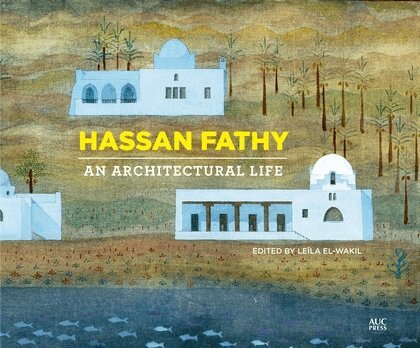
    Hassan Fathy

    An Architectural Life

    AvLeila El-Wakil

    Inbunden, Engelska, 2018

    1 066 kr

    Beställningsvara. Skickas inom 5-8 vardagar. Fri frakt över 249 kr.

    Beskrivning

    This fully illustrated volume represents the most comprehensive examination yet of the life and work of the great Egyptian architect Hassan Fathy (1900-89), and the regional and international significance of his contribution to the lived environment. Eleven Egyptian and international scholars reveal the man, his milieu, his goals and his passions, his concept of social living and his fight for a humane model for affordable housing in tune with the environment, the application of these concepts in his numerous plans and buildings, his relations with the establishment, the extent of his influence, and the lasting legacy of his completed projects. Generously illustrated with archival and color photographs and the architect's own distinctive and beautifully decorated gouache plans and elevations, many never previously published.

    Produktinformation

    • Utgivningsdatum:2018-06-30
    • Mått:290 x 240 x 34 mm
    • Vikt:2 198 g
    • Format:Inbunden
    • Språk:Engelska
    • Antal sidor:416
    • Förlag:The American University in Cairo Press
    • ISBN:9789774167898

    Utforska kategorier

    • Arkitekter och arkitektfirmor inom Kultur

    Mer om författaren

    Leila el-Wakil teaches the history of architecture and architectural conservation at the University of Geneva."

    Recensioner i media

    "[A] richly illustrated ode to Fathy's life and career."— AramcoWorld

    Innehållsförteckning

    • Introduction by Leila el-WakilFrom `sidereal emptiness' to fertile ground: an `appropriate' architect`Guru' and polymathThe right critical distanceThe state of the matterMultiple authors throwing light on Hassan Fathy1. Education and training by Leila el-WakilThe apogee of studies the Western way2. A family passion for music by Jessica Stevens-CamposFathy, the musician and music loverMuhammad Fathy and oriental musicArchitecture through the prism of Western classical music3. The first commissions by Leila el-WakilThe Talkha school project (1928)The early years, in collaboration with Ahmad Hosni OmarProject for the Azmi Building in ZamalekThe Bosphore CasinoProject for Hassan Pasha Madkour (1934)An exhibition pavilion for a tobacco company (1937)The other modern housesFrom the Hayat Muhammad Villa (1938) to the Hussein Farid izba (1941)4. The early steps of a `romantic' in a liberal Egypt by Mercedes Volait The first drawingsEgyptian modernismRevolutionising rural architecture5. The qa`a and the Arab house by Leila el-WakilThe shift towards the `inward-looking' house: the qa`a, the centrepiece of the typologyFathy's art de vivre: refined ambiguityCairo houses in the years around 1950The Neo-Mamluk house of Tusun Abu GabalTwo villas for Aziza Hassanein (1938 and 1949)Compositional eclecticism6. The arts and craftsmanship by Nadia Radwan Hassan Fathy: an `artist'?Fathy and Habib Gorgi: architecture without architects and schools without teachersFathy and Ramses Wissa Wassef: art and craft at the heart of the model villageThe `Friends of Art and Life' and Hamed Said's `eco-studio'From Gourna to the `House of the Arts': Fathy among Artists7. Colourful reveries by Ola Seif The pre-Gourna phaseThe Gourna phasePost-GournaThe paintings of a fantasist visionary, an architect or a dreamer?8. Envisioning architecture by Ahmad Hamid 9. The great transformation of the Egyptian peasantry by Samir Radwan 10. The model izba by Leila el-WakilLiterary renewalArchitectural renewal and model villagesThe Fathy family farms (late 1930s)Mud brick : the modern invention of a `heaven-sent' materialThe model farm experiments at BahtimThe Anhouri farm project at MazghounaThe writings of Mirrit Boutros-GhaliA model farm for the Fayoum Real Estate Corporation (1943)Izbat al-Basri (1945)Hafiz Afifi and Lulu'at al-Sahara (1950)11. New Gourna by Leila el-WakilThe tools of the model village's inventionNew Gourna: the African HellerauUsing tradition to build the presentThe project's launch and failureThe projects to save Gourna12. A narrative in the form of a sonata by Jessica Stevens-Campos Prelude: Dream and RealityChorale: Man, Society, and TechnologyFugue: Architect, Peasant, and BureaucratFinale: Gourna Dormant13. The villages of the fellahs by Leila el-WakilPlans for an Institute for RuralismThe Kom Ombo rehousing projectHarraniya: from the Ramses Wissa Wassef Art Centre (begun 1952) to Fathy's renovation project for the village (1964)New Bariz, the masterpiece brought down by the Six-Day WarAn attempted collaboration with the United Nations: the development of the oasis of Dar`iyaThe concept of the vegetable-garden village for SoharThe Sadat Village in Aswan14. Choisy / Fathy: from constructive rationalism to bioclimatic architecture by Joseph AbramTradition/ConstructionPhysical environment / MaterialsSolar protection / Ventilation15. Clarke / Fathy: reviving traditions by Nicholas WarnerThe antiquarian and preservationistThe influence of Coptic architectureThe Use of Mud BrickBuildings for archaeologistsA new vernacular architecture?16. Doxiadis Associates: the nerve centre by Camille AbeleFirst encounters and exchangesThe Doxiadis Associates firmTwo characters face to faceGreater MussayibResidential blocks and a neighbourhood for New Baghdad (1959)Korangi: a model extension of Karachi (1959)17. From ekistics to `appropriate urbanism' by Remi BaudouiFrom the countryside to the city: anthropology of the evolution of an active processOpera minora: the modern city of a Cairene dandyReconsiderations between 1937 and the Doxiadis period: abandonment and rediscovery of the city and its implicationsThe urban projects for Iraq and PakistanThe `City of the Future' (CoF) projectThe foundations of a theory of `appropriate urbanism': the case of the Arab city18. Touristic villages by Leila el-WakilPioneering ideas for the North CoastA model tourist accommodation unit at Sidi KrierThe Hammamet Conference (1974)The proposal to convert New Gourna into a touristic villageAl-Mashrabiya Tourist Centre: a cultural centre for the capitalThe Nile Festival VillageDeveloping cultural tourism in al-Fayoum and elsewhereA utopia for Sinai and a controversial posthumous project19. A love of heritage by Leila el-WakilEgyptian heritage institutionsContributing factors to an infatuationTale of the Mashrabiya, an autobiographical storyNubia submerged: a World Heritage Site (1959-64)The Hell of Reinforced ConcreteThe confrontation with heritage leaders at PistoiaThe International Conference on the History of CairoAppraising Cairene heritageThe mosque of Abbasiya20. Between materiality and spirituality by Leila el-WakilSymbolism versus anthroposophyThe influence of the Groupe de Louxor's spiritual and esoteric studiesReligious architecture in search of symbols21. East and West by Leila el-WakilThe champions of modernity called into questionScientific research at the service of art`Appropriate' beautyAn architect on a quest for appropriatenessAcknowledgments Glossary SourcesGeneral bibliography