• Fri frakt över 249 kr
  • •
  • Snabba leveranser
  • •
  • Billiga böcker
Kundservice

Du är på sajten för privatpersoner.

Företag, bibliotek eller offentlig verksamhet?

Du handlar på classic.bokus.com, där alla dina funktioner finns intakta.
Till classic.bokus.com
Bokus logotyp. Gå till startsidan.
  • Erbjudanden
  • Nyheter
  • Student
  • Topplistor
  • Barn & ungdom
  • Bokus Play
  • E-böcker
  • Pocketböcker
  • Spel & pussel

10% rabatt på allt med kod NYSTART10 →

Sidfot

Mina sidor

    Hjälp

    • Kundservice
    • Vanliga frågor och svar
    • Frakt och leverans
    • Retur vid ångerrätt
    • Reklamera vara
    • Betalning
    • Köpvillkor
    • Allmänna villkor
    • Information om webbplatsens tillgänglighet

    Om Bokus

    • Om oss
    • Pressrum
    • För studenter
    • För företag
    • För bibliotek och offentlig verksamhet
    • För leverantörer
    • Hållbarhet

    Populärt

    • Aktuella erbjudanden
    • Presentkort
    • Studentlitteratur
    • Nya böcker
    • Topplistor
    • Signerade böcker
    • Engelska böcker

    Inspiration

    • Boktips
    • BookTok
    • Populära bokserier
    • Barnbokskaraktärer
    • Populära författare
    Logotyp för Bokus
    Följ oss på Facebook (extern länk)Följ oss på Instagram (extern länk)Följ oss på YouTube (extern länk)Följ oss på TikTok (extern länk)
    bokus @ CookiesAnpassa cookiesIntegritetspolicyKöpvillkor
    Till Citymail hemsida (extern länk)Till Budbee hemsida (extern länk)Till Postnord hemsida (extern länk)Till Schenker hemsida (extern länk)Till Early Bird hemsida (extern länk)Till Walleys hemsida (extern länk)
    1. Naturvetenskap och teknik
    2. Teknik och industri
    3. Energiteknik

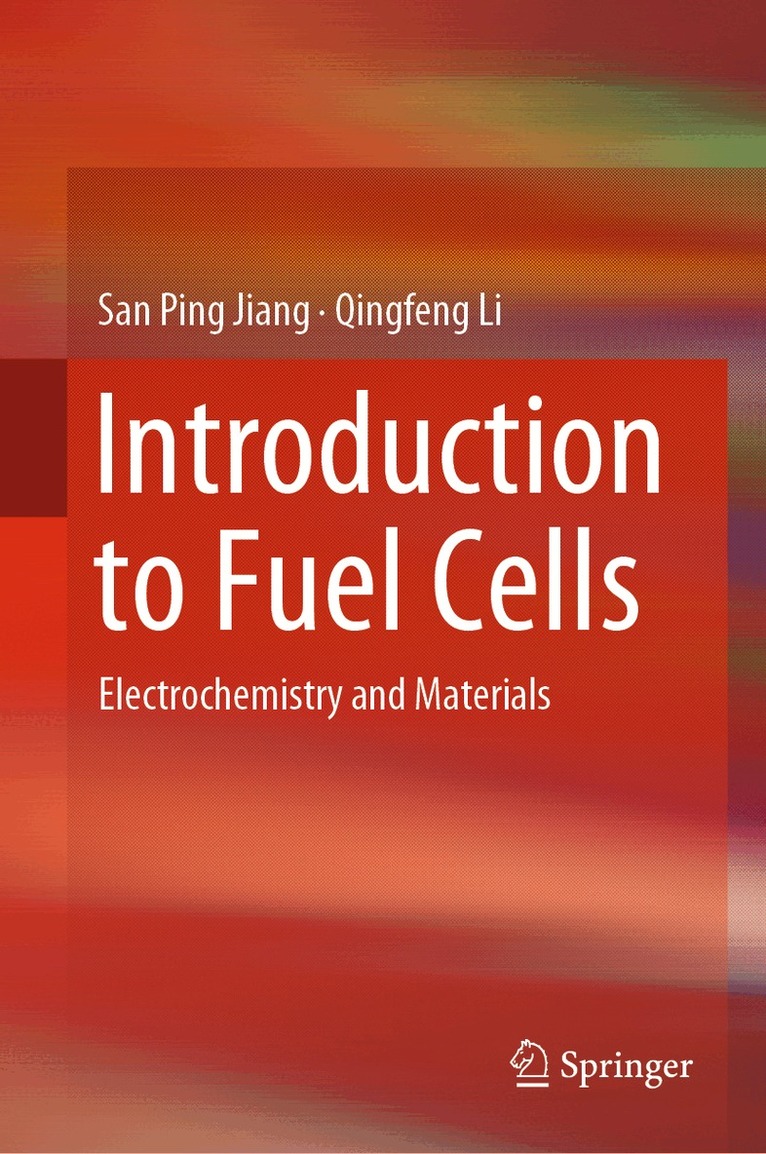
    Introduction to Fuel Cells

    Electrochemistry and Materials

    AvSan Ping Jiang,Qingfeng Li

    Inbunden, Engelska, 2021

    1 192 kr

    Beställningsvara. Skickas inom 10-15 vardagar. Fri frakt över 249 kr.

    Beskrivning

    This textbook covers essential electrochemistry and materials science content and provides an extensive collection of examples in order to bridge the gap between engineering students’ basic knowledge and the concrete skills they need to handle practical problems in fuel cells. The book starts with an introduction to the basic thermodynamics and electrochemistry principles and techniques in fuel cells. It subsequently discusses fuel cell operation principles, electrocatalysts, electrode materials, cell and system configuration and technologies in low-temperature fuel cells such as alkaline fuel cells and proton exchange membrane fuel cells, and in high-temperature fuel cells including solid oxide and molten carbonate fuel cells. Other energy conversion and storage technologies such as supercapacitors, batteries and electrolysis are also covered. A special chapter on laboratory experiments with fuel cells is also included, which can be conducted in conjunction with classroom teaching. Each chapter includes problems and exercises.The book provides students with an engineering background essential information on the basic thermodynamics, electrochemistry and materials of fuel cells, the most efficient and environmentally friend energy conversion technologies, all in a single book.

    Produktinformation

    • Utgivningsdatum:2021-08-24
    • Mått:155 x 235 x 46 mm
    • Vikt:1 279 g
    • Format:Inbunden
    • Språk:Engelska
    • Antal sidor:721
    • Förlag:Springer Verlag, Singapore
    • ISBN:9789811076251

    Utforska kategorier

    • Energiteknik inom Naturvetenskap och teknik
    • Miljövetenskap och miljöpolitik inom Naturvetenskap och teknik
    • Fysikalisk kemi inom Naturvetenskap och teknik

    Mer om författaren

    Dr. San Ping Jiang obtained his BE from South China University of Technology in 1982 and PhD from The City University, London in 1988. He is a Professor at the Department of Chemical Engineering and Deputy Director of Fuels and Energy Technology Institute, Curtin University and Adjunct Professor of the University of Sunshine Coast University, Australia. Before joining Curtin University in 2010, Dr. Jiang worked at Essex University in UK, CSIRO Materials Science and Manufacturing Division, Ceramic Fuel Cells Ltd in Melbourne, Australia and Nanyang Technological University in Singapore. He has over 25 years R and D experience in electrochemical energy conversion and storage technologies. His research interests encompass solid oxide fuel cells, proton exchange membrane fuel cells, water splitting, supercapacitors, solid oxide electrolysers, electrocatalysis and nano- and mesoporous structured functional materials. He has published 315 journal articles, which have accrued over 10,500 citations and a h-index of 58. He has authored and co-authored 12 book chapters, 4 books on fuel cells, and delivered over 70 invited public seminars.   Qingfeng Li is a full professor at the Department of Energy Conversion and Storage, Technical University of Denmark. He received his PhD at the Northeastern University of China in 1990 and in 2006, was awarded the Doctor of Technics in Denmark. He has initialized / coordinated / participated in seven EUs and more than 20 Nordic research projects in the field of electrochemical energy conversion technologies including a Danish-Chinese Research Centre on Proton Conducting Systems. For the time being he is leading a Danish research center funded by Innovation Fund Denmark, devoted to fundamental research on high temperature polymer fuel cells. He has a list of 135 papers published on peer-reviewed journals, with a total citation of over 6000 times and an h-index of 34. He has co-authored four books and 16 book chapters. In addition, he has been teaching a Hydrogen Energy and Fuel Cells course for the last 14 years and an experimental Fuel Cell Chemistry course for nine years at the Technical University of Denmark.

    Innehållsförteckning

    • Introduction.- Fuel Cell Thermodynamics.- Fuel Cell Electrochemistry.- Fuels and Electrocatalysis for fuel cells.- Low Temperature Fuel Cells.- High temperature fuel cells.- Other electrochemical energy conversion and storage techniques.- Outlook.- Laboratory experiments for fuel cells