• Fri frakt över 249 kr
  • •
  • Snabba leveranser
  • •
  • Billiga böcker
Kundservice

Du är på sajten för privatpersoner.

Företag, bibliotek eller offentlig verksamhet?

Du handlar på classic.bokus.com, där alla dina funktioner finns intakta.
Till classic.bokus.com
Bokus logotyp. Gå till startsidan.
  • Erbjudanden
  • Nyheter
  • Student
  • Topplistor
  • Barn & ungdom
  • Bokus Play
  • E-böcker
  • Pocketböcker
  • Spel & pussel

10% rabatt på allt med kod NYSTART10 →

Sidfot

Mina sidor

    Hjälp

    • Kundservice
    • Vanliga frågor och svar
    • Frakt och leverans
    • Retur vid ångerrätt
    • Reklamera vara
    • Betalning
    • Köpvillkor
    • Allmänna villkor
    • Information om webbplatsens tillgänglighet

    Om Bokus

    • Om oss
    • Pressrum
    • För studenter
    • För företag
    • För bibliotek och offentlig verksamhet
    • För leverantörer
    • Hållbarhet

    Populärt

    • Aktuella erbjudanden
    • Presentkort
    • Studentlitteratur
    • Nya böcker
    • Topplistor
    • Signerade böcker
    • Engelska böcker

    Inspiration

    • Boktips
    • BookTok
    • Populära bokserier
    • Barnbokskaraktärer
    • Populära författare
    Logotyp för Bokus
    Följ oss på Facebook (extern länk)Följ oss på Instagram (extern länk)Följ oss på YouTube (extern länk)Följ oss på TikTok (extern länk)
    bokus @ CookiesAnpassa cookiesIntegritetspolicyKöpvillkor
    Till Citymail hemsida (extern länk)Till Budbee hemsida (extern länk)Till Postnord hemsida (extern länk)Till Schenker hemsida (extern länk)Till Early Bird hemsida (extern länk)Till Walleys hemsida (extern länk)
    1. Naturvetenskap och teknik
    2. Geovetenskap
    3. Geovetenskap

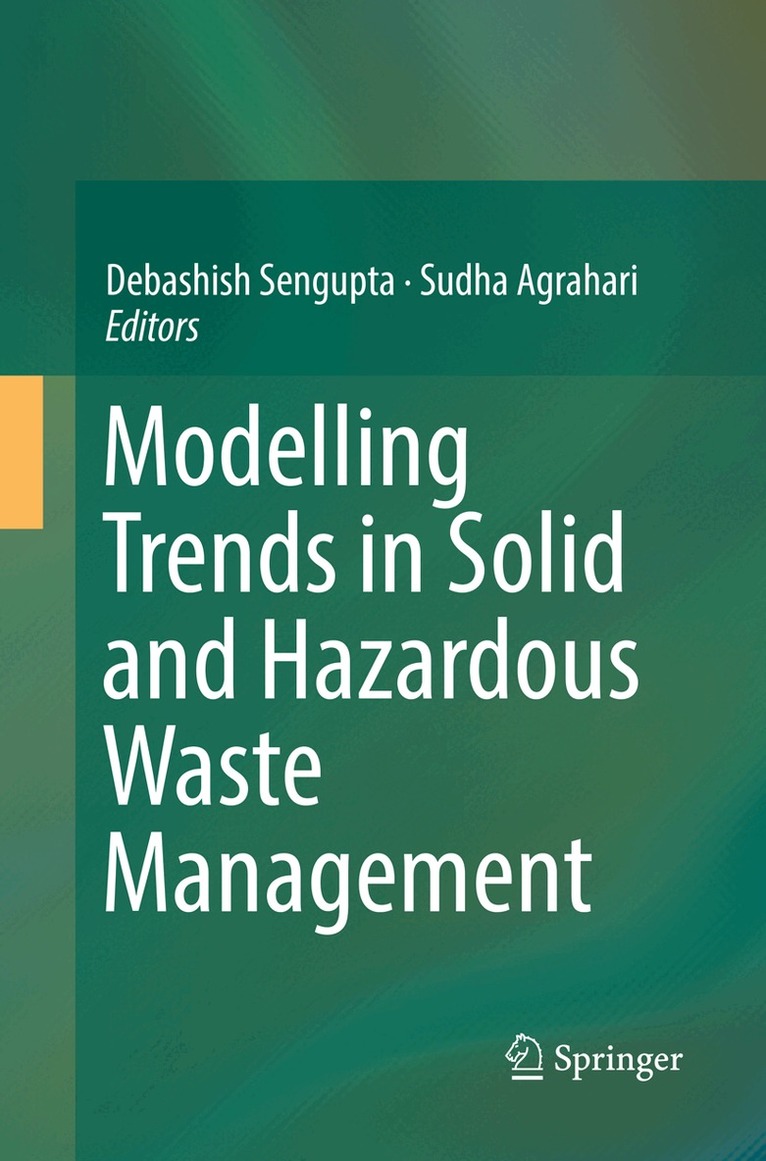
    Modelling Trends in Solid and Hazardous Waste Management

    AvDebashish Sengupta,Sudha Agrahari

    Häftad, Engelska, 2018

    1 086 kr

    Beställningsvara. Skickas inom 10-15 vardagar. Fri frakt över 249 kr.

    Beskrivning

    This book explores state-of-art techniques based on methodological and modeling aspects of solid and hazardous waste management, specifically focusing on the recent trends in data acquisition and robust modeling of the results obtained. In addition to an in-depth description of the recent regulatory paradigm for solid waste disposal and revealing insights into solid waste management models, the book also addresses significant case history and remediation methodologies for sustainable development in emerging economies like India, China and Brazil.The main emphasis is on a suitable regulatory framework with site-specific baseline calibration and aimed at the robust modeling of contaminant transport and its remediation. This is based on instructive case history in various locations/regions worldwide. The focus on recent modeling and quantification methods is the backbone of the book. One of the major aspects discussed is the application of non-invasive methods for studies related to the Earth's interior, which are increasingly preferred over invasive techniques thanks to their economic utility, as well as robust techniques for the interpretation of geophysical data. The increasing demand for groundwater and energy resources, especially for rapidly emerging countries with large populations like India and China, has made it vital to derive safe utilization approaches for our resources, including suitable waste disposal and remediation methodologies that can be adopted for 'contaminated sites.'

    Produktinformation

    • Utgivningsdatum:2018-04-30
    • Mått:155 x 235 x 11 mm
    • Vikt:289 g
    • Format:Häftad
    • Språk:Engelska
    • Antal sidor:171
    • Förlag:Springer Verlag, Singapore
    • ISBN:9789811096099

    Utforska kategorier

    • Geovetenskap inom Naturvetenskap och teknik
    • Miljövetenskap och miljöpolitik inom Naturvetenskap och teknik
    • Miljöteknik inom Naturvetenskap och teknik

    Mer om författaren

    Dr. Debashish Sengupta is a Professor, Higher Administrative Grade and Ex-Head of the Department of Geology and Geophysics at the Indian Institute of Technology Kharagpur, West Bengal, India. Dr. Sengupta completed his Ph.D. in Applied Geophysics in 1987, and has more than 25 years of teaching and research experience. His areas of interests are Nuclear Geophysics including petroleum logging using subsurface nuclear data, Radioactive Methods and Geochronology, Radon Emanometry and its applications, Applications of Isotopes and Radionuclides in Earth and Environmental Geosciences, Heat flow and Geothermics. Dr. Sengupta has authored more than 90 research publications in International Journals and more than 50 papers in Conference Proceedings, in addition to a large number of Invited Talks delivered both in India and abroad. His research work has been seminal and resulted in the formulation of Environmental Regulation policies in various countries of Asia, North and South America and the European Union. Dr. Sengupta had also been a Visiting Professor at the University of Sao Paulo, Brazil and a Senior Visiting Professor at the University of Salamanca, Spain. He received the Society of Geoscientists and Allied Technologists (SGAT’s) Award of Excellence in Earth Sciences for the year 2003. To date, 10 students have been awarded PhD degrees under his supervision.Dr. Sudha Agrahari is an Assistant Professor in the Department of Geology and Geophysics at the Indian Institute of Technology Kharagpur, India. She completed her PhD in 2010, followed by three years of post-doctoral research experience in the field of helicopter-borne Electromagnetics at the University of Cologne, Germany. Her research interests include Unconventional Energy Resources, Study of Joint Inversion of Electrical and Electromagnetic Methods for Environmental Applications, and Modeling and Simulation of Geophysical Data. She has disseminated her research through publications in international journals and book chapters.

    Innehållsförteckning

    • Chapter 1. Radioactive Waste Disposal of Medical Waste.- Chapter 2. Heavy Metal/Radionuclide Contaminant Migration in the Vicinity of Thermal Power Plants: Monitoring, Remediation and Utilization.- Chapter 3. Legislative Framework for Solid Waste Management in India and USA.- Chapter 4. A Review of Solid Waste Management Models: Prediction, Optimization and Cost.- Chapter 5. Shale Gas: Hydrofracking, its Effects and Possible Remediation.- Chapter 6. Characterization and Motoring of Solid Waste Disposal Sites Using Geophysical Methods: Current Applications and Novel Trends.- Chapter 7. Uranium Resource Development and Sustainability – Indian Case Study.- Chapter 8. Recent Trends in Management of Hazardous Waste.- Chapter 9. The Change from Aerobic to Anaerobic Landfilling and the Increase of Correspondent Emissions and Expenses.- Chapter 10. Microbial Fuel Cells in Solid Waste Valorization: Trends and Applications.