• Fri frakt över 249 kr
  • •
  • Snabba leveranser
  • •
  • Billiga böcker
Kundservice

Du är på sajten för privatpersoner.

Företag, bibliotek eller offentlig verksamhet?

Du handlar på classic.bokus.com, där alla dina funktioner finns intakta.
Till classic.bokus.com
Bokus logotyp. Gå till startsidan.
  • Erbjudanden
  • Nyheter
  • Student
  • Topplistor
  • Barn & ungdom
  • Bokus Play
  • E-böcker
  • Pocketböcker
  • Spel & pussel

10% studentrabatt med kod TERM26

Sidfot

Mina sidor

    Hjälp

    • Kundservice
    • Vanliga frågor och svar
    • Frakt och leverans
    • Retur vid ångerrätt
    • Reklamera vara
    • Betalning
    • Köpvillkor
    • Allmänna villkor
    • Information om webbplatsens tillgänglighet

    Om Bokus

    • Om oss
    • Pressrum
    • För studenter
    • För företag
    • För bibliotek och offentlig verksamhet
    • För leverantörer
    • Hållbarhet

    Populärt

    • Aktuella erbjudanden
    • Presentkort
    • Studentlitteratur
    • Nya böcker
    • Topplistor
    • Signerade böcker
    • Engelska böcker

    Inspiration

    • Boktips
    • BookTok
    • Populära bokserier
    • Barnbokskaraktärer
    • Populära författare
    Logotyp för Bokus
    Följ oss på Facebook (extern länk)Följ oss på Instagram (extern länk)Följ oss på YouTube (extern länk)Följ oss på TikTok (extern länk)
    bokus @ CookiesAnpassa cookiesIntegritetspolicyKöpvillkor
    Till Citymail hemsida (extern länk)Till Budbee hemsida (extern länk)Till Postnord hemsida (extern länk)Till Schenker hemsida (extern länk)Till Early Bird hemsida (extern länk)Till Walleys hemsida (extern länk)
    1. Historia och arkeologi
    2. Historia
    3. Historia: särskilda händelser och ämnen
    4. Kolonialism och imperialism

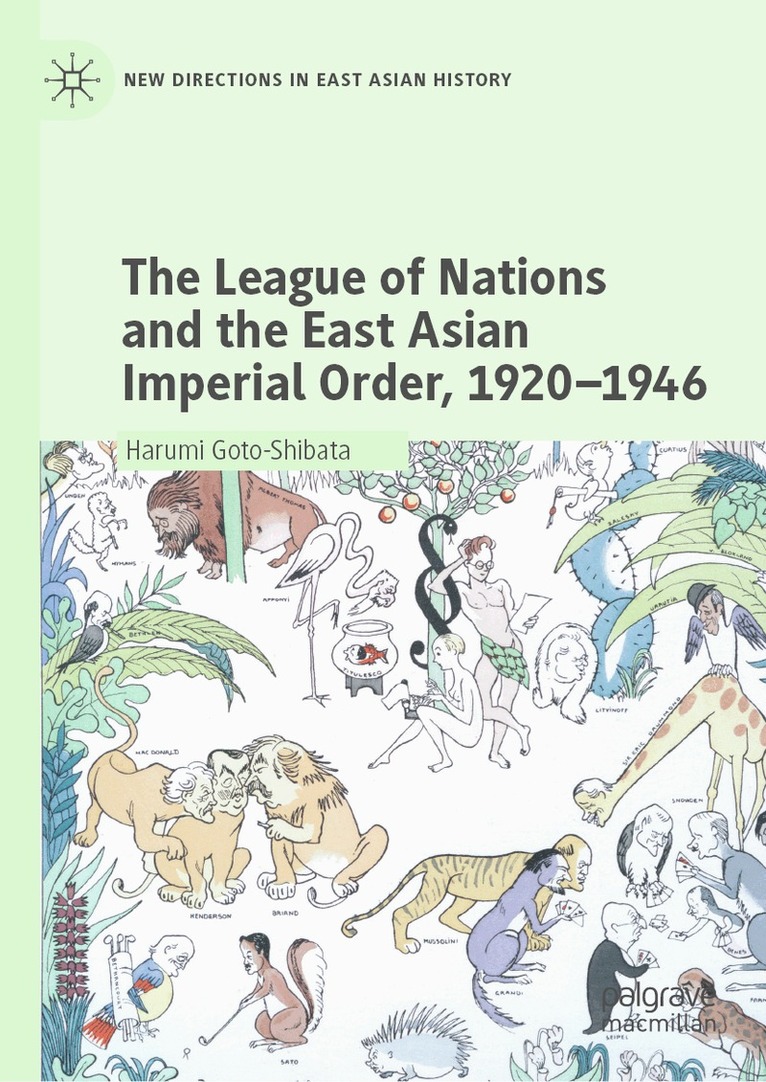
    League of Nations and the East Asian Imperial Order, 1920–1946

    AvHarumi Goto-Shibata

    Häftad, Engelska, 2021

    Del i serien New Directions in East Asian History

    665 kr

    Beställningsvara. Skickas inom 5-8 vardagar. Fri frakt över 249 kr.

    Fler format och utgåvor

    Inbunden

    665 kr

    E-bok

    1 455 kr

    Beskrivning

    Well-grounded on abundant Japanese language sources which have been underused, this book uncovers the League of Nations’ works in East Asia in the inter-war period. By researching the field of social and other technical issues, namely, the trade in narcotics, the trafficking of women and the work in terms of improving health provision and providing economic advice to Nationalist China, it not only examines their long-term impacts on the international relations in the region but also argues that the League’s works challenged the existing imperial order of East and Southeast Asia. The book offers a key read for academics and students of international history and international relations, and others studying Japan or East Asia in the twentieth century.

    Produktinformation

    • Utgivningsdatum:2021-07-03
    • Mått:148 x 210 x 17 mm
    • Vikt:401 g
    • Format:Häftad
    • Språk:Engelska
    • Serie:New Directions in East Asian History
    • Antal sidor:295
    • Förlag:Springer Verlag, Singapore
    • ISBN:9789811549700

    Utforska kategorier

    • Kolonialism och imperialism inom Historia och arkeologi
    • Referensverk och tvärvetenskap inom Samhälle och politik
    • Asiens historia inom Historia och arkeologi

    Mer om författaren

    Harumi Goto-Shibata is Professor of International History at the Department of Advanced Social and International Studies, Graduate School of Arts and Sciences, University of Tokyo, Japan. Her prior publications include Japan and Britain in Shanghai, 1925-31 (Macmillan, St Antony’s series, 1995) as well as three single-authored books, and two co-edited books in Japanese.

    Recensioner i media

    “The book is a valuable contribution to the knowledge of the League’s work, especially in China, which offers historians many valuable insights and starting points for further research. … the book outlines some of the origins of China’s operations in international organizations, evolving from a semi-colonial recipient of international aid to one of the world’s most powerful states, aspiring to be a leader in global multilateral politics in the twenty-first century.” (Thomas Gidney, H-Soz-Kult, hsozkult.de, November 2, 2022)“This is a meticulously researched work based largely on primary archival sources. The use of sources … presents the perspective of governmental and League actors. In doing so, Goto-Shibata shows not only the immense influence that Western powers … had on the League’s technical work in Asia but also the sympathy of League officials towards the countries they operated in. … the book is a valuable contribution to the knowledge of the League’s work, especially in China, which offers historians many valuable insights and starting points for further research.” (Thomas Gidney, Connections, October 28, 2022)“Harumi Goto-Shibata is … interested in the practices and the actors constituting the fabric of international order, including the work of international civil servants, cooperation with national authorities, and the importance of conferences and forums. … Goto-Shibata focuses on how the League of Nations promoted international cooperation in East Asia; she stresses the importance of ‘social and humanitarian works,’ among others in China, which have been neglected by other historians working on the region … .” (Quincy Cloet, Diplomatica, Vol. 4 (2), August, 2022)“This book is a valuable contribution to the scholarship on the League, which is enjoying a significant renaissance … . In fact, the most growing area in this ‘new history’ of the League is its social affairs. ‘Social and technical issues’ which this book deals with are: opium (and dangerous drug) control, technical cooperation … and trafficking in women. … And it has a distinct value because many of these works still focus largely on Euro-American contexts.” (Tomoko Akami, The East Asian Journal of British History, Vol. 8, 2021)

    Innehållsförteckning

    • Introduction.- Part I The League of Nations as Forums and Actors.- Social and Humanitarian Issues of the League of Nations.- Challenging the Imperial Order: Control of Opium.- Expanding the Range: Japan’s Reaction to the Technical Co-operation with China.- The TWC as Another Forum and Women.- Part II Contested Power and Authority.- Japan’s Withdrawal and China’s Request for a Seat on the Council.- Who Controls the Co-operation: Technical Co-operation after the Outbreak of the Sino-Japanese War.- The Question of Empires: Co-operation in the Yunnan-Burma Borderland in 1939.- The Limits of the League’s Control of Opium.- East Asia in the Architecture of the Post-War World: From the League to the UN Economic and Social Council.- Conclusion.