Häftad, Engelska, 2023
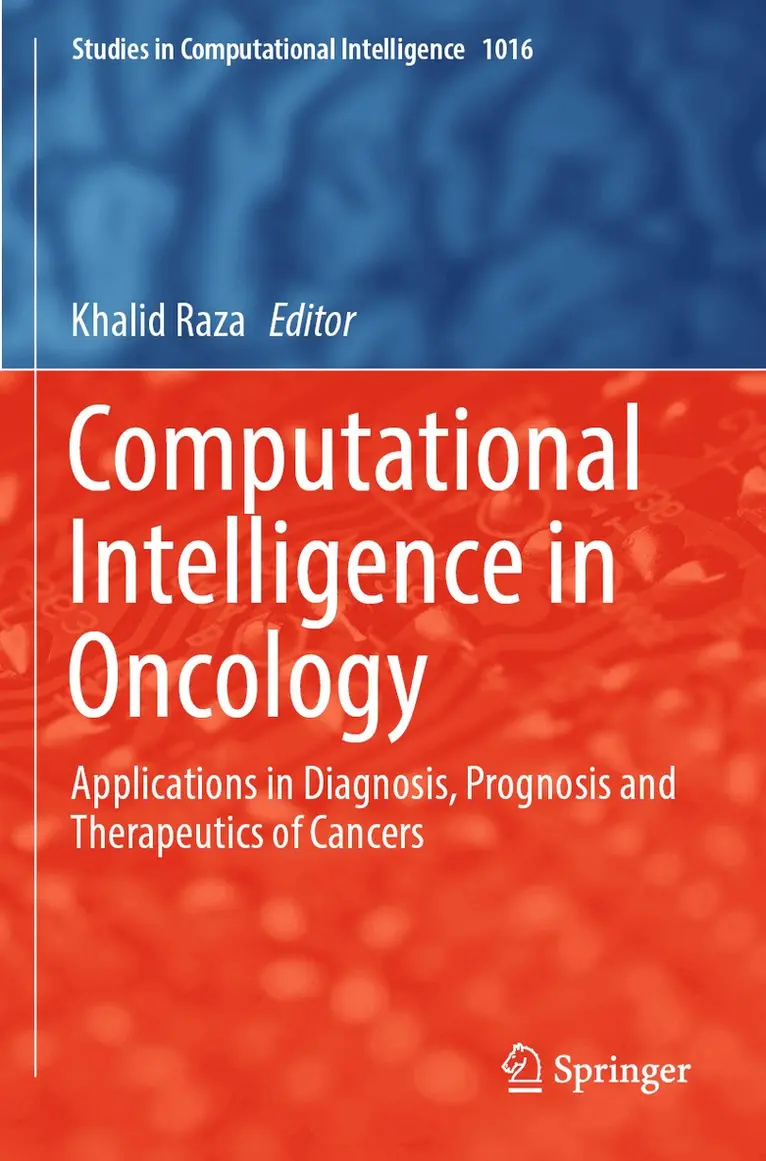
Computational Intelligence in Oncology
Av Khalid Raza
1910 kr
Beställningsvara. Skickas inom 10-15 vardagar. Fri frakt över 249 kr.
Beskrivning
This book encapsulates recent applications of CI methods in the field of computational oncology, especially cancer diagnosis, prognosis, and its optimized therapeutics.The cancer has been known as a heterogeneous disease categorized in several different subtypes. According to WHO’s recent report, cancer is a leading cause of death worldwide, accounting for over 10 million deaths in the year 2020. Therefore, its early diagnosis, prognosis, and classification to a subtype have become necessary as it facilitates the subsequent clinical management and therapeutics plan. Computational intelligence (CI) methods, including artificial neural networks (ANNs), fuzzy logic, evolutionary computations, various machine learning and deep learning, and nature-inspired algorithms, have been widely utilized in various aspects of oncology research, viz. diagnosis, prognosis, therapeutics, and optimized clinical management. Appreciable progress has been made toward the understanding the hallmarks of cancer development, progression, and its effective therapeutics. However, notwithstanding the extrinsic and intrinsic factors which lead to drastic increment in incidence cases, the detection, diagnosis, prognosis, and therapeutics remain an apex challenge for the medical fraternity. With the advent in CI-based approaches, including nature-inspired techniques, and availability of clinical data from various high-throughput experiments, medical consultants, researchers, and oncologists have seen a hope to devise and employ CI in various aspects of oncology. The main aim of the book is to occupy state-of-the-art applications of CI methods which have been derived from core computer sciences to back medical oncology. This edited book covers artificial neural networks, fuzzy logic and fuzzy inference systems, evolutionary algorithms, various nature-inspired algorithms, and hybrid intelligent systems which are widely appreciated for the diagnosis, prognosis, and optimization of therapeutics of various cancers. Besides, this book also covers multi-omics exploration, gene expression analysis, gene signature identification of cancers, genomic characterization of tumors, anti-cancer drug design and discovery, drug response prediction by means of CI, and applications of IoT, IoMT, and blockchain technology in cancer research.
Produktinformation
- Utgivningsdatum: 2023-03-03
- Mått: 155 x 235 x 27 mm
- Vikt: 733 g
- Format: Häftad
- Språk: Engelska
- Serie: Studies in Computational Intelligence
- Antal sidor: 467
- Förlag: Springer Verlag, Singapore
- ISBN: 9789811692239
Utforska kategorier
Betyg & recensioner
0 recensioner
Inga recensioner tillgängliga.