• Fri frakt över 249 kr
  • •
  • Snabba leveranser
  • •
  • Billiga böcker
Kundservice

Du är på sajten för privatpersoner.

Företag, bibliotek eller offentlig verksamhet?

Du handlar på classic.bokus.com, där alla dina funktioner finns intakta.
Till classic.bokus.com
Bokus logotyp. Gå till startsidan.
  • Erbjudanden
  • Nyheter
  • Student
  • Topplistor
  • Barn & ungdom
  • Bokus Play
  • E-böcker
  • Pocketböcker
  • Spel & pussel

10% rabatt på allt med kod: NYSTART10 →

Sidfot

Mina sidor

    Hjälp

    • Kundservice
    • Vanliga frågor och svar
    • Frakt och leverans
    • Retur vid ångerrätt
    • Reklamera vara
    • Betalning
    • Köpvillkor
    • Allmänna villkor
    • Information om webbplatsens tillgänglighet

    Om Bokus

    • Om oss
    • Pressrum
    • För studenter
    • För företag
    • För bibliotek och offentlig verksamhet
    • För leverantörer
    • Hållbarhet

    Populärt

    • Aktuella erbjudanden
    • Presentkort
    • Studentlitteratur
    • Nya böcker
    • Topplistor
    • Signerade böcker
    • Engelska böcker

    Inspiration

    • Boktips
    • BookTok
    • Populära bokserier
    • Barnbokskaraktärer
    • Populära författare
    Logotyp för Bokus
    Följ oss på Facebook (extern länk)Följ oss på Instagram (extern länk)Följ oss på YouTube (extern länk)Följ oss på TikTok (extern länk)
    bokus @ CookiesAnpassa cookiesIntegritetspolicyKöpvillkor
    Till Citymail hemsida (extern länk)Till Budbee hemsida (extern länk)Till Postnord hemsida (extern länk)Till Schenker hemsida (extern länk)Till Early Bird hemsida (extern länk)Till Walleys hemsida (extern länk)
    1. Samhälle och politik
    2. Samhälle och kultur
    3. Kultur och medier
    4. Referensverk och tvärvetenskap

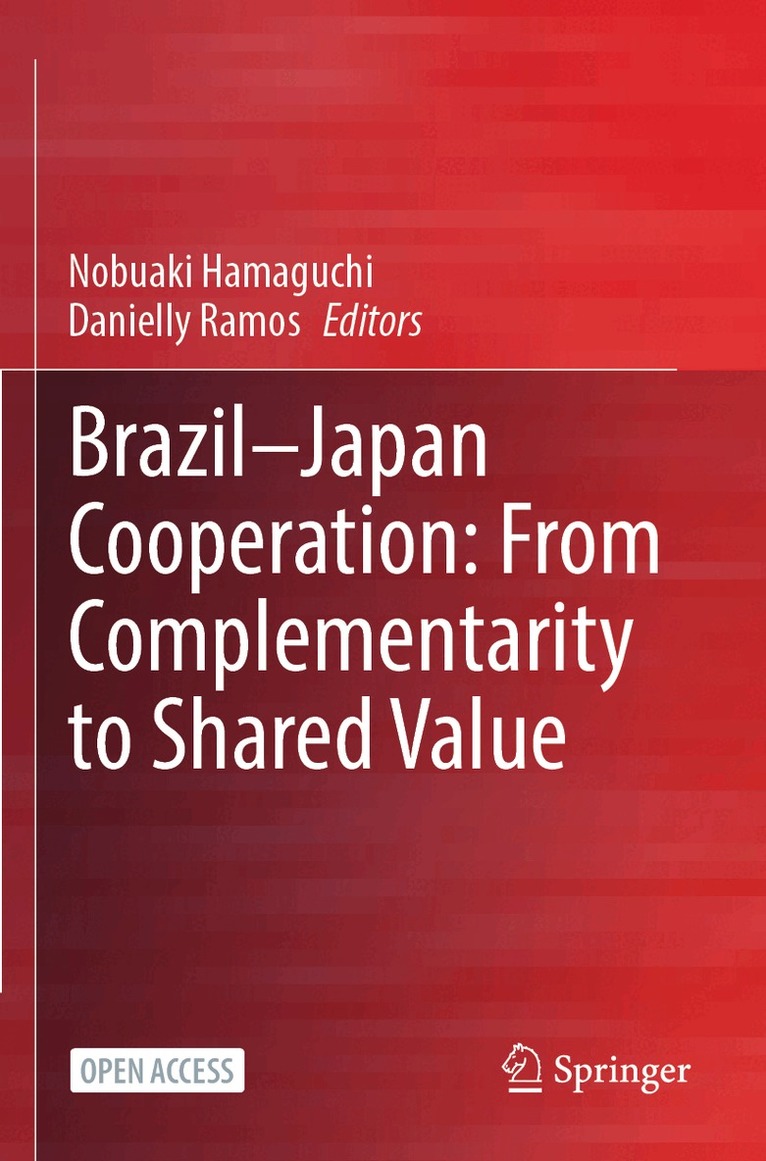
    Brazil—Japan Cooperation: From Complementarity to Shared Value

    AvNobuaki Hamaguchi,Danielly Ramos

    Häftad, Engelska, 2022

    438 kr

    Beställningsvara. Skickas inom 10-15 vardagar. Fri frakt över 249 kr.

    Beskrivning

    This is an open access book. Relations between Brazil and Japan progressed dynamically in the 1960s and 1970s, centering on the substantial complementarity between Japan’s needing primary goods to sustain high economic growth and Brazil’s seeking non-hegemonic investment to invigorate its resource potential. Now that this complementarity has lost significance, the two countries are restructuring their relations to protect shared values of democracy, freedom, the rule of law, and the need for maintaining good relations with both China and the United States.Analyzed here is the development of this renewed bilateral relationship in multiple directions: productivity, global environment and health, migration, and triangular cooperation in third countries’ development. Facing the prospect of a declining population, Japan may become more open to international migration, but the experience with Japanese-descent Brazilian workers since the amendment of the migration control law in 1990 presents many lessons and challenges for the symbiosis of multicultural groups. Brazil, for its part, needs to address social inequality. To this end, it is fundamental to improve the quality of work.This book argues that Brazil and Japan can benefit from cooperation in managing those country-specific issues. It also discusses ways that Brazil and Japan can profit from coordinating action on global problems such as greenhouse gas reduction, mitigation of tropical diseases, healthy community building, and high-quality infrastructure for poverty reduction.

    Produktinformation

    • Utgivningsdatum:2022-10-02
    • Mått:155 x 235 x 15 mm
    • Vikt:356 g
    • Format:Häftad
    • Språk:Engelska
    • Antal sidor:214
    • Förlag:Springer Verlag, Singapore
    • ISBN:9789811940316

    Utforska kategorier

    • Referensverk och tvärvetenskap inom Samhälle och politik
    • Internationell ekonomi inom Ekonomi och Ledarskap
    • Internationella relationer inom Samhälle och politik

    Mer om författaren

    Nobuaki Hamaguchi is a professor at the Research Institute for Economics and Business Administration (RIEB) at Kobe University, Japan. He holds a Ph.D. degree in regional science from the University of Pennsylvania, USA. His research interests are in regional/industrial policies and economic integration. From 2011 to date, he has been a program director and a faculty fellow of the Research Institute of Economy, Trade, and Industry (RIETI). He is the co-author of Spatial Economics for Building Back Better: The Japanese Experience (Springer 2021) and Cutting the Distance: Benefits and Tensions from the Recent Active Engagement of China, Japan, and Korea in Latin America (Springer 2018).  Danielly Ramos, Ph.D., is an associate professor at the Institute of International Relations and director of the Center for Global Studies at the University of Brasília (UnB). She coordinates the Asia–Latin America and Caribbean research group (ASIALAC). Her research focuses on Brazil’s foreign policy and Asia–Latin America relations. Her publications probe China’s foreign direct investment in Latin America and the Caribbean, inter alia, especially connections between Chinese multinational corporations’ investments and Brazil's domestic political economy. She is the co-author of “Rise and Fall of Triumphalism in Brazilian Foreign Policy: The International Strategy of the Workers Party’s Governments” in Status and the Rise of Brazil (Palgrave Macmillan) and “One Step Closer: The Politics and the Economics of China's Strategy in Brazil and the Case of the Electric Power Sector” in China–Latin America Relations in the 21st Century (Springer 2020).

    Innehållsförteckning

    • Brazil - Japan Relationship: A Partnership? (Henrique Altemani de Oliveira and Antonio Carlos Lessa).- Global Environmental Governance and ODA from Japan to Brazil (Shuichiro Masukata, Cristina Y. A. Inoue, and Nanahira de Rabelo e Sant’Anna).- Global Health (Rodrigo Pires de Campos and Saori Kawai).- Trilateral Cooperation for Infrastructure (Akiko Koyasu and Danielly Ramos).- Brazilian Workers in Japan and Public Policies for Promoting their Social Integration with a Focus on Basic Education to the Children (Mauricio Bugarin and Keiichi Yamazaki).