• Fri frakt över 249 kr
  • •
  • Snabba leveranser
  • •
  • Billiga böcker
Kundservice

Du är på sajten för privatpersoner.

Företag, bibliotek eller offentlig verksamhet?

Du handlar på classic.bokus.com, där alla dina funktioner finns intakta.
Till classic.bokus.com
Bokus logotyp. Gå till startsidan.
  • Erbjudanden
  • Nyheter
  • Student
  • Topplistor
  • Barn & ungdom
  • Bokus Play
  • E-böcker
  • Pocketböcker
  • Spel & pussel

Må bättre, för mindre! Upp till 50% rabatt på hälsoböcker

Sidfot

Mina sidor

    Hjälp

    • Kundservice
    • Vanliga frågor och svar
    • Frakt och leverans
    • Retur vid ångerrätt
    • Reklamera vara
    • Betalning
    • Köpvillkor
    • Allmänna villkor
    • Information om webbplatsens tillgänglighet

    Om Bokus

    • Om oss
    • Pressrum
    • För studenter
    • För företag
    • För bibliotek och offentlig verksamhet
    • För leverantörer
    • Hållbarhet

    Populärt

    • Aktuella erbjudanden
    • Presentkort
    • Studentlitteratur
    • Nya böcker
    • Topplistor
    • Signerade böcker
    • Engelska böcker

    Inspiration

    • Boktips
    • BookTok
    • Populära bokserier
    • Barnbokskaraktärer
    • Populära författare
    Logotyp för Bokus
    Följ oss på Facebook (extern länk)Följ oss på Instagram (extern länk)Följ oss på YouTube (extern länk)Följ oss på TikTok (extern länk)
    bokus @ CookiesAnpassa cookiesIntegritetspolicyKöpvillkor
    Till Citymail hemsida (extern länk)Till Budbee hemsida (extern länk)Till Postnord hemsida (extern länk)Till Schenker hemsida (extern länk)Till Early Bird hemsida (extern länk)Till Walleys hemsida (extern länk)
    1. Historia och arkeologi
    2. Historia
    3. Historia: särskilda händelser och ämnen

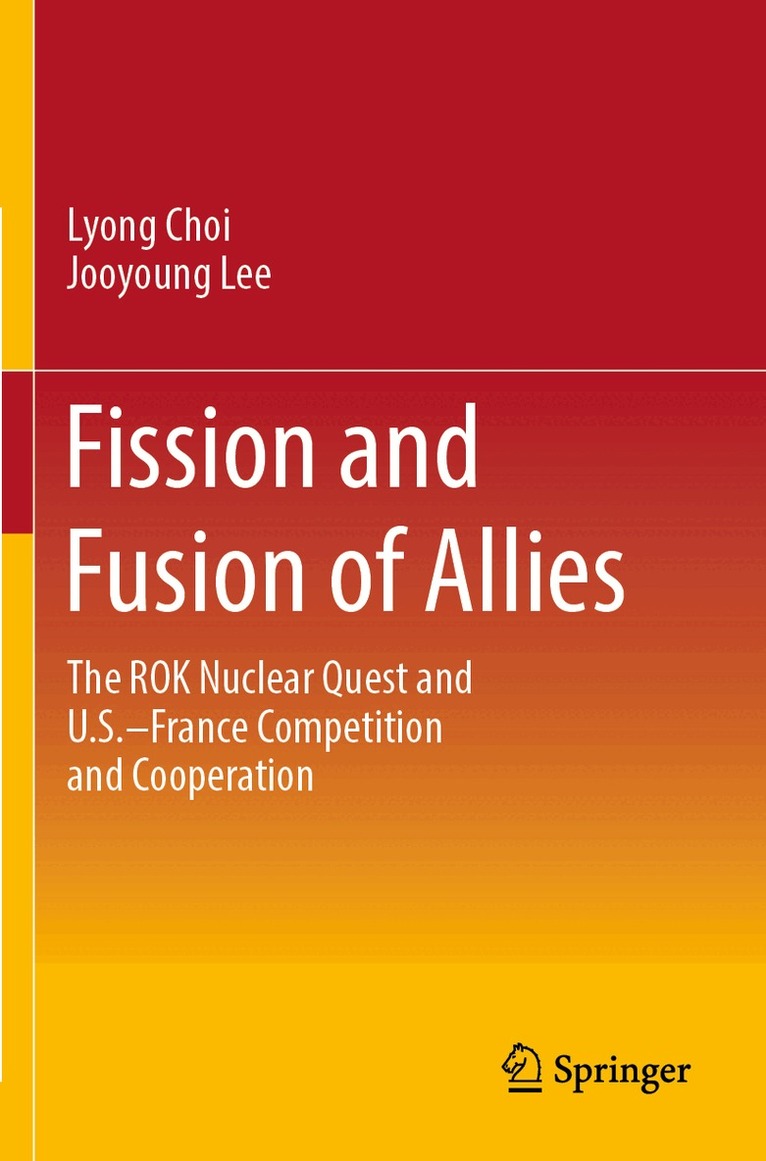
    Fission and Fusion of Allies

    The ROK Nuclear Quest and U.S.–France Competition and Cooperation

    AvLyong Choi,Jooyoung Lee

    Häftad, Engelska, 2024

    1 452 kr

    Beställningsvara. Skickas inom 10-15 vardagar. Fri frakt över 249 kr.

    Fler format och utgåvor

    Inbunden

    1 452 kr

    Beskrivning

    This book traces the development of U.S-led global nuclear non-proliferation diplomacy during the three decades since the Eisenhower’s “Atoms for Peace” in 1953. The U.S. non-proliferation efforts had diverse obstacles. It had to prevent nuclear states’ export of nuclear technology while dissuading non-nuclear states from developing nuclear weapons. In addition, building non-proliferation regime was not always its top foreign policy priority. To understand the complex process of non-proliferation, the book examines the relations among three different actors in the nuclear field: a global non-proliferation regime builder (U.S.), a potential nuclear proliferator (France) and a would-be nuclear state (Republic of Korea). In tracing how they developed nuclear strategies, conflicting and compromising with one another, the book pays special attention to how the transforming Cold War structure in the 1970s not only affected foreign policies of the involved countries but also complicated theirrelationship. The exploration ultimately highlights the multidimensional nature of international discussion on nuclear non-proliferation as the ROK’s nuclear development attempts, U.S. non-proliferation efforts, and the U.S.-France nuclear technology cooperation in the 1970s were all deeply connected.

    Produktinformation

    • Utgivningsdatum:2024-04-02
    • Mått:155 x 235 x 8 mm
    • Vikt:201 g
    • Format:Häftad
    • Språk:Engelska
    • Antal sidor:110
    • Förlag:Springer Verlag, Singapore
    • ISBN:9789811998034

    Utforska kategorier

    • Historia: särskilda händelser och ämnen inom Historia och arkeologi
    • Referensverk och tvärvetenskap inom Samhälle och politik
    • Statsvetenskap och politisk teori inom Samhälle och politik

    Mer om författaren

    Lyong Choi is Associate Professor of the Asia-Pacific Research Center at Hanyang University. He was Associate Professor of Political Science and Sociology at the Korea Military Academy when this book was written. He obtained a Ph.D. in international history from the London School of Economics and Political Science. His research focuses on issues of modern and contemporary American, East Asian, and Korean history. He published “Human Rights, Popular Protest and Jimmy Carter’s Plan to Withdraw U.S. Troops from South Korea” for Diplomatic History in 2017, “North Korea and Zimbabwe, 1978–1982: from the strategic alliance to the symbolic comradeship between Kim Il Sung and Robert Mugabe” in 2017 and “Re-thinking Normalization between ROK and PRC in the Early 1990s: The South Korean Perspective” in 2014, and “The First Nuclear Crisis in the Korean Peninsula, 1975- 76,” in 2013 for Journal of Cold War History.Jooyoung Lee (Ph.D., History, Brown University) is anAssistant Professor in the School of Liberal Arts at Ulsan National Institute of Science and Technology in South Korea. His research topics include the histories of U.S. democracy promotion, transnational human rights politics, and international nuclear diplomacy. He is particularly interested in examining the roles that various ideas such as democracy, human rights, liberalism have played in international relations. He also considers U.S. diplomacy in the global context by paying attention to how U.S. policy has been constrained on the stage of international relations and how the U.S. has tried to overcome these constraints. He has published articles in Interventions, Diplomatic History, Journal of American-East Asian Relations as well as in several Korean history journals.

    Innehållsförteckning

    • Prologue.- Chapter 1 The Origin of the ROK Nuclear Program.- Chapter 2 The U.S. and the Emerging Threat of Proliferation: Opportunities and risks for the non-proliferation regimes created in the changing context of the Cold War order, 1960–1974.- Chapter 3 The Rise and Downfall of Gaullism and France’s Nuclear Deals with Third World States, 1945–1974.- Chapter 4 The Coexistence of the ROK–France–IAEA Nuclear Cooperation Agreement and the ROK–U.S. Nuclear Cooperation Agreement, 1975.- Chapter 5 The Fall of the Gaullist Technocrats and End of the ROK Nuclear weapons Program, 1976–79; Epilogue.