Lyong Choi – författare
Visar alla böcker från författaren . Handla med fri frakt och snabb leverans.
4 produkter
4 produkter
Inbunden, Engelska, 2023
1 439 kr
Skickas inom 10-15 vardagar
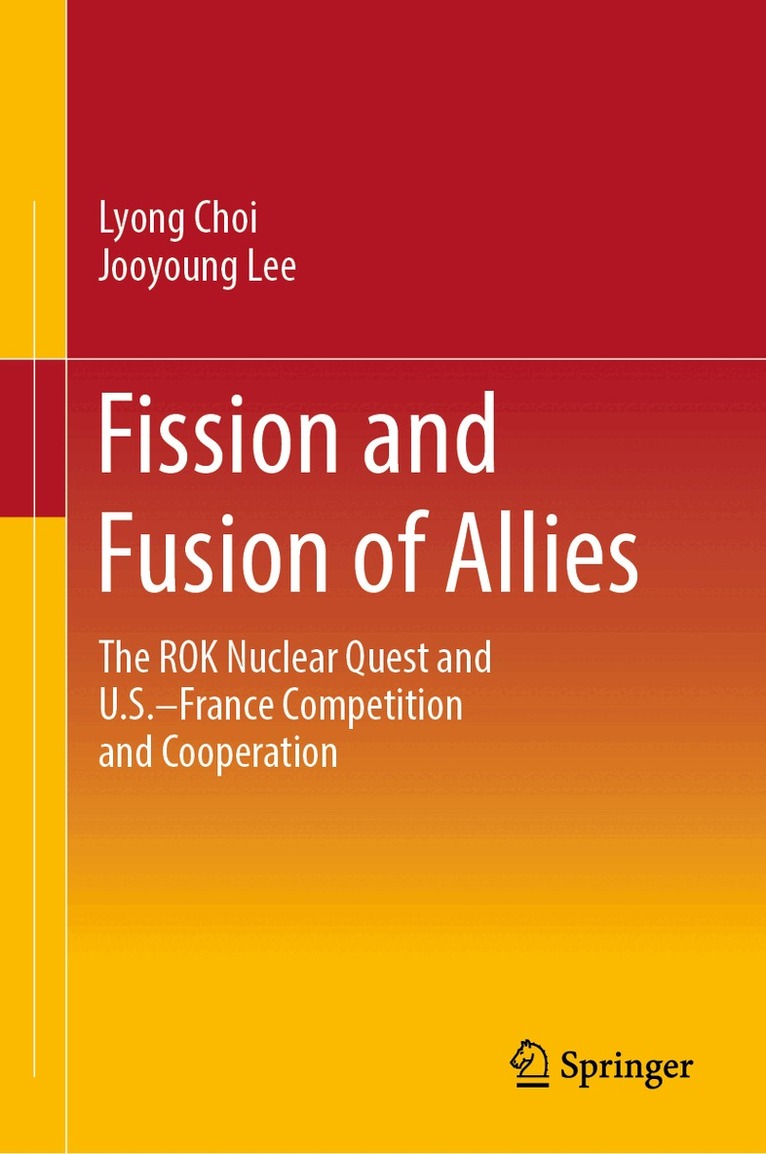
This book traces the development of U.S-led global nuclear non-proliferation diplomacy during the three decades since the Eisenhower’s “Atoms for Peace” in 1953. The U.S. non-proliferation efforts had diverse obstacles. It had to prevent nuclear states’ export of nuclear technology while dissuading non-nuclear states from developing nuclear weapons. In addition, building non-proliferation regime was not always its top foreign policy priority. To understand the complex process of non-proliferation, the book examines the relations among three different actors in the nuclear field: a global non-proliferation regime builder (U.S.), a potential nuclear proliferator (France) and a would-be nuclear state (Republic of Korea). In tracing how they developed nuclear strategies, conflicting and compromising with one another, the book pays special attention to how the transforming Cold War structure in the 1970s not only affected foreign policies of the involved countries but also complicated theirrelationship. The exploration ultimately highlights the multidimensional nature of international discussion on nuclear non-proliferation as the ROK’s nuclear development attempts, U.S. non-proliferation efforts, and the U.S.-France nuclear technology cooperation in the 1970s were all deeply connected.
E-bok
Engelska, 20231 785 kr
Läs direkt efter köp
This book traces the development of U.S-led global nuclear non-proliferation diplomacy during the three decades since the Eisenhower’s “Atoms for Peace” in 1953. The U.S. non-proliferation efforts had diverse obstacles. It had to prevent nuclear states’ export of nuclear technology while dissuading non-nuclear states from developing nuclear weapons. In addition, building non-proliferation regime was not always its top foreign policy priority. To understand the complex process of non-proliferation, the book examines the relations among three different actors in the nuclear field: a global non-proliferation regime builder (U.S.), a potential nuclear proliferator (France) and a would-be nuclear state (Republic of Korea). In tracing how they developed nuclear strategies, conflicting and compromising with one another, the book pays special attention to how the transforming Cold War structure in the 1970s not only affected foreign policies of the involved countries but also complicated theirrelationship. The exploration ultimately highlights the multidimensional nature of international discussion on nuclear non-proliferation as the ROK’s nuclear development attempts, U.S. non-proliferation efforts, and the U.S.-France nuclear technology cooperation in the 1970s were all deeply connected.
Engelska, 2023
648 kr
Skickas inom 5-8 vardagar
Häftad, Engelska, 2024
1 439 kr
Skickas inom 10-15 vardagar
This book traces the development of U.S-led global nuclear non-proliferation diplomacy during the three decades since the Eisenhower’s “Atoms for Peace” in 1953. The U.S. non-proliferation efforts had diverse obstacles. It had to prevent nuclear states’ export of nuclear technology while dissuading non-nuclear states from developing nuclear weapons. In addition, building non-proliferation regime was not always its top foreign policy priority. To understand the complex process of non-proliferation, the book examines the relations among three different actors in the nuclear field: a global non-proliferation regime builder (U.S.), a potential nuclear proliferator (France) and a would-be nuclear state (Republic of Korea). In tracing how they developed nuclear strategies, conflicting and compromising with one another, the book pays special attention to how the transforming Cold War structure in the 1970s not only affected foreign policies of the involved countries but also complicated theirrelationship. The exploration ultimately highlights the multidimensional nature of international discussion on nuclear non-proliferation as the ROK’s nuclear development attempts, U.S. non-proliferation efforts, and the U.S.-France nuclear technology cooperation in the 1970s were all deeply connected.