• Fri frakt över 249 kr
  • •
  • Snabba leveranser
  • •
  • Billiga böcker
Kundservice

Du är på sajten för privatpersoner.

Företag, bibliotek eller offentlig verksamhet?

Du handlar på classic.bokus.com, där alla dina funktioner finns intakta.
Till classic.bokus.com
Bokus logotyp. Gå till startsidan.
  • Erbjudanden
  • Nyheter
  • Student
  • Topplistor
  • Barn & ungdom
  • Bokus Play
  • E-böcker
  • Pocketböcker
  • Spel & pussel

10% rabatt på allt med kod: NYSTART10 →

Sidfot

Mina sidor

    Hjälp

    • Kundservice
    • Vanliga frågor och svar
    • Frakt och leverans
    • Retur vid ångerrätt
    • Reklamera vara
    • Betalning
    • Köpvillkor
    • Allmänna villkor
    • Information om webbplatsens tillgänglighet

    Om Bokus

    • Om oss
    • Pressrum
    • För studenter
    • För företag
    • För bibliotek och offentlig verksamhet
    • För leverantörer
    • Hållbarhet

    Populärt

    • Aktuella erbjudanden
    • Presentkort
    • Studentlitteratur
    • Nya böcker
    • Topplistor
    • Signerade böcker
    • Engelska böcker

    Inspiration

    • Boktips
    • BookTok
    • Populära bokserier
    • Barnbokskaraktärer
    • Populära författare
    Logotyp för Bokus
    Följ oss på Facebook (extern länk)Följ oss på Instagram (extern länk)Följ oss på YouTube (extern länk)Följ oss på TikTok (extern länk)
    bokus @ CookiesAnpassa cookiesIntegritetspolicyKöpvillkor
    Till Citymail hemsida (extern länk)Till Budbee hemsida (extern länk)Till Postnord hemsida (extern länk)Till Schenker hemsida (extern länk)Till Early Bird hemsida (extern länk)Till Walleys hemsida (extern länk)
    1. Kultur
    2. Arkitektur

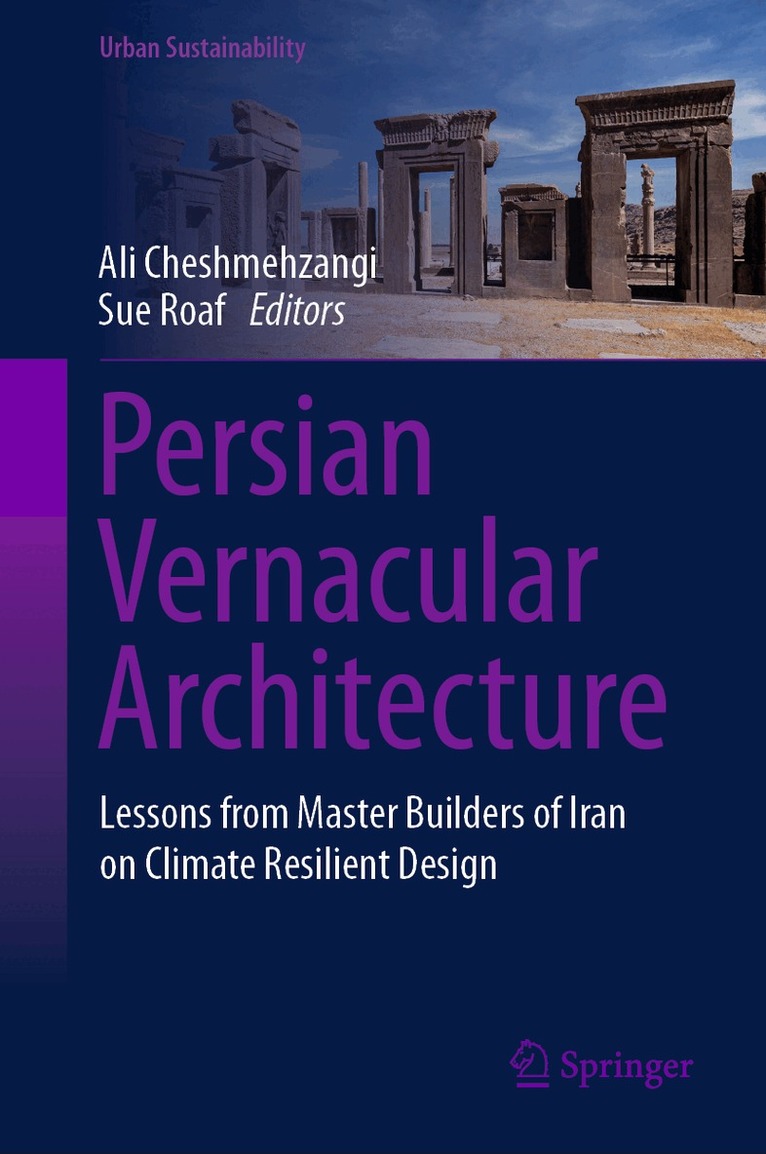
    Persian Vernacular Architecture

    Lessons from Master Builders of Iran on Climate Resilient Design

    AvAli Cheshmehzangi,Sue Roaf

    Inbunden, Engelska, 2025

    Del i serien Urban Sustainability

    2 230 kr

    Beställningsvara. Skickas inom 10-15 vardagar. Fri frakt över 249 kr.

    Beskrivning

    This timely book aims to address a significant challenge in contemporary design and architecture, i.e., “to learn from the vernacular”. Vernacular architecture refers to traditional and indigenous building styles that have evolved in response to local climate, materials, and cultural practices. These styles often embody 'extreme' design principles, as they support life without relying on modern mechanical systems for heating and cooling. The core premise of the book is that these time-tested design solutions offer valuable lessons for real sustainable and climate-resilient architecture today.We strongly urge a return to the vernacular as a source of inspiration and knowledge. Hence, a genuine dedication to dedicated Ostads or master builders of Iran, who have contributed extensively to making and co-creating climate-resilient architecture and climate-sensitive design. This is more than just a box-ticking sustainability exercise and delves more deeply into the building performance and its impact on our everyday life, our health and wellbeing, and us as human beings. The book posits that contemporary architects and designers can learn valuable lessons by studying the adaptive strategies and sustainable practices embedded in the traditional vernacular architecture of Iran. These lessons are crucial for addressing modern challenges such as climate change, resource scarcity, and the need for energy-efficient buildings. By revisiting and analysing vernacular architecture, the book aims to bridge the gap between traditional knowledge and contemporary design practices. It provides a comprehensive exploration of how vernacular principles can be integrated into modern architectural education and practice. The goal is not only to preserve traditional wisdom but also to innovate upon it, creating buildings that are both culturally relevant and environmentally sustainable.The contributing case study chapters of the book include an excellent range of practical recommendations for architects, researchers, and policymakers. By fostering a deeper understanding of vernacular architecture, the book seeks to inspire a new generation of architects to create buildings that are harmonious with their environment and resilient to future challenges. Through this approach, we believe lessons from vernacular buildings ought to offer the promise of reintegrating real Resilience into the design of the next generation of buildings.

    Produktinformation

    • Utgivningsdatum:2025-02-15
    • Mått:155 x 235 x 24 mm
    • Vikt:749 g
    • Format:Inbunden
    • Språk:Engelska
    • Serie:Urban Sustainability
    • Antal sidor:324
    • Förlag:Springer Nature Switzerland AG
    • ISBN:9789819611157

    Utforska kategorier

    • Arkitektur inom Kultur
    • Arkitekturhistoria inom Kultur
    • Byggnadsteknik inom Naturvetenskap och teknik

    Mer om författaren

    Ali CHESHMEHZANGI is a Professor and Head of the School of Architecture, Design and Planning (ADP) at The University of Queensland, Brisbane, Australia. He is among the top 30 global scholars in the urban sustainability research area. With a career spanning over two decades, he has made significant contributions to the academic and professional communities, with a focus on sustainable and environmentally conscious design. He also remains affiliated with the Network for Education and Research on Peace and Sustainability (NERPS) at Hiroshima University, Japan. So far, Ali has published over 500 journal papers, articles, conference papers, book chapters, and reports. He also has 34 other academic books, three of which have received awards at the international, national, provincial, and municipal levels. He also has received international awards and recognition for his research on urban resilience studies and sustainability research, as well as a Vice-Chancellor’s award for his impactful contribution to higher education. Sue ROAF is an Emeritus Professor of Architectural Engineering at Heriot-Watt University, Edinburgh, and the winner of the 11th Farabi International Award for Iranian Studies in 2020.  An award-winning architect, teacher, and author/editor of 24 books her PhD was on the Windcatchers of Yazd, Iran. She is best known for her pioneering work on domestic solar energy and eco-design. In 1995 She built a house in Oxford designed to minimise emissions from her lifestyle with the first photovoltaic roof in Britain. Using low-energy construction techniques, high thermal mass, and wood-burning, many of its climatic features were inspired by Persian vernacular architecture as explained in her internationally best-selling book on Ecohouse Design. Her public services have included 7 years as an Oxford City Councilor, membership of the UK Architect’s Registration Board, and 5 years leading research on Climate Adaptation for Scotland. She has organised and chaired many international conferences including those on comfort at the extremes.

    Innehållsförteckning

    • Persian Vernacular Buildings Lessons on Resilient Design.- From Ostads to Architects Evolution of Iranian Architectural Practices in Residential Building.- Ab Anbars of Yazd A Study of Geographical and Historical Distributions of Cisterns in a Desert City.- Flexible Configuration Selective Connect-ability in Traditional Iranian Houses.- Exploring the Architectural Legacy of Najafabad Lessons from Iranian Vernacular Architecture and the Safavid Era.