• Fri frakt över 249 kr
  • •
  • Snabba leveranser
  • •
  • Billiga böcker
Kundservice

Du är på sajten för privatpersoner.

Företag, bibliotek eller offentlig verksamhet?

Du handlar på classic.bokus.com, där alla dina funktioner finns intakta.
Till classic.bokus.com
Bokus logotyp. Gå till startsidan.
  • Erbjudanden
  • Nyheter
  • Student
  • Topplistor
  • Barn & ungdom
  • Bokus Play
  • E-böcker
  • Pocketböcker
  • Spel & pussel

10% rabatt på allt med kod: NYSTART10 →

Sidfot

Mina sidor

    Hjälp

    • Kundservice
    • Vanliga frågor och svar
    • Frakt och leverans
    • Retur vid ångerrätt
    • Reklamera vara
    • Betalning
    • Köpvillkor
    • Allmänna villkor
    • Information om webbplatsens tillgänglighet

    Om Bokus

    • Om oss
    • Pressrum
    • För studenter
    • För företag
    • För bibliotek och offentlig verksamhet
    • För leverantörer
    • Hållbarhet

    Populärt

    • Aktuella erbjudanden
    • Presentkort
    • Studentlitteratur
    • Nya böcker
    • Topplistor
    • Signerade böcker
    • Engelska böcker

    Inspiration

    • Boktips
    • BookTok
    • Populära bokserier
    • Barnbokskaraktärer
    • Populära författare
    Logotyp för Bokus
    Följ oss på Facebook (extern länk)Följ oss på Instagram (extern länk)Följ oss på YouTube (extern länk)Följ oss på TikTok (extern länk)
    bokus @ CookiesAnpassa cookiesIntegritetspolicyKöpvillkor
    Till Citymail hemsida (extern länk)Till Budbee hemsida (extern länk)Till Postnord hemsida (extern länk)Till Schenker hemsida (extern länk)Till Early Bird hemsida (extern länk)Till Walleys hemsida (extern länk)
    1. Samhälle och politik
    2. Politik och statsskick

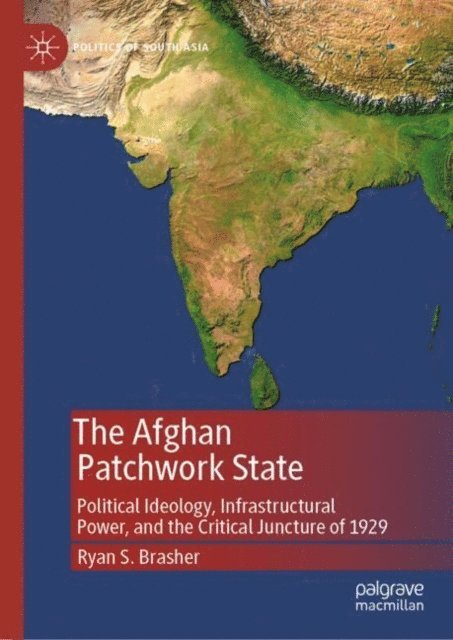
    Afghan Patchwork State

    Political Ideology, Infrastructural Power, and the Critical Juncture of 1929

    AvRyan S. Brasher

    E-bok
    Engelska, 2024

    553 kr

    Läs direkt i Bokus Reader – eller ladda ned till din enhet

    Fler format och utgåvor

    Inbunden

    1 341 kr

    Beskrivning

    This book provides a theoretically grounded and empirically fine-grained analysis of uneven state development in Afghanistan beginning in the early 20th Century. Based on archival research, the book shows that after Amanullah Shah’s abortive modernist authoritarian experiment and Habibullah Kalakani’s brief rule, a newly empowered Musahiban dynasty charted a patrimonial absolutist course. The new regime delegated considerable authority to traditional tribal areas in the southeastern and eastern part of the country, while pursuing a coercive strategy in other parts of the country that usurped traditional leadership at the regional and local levels. Previous explanations of the weakness of the Afghan state tend to emphasize structural determinants such as difficult geography, acephalous tribal organization, ethnic heterogeneity, as well as colonial interventions. Others have focused only on events after the Soviet or NATO interventions, pointing out faulty external decision-making, corrupt government officials and warlords, neighboring insurgent safe havens, or the international aid-fueled rentier economy. This book proposes an intermediate explanation for the patchwork nature of the Afghan state rooted in institutional choices made by a new ruling elite that took over in 1929. The year represents one critical juncture in Afghan history, where individual agency based on certain ideological preferences set in motion a path-dependent process that shaped its politics well into the latter half of the century.

    Produktinformation

    • Utgivningsdatum:2024-09-23
    • Språk:Engelska
    • Filformat:EPUB
    • Kopieringsskydd:LCP
    • ISBN:9789819765997
    • Förlag:Springer Nature Singapore

    Utforska kategorier

    • Politik och statsskick inom Samhälle och politik
    • Statsvetenskap och politisk teori inom Samhälle och politik