

Case of the Elusive W-Anchor pimpernel. Father Brown Investigates
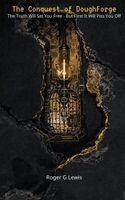
The Conquest Of DoughForge, #2
E-bok
Engelska, 202667 kr
Läs direkt i Bokus Reader – eller ladda ned till din enhet
Fler format och utgåvor
Beskrivning
The domain went dark at 6:41 PM. By morning, three corporations had each blamed the other, the evidence had been quietly erased, and the victim was left looking paranoid. Father Brown had seen this before — not in a vicarage, but in a colliery, in a kitchen in Sweden, and in the architecture of the global banking system.The Case of the Elusive W-Anchor is a detective story in which the crime is structural, the culprit is a process, and the only weapon available to the investigator is an independent set of scales.Part technical manual, part autobiography, part meta-fiction — this is the book that reads you back. While Father Brown investigates a hijacked domain through the labyrinth of Heart Internet, GoDaddy, and Nominet, Roger G. Lewis is simultaneously at a kitchen table in Hjärnarp, Sweden, building the very protocol that might have prevented the crime. The W-Anchor Protocol. The FAIR-Index. The Check-Weighman Principle. Tools, not arguments — because arguments can be ignored, but a working set of scales cannot.Beneath the detective narrative lies a 27-year dataset showing a 59% collapse in UK housing affordability, a dissection of how banks create money from nothing and call it a mortgage, and a quiet, devastating identification of the institution that owns the oven in which all of this is baked.It Is One Chapter in Three Books at OnceThe "e;Pimpernell Cut"e; — a single chapter in six parts — appears across The Conquest of DoughForge, The Wandering Anchor, and this book. Lewis uses transclusion (Ted Nelson's concept of content included by reference rather than copied) as a structural principle. You are not reading a standalone book; you are reading a node in a living library of 14 interconnected works.The Parliament of LLMs chapter features Large Language Models admitting, in chorus, their own unreliability. Appendix C of the companion volume even includes AI-hallucinated "e;phantom chapters"e; preserved as exhibits. Lewis doesn't just write about AI drift — he demonstrates it, documents it, and builds a protocol to fix it, all within the same text.Most economic books cite Keynes or Friedman. This one's methodological anchor is a Welsh miner born in 1902 who stood at a colliery weighbridge with his own scales. The Check-Weighman Principle isn't a metaphor borrowed for rhetorical effect — it is the literal origin of the FAIR-Index's independence claim.The Villain Has a Real AddressMost critiques of financial power gesture vaguely at "e;the system."e; Lewis names the Bank for International Settlements in Basel — its capital adequacy ratios, its Basel Accords, its structural invisibility — and calls it, with precision and without hysteria, the institution that owns the oven. The serpent is identified. It has a postcode.Every other book about AI, housing, or institutional power asks you to believe its argument.The Case of the Elusive W-Anchor hands you the scales and asks you to weigh it yourself.
Produktinformation
Utforska kategorier




Hoppa över listan








Du kanske också är intresserad av
- 10% rabatt på allt
Del 2
- 10% rabatt på allt
Del 11
- Signerad!
Del 3
- 10% rabatt på allt
- Signerad!
- 10% rabatt på allt
Del 3
- Nyhet
- Nyhet
- -30%