• Fri frakt över 249 kr
  • •
  • Snabba leveranser
  • •
  • Billiga böcker
Kundservice

Du är på sajten för privatpersoner.

Företag, bibliotek eller offentlig verksamhet?

Du handlar på classic.bokus.com, där alla dina funktioner finns intakta.
Till classic.bokus.com
Bokus logotyp. Gå till startsidan.
  • Erbjudanden
  • Nyheter
  • Student
  • Topplistor
  • Barn & ungdom
  • Bokus Play
  • E-böcker
  • Pocketböcker
  • Spel & pussel

10% rabatt på allt med kod NYSTART10 →

Sidfot

Mina sidor

    Hjälp

    • Kundservice
    • Vanliga frågor och svar
    • Frakt och leverans
    • Retur vid ångerrätt
    • Reklamera vara
    • Betalning
    • Köpvillkor
    • Allmänna villkor
    • Information om webbplatsens tillgänglighet

    Om Bokus

    • Om oss
    • Pressrum
    • För studenter
    • För företag
    • För bibliotek och offentlig verksamhet
    • För leverantörer
    • Hållbarhet

    Populärt

    • Aktuella erbjudanden
    • Presentkort
    • Studentlitteratur
    • Nya böcker
    • Topplistor
    • Signerade böcker
    • Engelska böcker

    Inspiration

    • Boktips
    • BookTok
    • Populära bokserier
    • Barnbokskaraktärer
    • Populära författare
    Logotyp för Bokus
    Följ oss på Facebook (extern länk)Följ oss på Instagram (extern länk)Följ oss på YouTube (extern länk)Följ oss på TikTok (extern länk)
    bokus @ CookiesAnpassa cookiesIntegritetspolicyKöpvillkor
    Till Citymail hemsida (extern länk)Till Budbee hemsida (extern länk)Till Postnord hemsida (extern länk)Till Schenker hemsida (extern länk)Till Early Bird hemsida (extern länk)Till Walleys hemsida (extern länk)
    1. Skönlitteratur
    2. Litteraturvetenskap

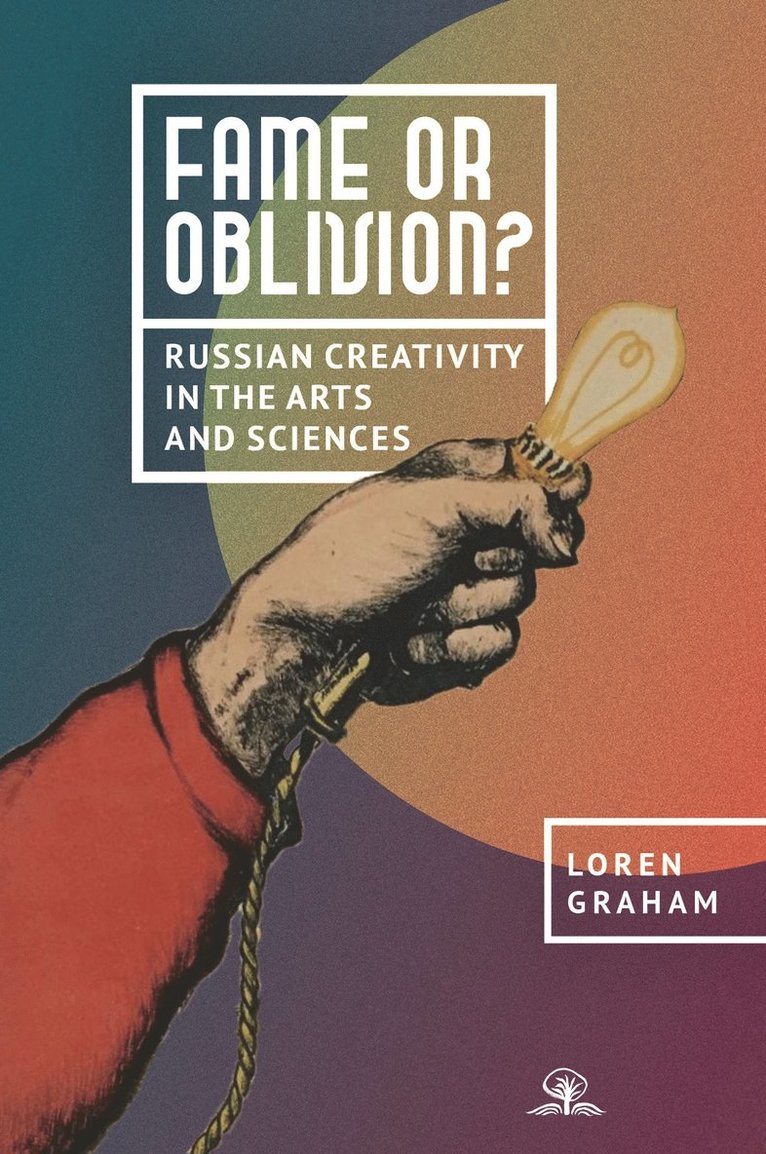
    Fame or Oblivion?

    Russian Creativity in the Arts and Sciences

    AvLoren Graham

    Inbunden, Engelska, 2025

    948 kr

    Skickas . Fri frakt över 249 kr.

    Fler format och utgåvor

    E-bok

    1 635 kr

    E-bok

    1 582 kr

    Beskrivning

    Why do some creations flourish while others fade into obscurity? In Fame or Oblivion? the author makes a provocative thesis: that Russian society has historically nurtured literary and artistic genius while stifling technological innovation. Based on the tools of cultural and historical analysis, the book examines how social patterns, economic systems, and institutional support—or lack thereof—influence the outcomes of creative achievements.From the enduring heritage of Tolstoy and Tchaikovsky to the forgotten names of the inventors of early computers and lasers, this work put into contrast Russia’s world's known contributions to literature, music, and mathematics with its underrecognized pioneers in science and technology. It argues that invention does not exist per se, but requires a huge environment of support, investment, and societal readiness.Though rooted in Russian history, the book offers a universal lens—inviting readers to reflect on the correlation between genius and recognition, and to consider how societies can better harness the full spectrum of human ingenuity.

    Produktinformation

    • Utgivningsdatum:2025-10-02
    • Mått:127 x 203 x 23 mm
    • Vikt:436 g
    • Format:Inbunden
    • Språk:Engelska
    • Antal sidor:304
    • Förlag:Academic Studies Press
    • ISBN:9798887198231

    Utforska kategorier

    • Litteraturvetenskap inom Skönlitteratur
    • Litteraturteori inom Skönlitteratur
    • Samhälle och kultur inom Samhälle och politik

    Mer om författaren

    Loren R. Graham was an acclaimed author and one of the world’s foremost experts on the history of science and technology in Russia and the Soviet Union. Loren spent the bulk of his academic career—more than three decades—as a professor at MIT in the Program in Science, Technology, and Society (STS), while also holding a joint appointment at the Davis Center at Harvard University.

    Recensioner i media

    “Loren Graham's long career as a historian of science and technology in Russia and the Soviet Union had enormous influence on the way scholars understand the development of scientific thought and scientific innovation in autocratic societies. Through his large body of published work and his training of several generations of students, he shaped the whole way experts nowadays think about these subjects. Of particular importance, Graham explained how, even when living under conditions of stifling repression and murderous state violence, Russian and Soviet mathematicians, physicists, chemists, and engineers managed to achieve great strides in scientific research and technological adaptation.” — Mark Kramer, Director of Cold War Studies and Senior Fellow, Davis Center for Russian and Eurasian Studies, Harvard University“Celebrated as the ‘dean of the history of Russian and Soviet science,’ Loren Graham generously shared his insights with generations of students—including myself, to my great good fortune. For him, history is an enigma that calls for paradoxical answers. His writing challenges stereotypes, sparks debate, and inspires further inquiry. The hallmarks of his scholarship—its extraordinary breadth and boldness of argument—are vividly displayed in this book.” — Slava Gerovitch, MIT, author of From Newspeak to Cyberspeak and Soviet Space Mythologies

    Innehållsförteckning

    • Preface: Discussions of Creativity and PoliticsIntroduction1. Alexander Pushkin: How Repression Helped a Great Poet Create2. Nikolai Lobachevsky: Anonymity Promoted Geometry3. Nikolai Gogol: Winning Fame by Being an Enigma4. Pavel Shilling: How the Environment Thwarted Technical Creativity5. Ivan Turgenev: Moderation in Creativity Is Misunderstood6. Fyodor Dostoevsky: Prison Time Provokes Literary Creativity7. Pavel Yablochkov: Success Abroad Doesn’t Help Creativity at Home8. Nikolai Leskov: Praising Technology for the Wrong Reason9. Alexander Lodygin: Why a Russian Lightbulb before Edison’s Didn’t Succeed10. Modest Mussorgsky: Attempts at Unique Russian Music11. Sofia Kovalevskaia: A Woman’s Tortured Path to Success12. Dmitry Mendeleev: The Advantages of Backwardness13. Nikolai Rimsky-Korsakov: An Amateur Becomes a Professional14. Borodin and Morse: Chemistry, Music, Art, and Technology15. Lev Tolstoy: Guilt Boosts Creativity16. Petr Tchaikovsky: Great Music in Anguis17. Anna Akhmatova: Fame and Oblivion18. Russian Mathematics Reaches for Glory, and Helps Literature19. Isaac Babel: Seduction and Violence Win Fame20. Maxim Gorky: The Frustrated Transformist21. Nadezhda Mandelstam: Oppression Nurtures Fame22. Rozing and Zvorykin: Forgotten Inventors of Television23. Vladimir Mayakovsky: Revolution Promotes then Demotes Creativity24. Sergei Eisenstein: Fame and Oblivion Again25. Sergei Prokofiev: Pleasing Soviet Ideologues Wasn’t Always Bad26. Sergei Lebedev: Pioneering Creativity Followed by Routine Imitation27. Dmitrii Lopatkin: Frustrated Engineers Object28. Mikhail Sholokhov: From Creativity to Orthodoxy29. A Hidden Side of Technological Achievements30. Boris Pasternak: Preservation of Intelligentsia Values31. Lev Landau: Enfant Terrible and Giant32. Alexander Solzhenitsyn: The Conventional Rebel33. Creativity in a Prison34. Sinyavsky and Daniel: Benefitting from Persecution35. Andrei Sakharov: Rationality, Morality, and Irrationality36. How Much Has Changed? Art and Technology Try to Escape37. Zhores Alferov: New Transistors Do Not Help38. Grigori Perelman: The Genius as Caricature39. Svetlana Aleksievich: The Undesired Witness40. Computer Programming and Hacking41. Putin as Arbiter of All Things42. Concluding AnalysisBibliographyIndex