Visar resultat för..."Harpia Publishing"
11 produkter
11 produkter
214 kr
Tillfälligt slut
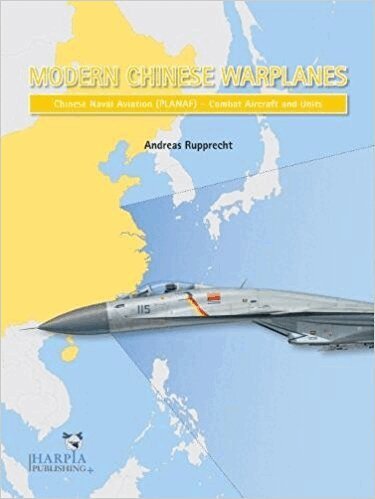
Due to China’s strong dependence/reliance on its economic development but also due to its rising political ambitions with the aim to resume a central role in the regional and global affairs, it is vital for China to show some sort of military presence in its area of influence. Consequently, within the past decade, China’s military – in both strategic considerations and the modernisation of procedures and material as well – has undergone some of the most profound reforms since its establishment and the Chinese Navy and its Naval Air Arm play an ever more increasing role to achieve these goals.The 2016-released National ‘white paper’ has emphasized a greater focus on the seas and clearly stated that China’s has to establish itself as a major maritime power. Consequently, the PLN will shift its focus from 'offshore waters defence' to an 'open seas protection'. That means in parallel to the PLAAF’s modernisations, the changes for the PLN – and concerning the scope off the book the PLANAF – will be probably even more dramatic when the PLANAF creates a modern, capable 'Blue Water' force. In terms of modern systems, the PLNAF will steadily increase its naval capabilities by introducing more modern multirole-capable systems but most important by the establishment of an indigenous carrier force.Similar to the original /Modern Chinese Warplanes/and /Flashpoint China/ books, this uniquely compact yet comprehensive directory serves as a magnificently illustrated, in-depth analysis and directory of modern Chinese Naval Air Power.It is organised in four parts: the most important military aircraft and their weapons found in PLANAF service today; aircraft markings and serial number systems; the recent modernization efforts and structural reforms and orders of battle for the People's Liberation Naval Air Force.
369 kr
Tillfälligt slut
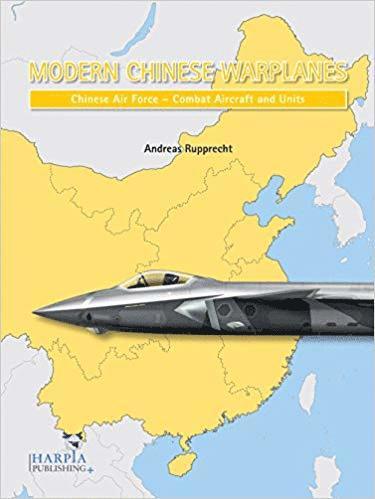
In 2012 the original Modern Chinese Warplanes set the standard as a uniquely compact yet comprehensive directory of modern Chinese air power, combining magnificent illustrations and in-depth analysis.Now almost six years later, much of the fascination that Chinese military aviation holds for the analyst and enthusiast still stems from the thick veil of secrecy that surrounds it. However, in the time that has passed since the first edition a plethora of new types, systems and weapons has been revealed. What is more, the structure of the People’s Liberation Army Air Force (PLAAF) has been completely revised by transforming the former Military Regions into Theatre Commands. In parallel, the general structure has been thoroughly modernised to cope with China’s latest challenges.Consequently, this fully revised edition is organised in three parts: the most important military aircraft and their weapons found in service today; aircraft markings and serial number systems; and orders of battle for the PLAAF. The study includes the latest developments emerging from behind the ‘Great Wall’, including the J-20 stealth fighter programme, Y-20 strategic transport and the latest developments in UAVs that are equipping a rapidly modernising air arm.The centrepiece consists of almost 100 fully illustrated pages detailing the organisational structure of the air force, providing an easy-to-use review of all known flying units, their equipment and their markings.No other book has ever attempted to present this level of accuracy in this way: Modern Chinese Air Power portrays the PLAAF in a degree of detail that was previously unavailable.
367 kr
Tillfälligt slut
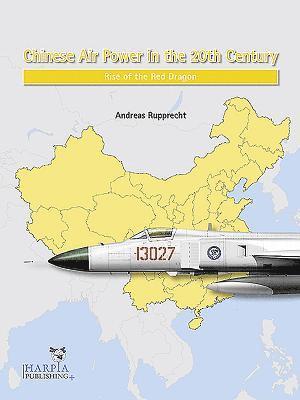
This comprehensive directory provides a lavishly illustrated, in-depth analysis and overview of the historical gestation of the PLAAF and its path to becoming the modern air arm we know today.
380 kr
Tillfälligt slut
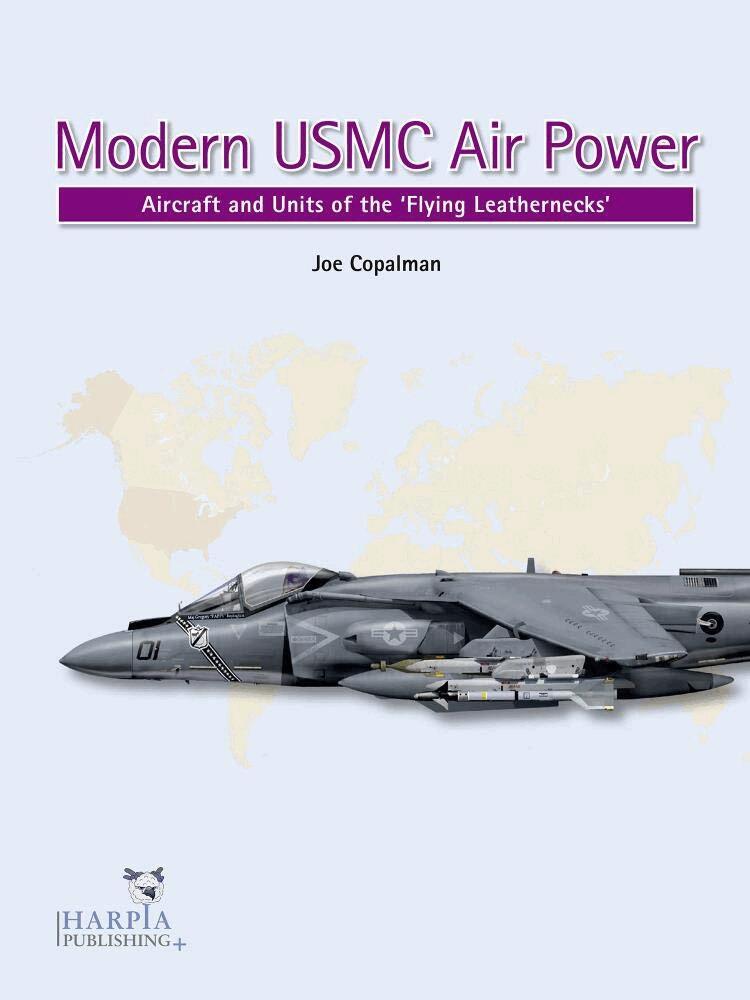
As America’s expeditionary force-in-readiness, the US Marine Corps operates an eclectic mix of fixed-wing, rotary-wing, tiltrotor and unmanned aircraft to support the marine rifleman on the ground. The first two decades of the 21st century have seen an almost complete transformation of the marine air wings, as Cold War-era legacy aircraft yield to digital-age replacements. In Harpia’s first book dedicated to a North American air arm, Joe Copalman explains the significance of each aircraft transition in the Marine Corps over the previous 20 years – community by community – on the Marine Air-Ground Task Force and its ability to conduct amphibious and expeditionary warfare.While some of these transitions, like that of the KC-130T to KC-130J and AH-1W to AH-1Z, have been incremental, evolutionary steps up, others like the tandem-rotor CH-46 Sea Knight to the tiltrotor MV-22 Osprey and the introduction of the F-35 Lightning II to replace all three of the Marine Corps’ tactical jets have revolutionised the way the service fights. In addition to introducing newer, vastly more capable and connected aircraft into its air wings, the Marine Corps has also invested heavily in keeping its remaining legacy fleets at the cutting edge of lethality and survivability throughout the final days of each type’s service.Utilising a before-and-after approach, Copalman guides the reader through every transition in Modern USMC Air Power, examining what each legacy aircraft brought to the fight, and how the service’s newer platforms have improved upon those capabilities, especially when aided by new constructs like precision-guided ordnance and digital interoperability.
218 kr
Tillfälligt slut
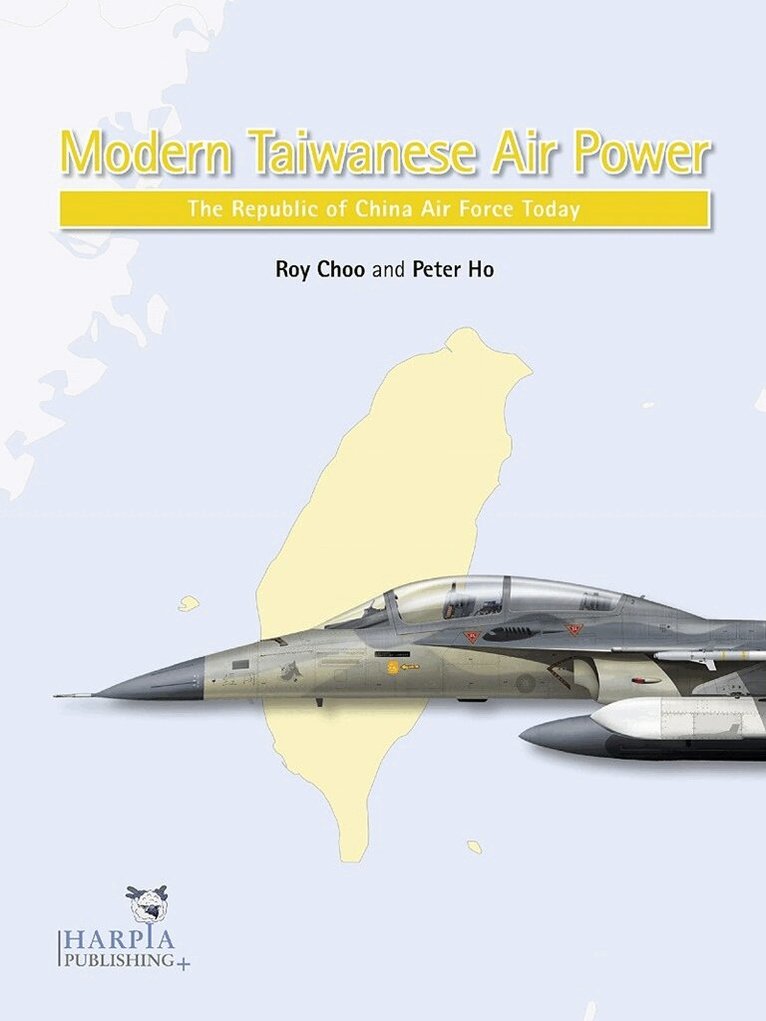
The sovereign status of Taiwan - or the Republic of China - has been a source of instability in the Asia-Pacific region for much of the last 70 years. While Taiwan aspires to be an independent and democratic nation, the communist-led People’s Republic of China sees it as a breakaway province. With Beijing flexing its muscles in recent years amid rising tensions between China and the US, the potential for a military flashpoint along the narrow Taiwan Strait cannot be overstated. The strategy of the Republic of China Armed Forces is to present Beijing with a credible deterrent, and should this fail, defend against a People’s Liberation Army attack and possible invasion. The Republic of China Air Force (ROCAF) is charged with the defence of airspace over and around Taiwan and enabling military operations in land and sea domains. If necessary, it could also take the battle into China as part of a multi-pronged offensive effort. While the ROCAF is relatively well-equipped and trained, attempts to modernise have been hit by political and fiscal challenges. The ROCAF has made some headway with mid-life upgrades for the majority of its more than 20-year-old fighter fleet and will receive a much-needed boost with the introduction of F-16C/D Block 70s in the coming years. However, it still lacks many force-multiplier capabilities such as aerial refuelling and electronic warfare. Amid qualitative and quantitative improvements to the PLA air combat fleets, the military balance across the Taiwan Strait continues to tip towards Mainland China. This book provides a comprehensive study of Taiwan’s air force with in-depth analysis backed by high-quality images. It examines ROCAF combat capabilities today, its aircraft fleet, and what the future holds for the air arm.
660 kr
Tillfälligt slut
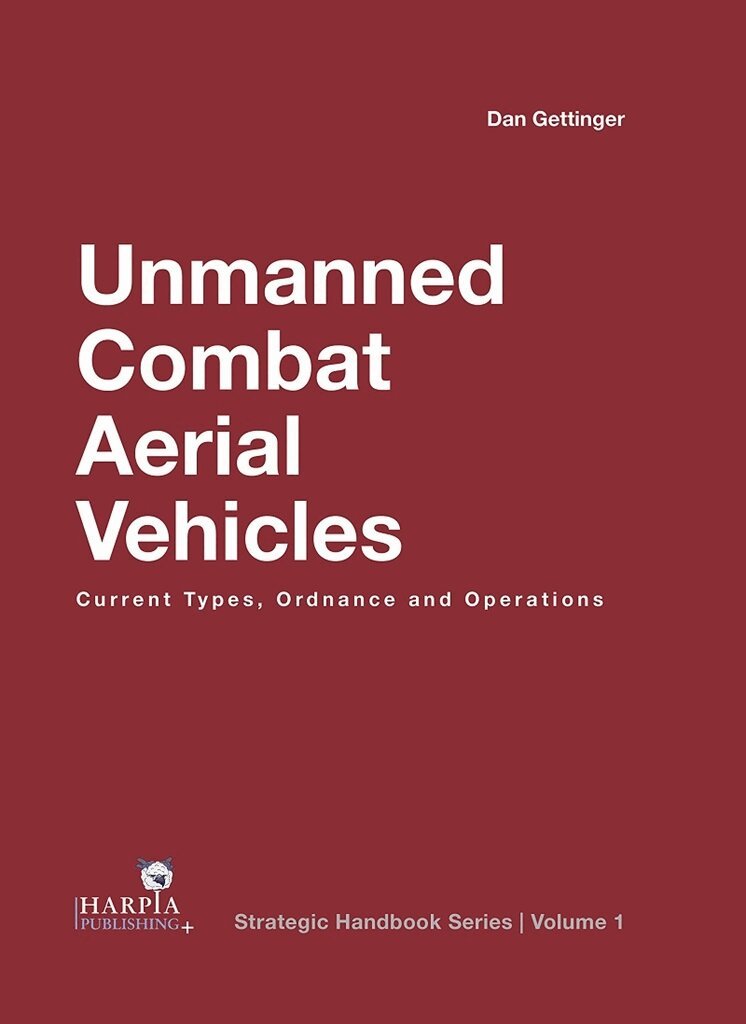
The field of unmanned combat aerial vehicles (UCAVs) is rapidly diversifying as an array of light, midsized, and heavy UCAVs and munitions enter the global marketplace. This has the potential to dramatically expand access to armed unmanned platforms and change the way unmanned aerial vehicles are used in combat. The influence of UCAVs on the conduct of war has already been felt in conflicts in the Caucasus, the Middle East and North Africa, where state and non-state actors have fielded a dizzying number of UCAVs from around the world. At the same time, advanced militaries are beginning to equip UCAVs with increasingly sophisticated munitions, some of which are heavier and can fly farther than the types of weapons used by UCAVs in the past. In Unmanned Combat Aerial Vehicles: Aircraft, Ordnance and Operations, a Strategic Handbook from Harpia Publishing, Gettinger presents an essential guide to the world of armed unmanned aircraft. It features profiles of every UCAV currently in active military service or under development, as well as other UAVs that could potentially be armed in the future. By parsing publicly available information and data, Gettinger offers a detailed timeline of the design and use of these armed UAVs. This Strategic Handbook includes, for the first time, a discerning and comprehensive study of UCAV munitions, offering readers a unique perspective into a segment of the UCAV market that portends an expansive combat role for unmanned combat aircraft long into the future.
380 kr
Tillfälligt slut
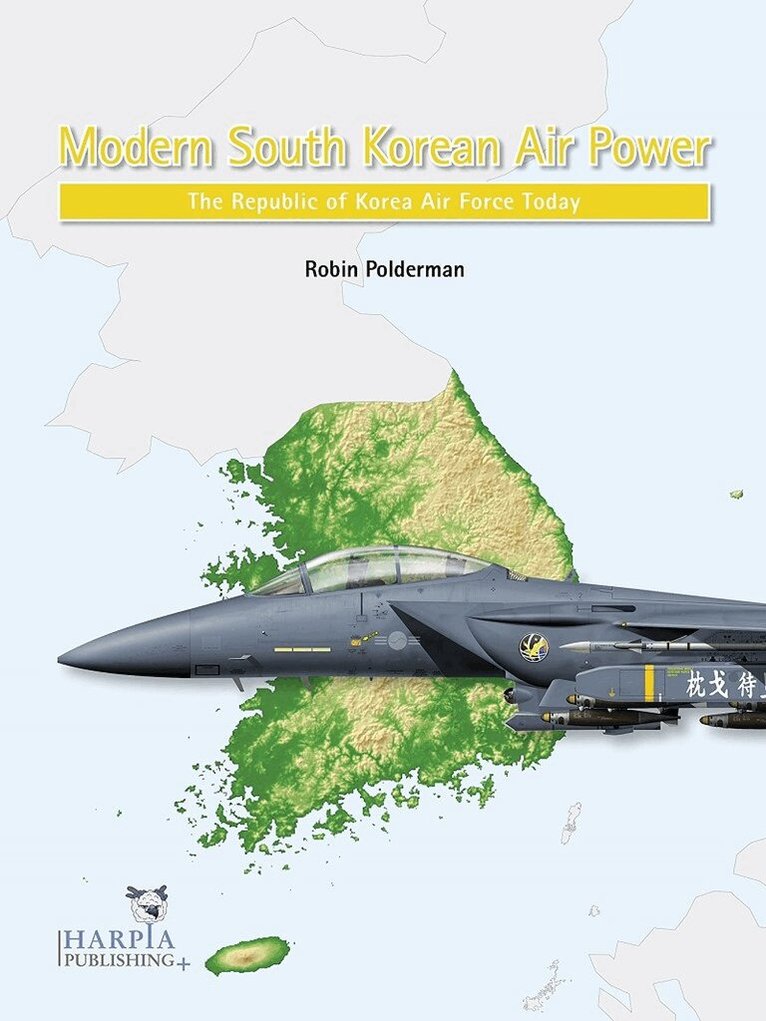
Since the early 1950s, the heavily industrialised nation of South Korea has seen steady growth and is now the world's seventh-largest exporter and 11th-largest economy overall. As the Cold War on the Korean peninsula gathered momentum, the development of the Republic of Korea Air Force became one of the nation’s top priorities. While initially dependent on the United States for its aircraft, Korea’s aviation industry has matured rapidly, and the ROKAF’s use of indigenously manufactured equipment is on the rise. Modern South Korean Air Power provides a detailed look at the aircraft and armament, as well as the organisation and the modernisation process of the ROKAF. The air arm has invested heavily in its early warning and intelligence-gathering capability to guard against the unpredictability of its northern neighbour. A territorial dispute with long-standing rival Japan, as well as incursions into its airspace by both China and Russia, have fuelled the need to transform the ROKAF into a technologically superior force. In its ongoing efforts to maintain its edge, the ROKAF has introduced fifth-generation stealth fighters while at the same time still making effective use of obsolete biplanes. It is this wide variety of aircraft and helicopters that make this air arm one of a kind. This book is a highly informative and richly illustrated source of reference and documents the ROKAF in a previously unavailable degree of detail. It provides an insightful and in-depth look at the journey the service has embarked upon to face the regional security challenges of tomorrow.
316 kr
Tillfälligt slut
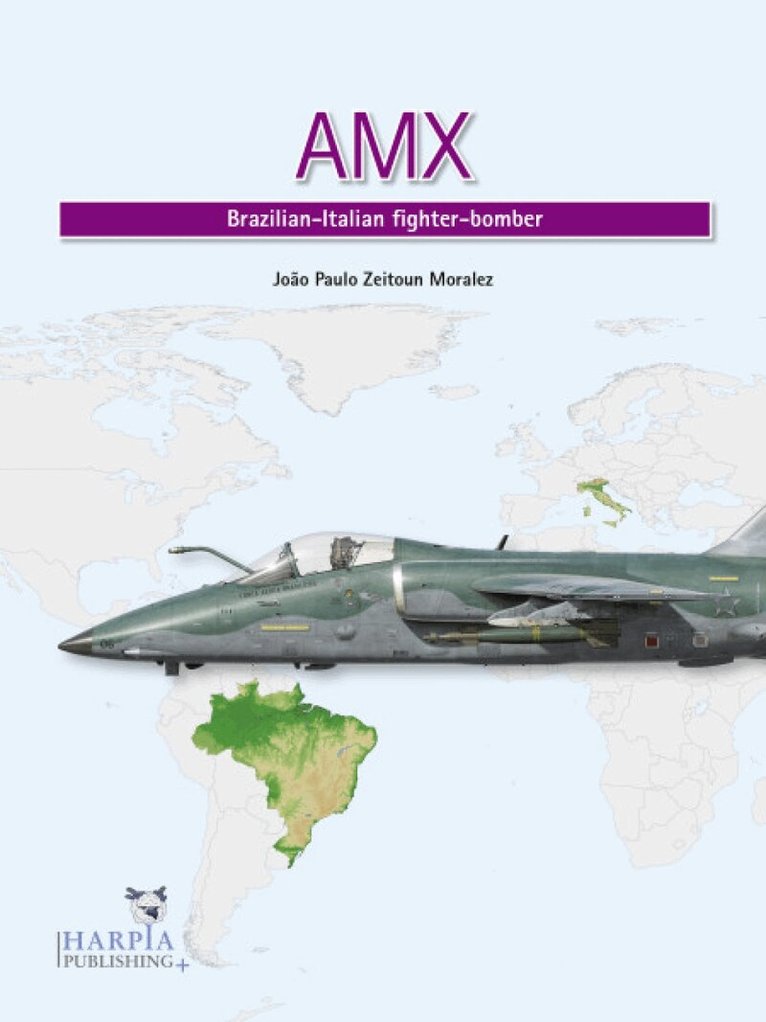
Italy began work on a new fighter-bomber in the late 1970s, aiming to field an aircraft capable of surviving in heavily defended Cold War airspace, flying at very low level, and releasing its weapons deep in enemy territory with a high degree of accuracy. In the early 1980s, Brazil joined the programme, resulting in the AMX. Subsonic, the new fighter-bomber has also proven well suited to the types of conflicts that have proliferated in the last 25 years and has served the Italian Air Force well during close air support, interdiction and reconnaissance missions. For Brazil, the AMX brought 21st-century capabilities to its air force, introducing advanced avionics and systems including a head-up display, radar warning receiver, chaff and flare countermeasures, identification friend or foe, and other new concepts. In this way, the AMX provided the Brazilian Air Force with a useful stepping-stone to the Super Tucano and the modernised F-5 Tiger II. Most importantly, the AMX had a huge impact on the Brazilian defence industry, which developed new technologies and infrastructures that helped drive both military and civilian programmes developed by Embraer from the 1990s onwards, including the E-Jet family and the KC-390 transport. This book is a must-have for specialists and enthusiasts alike, containing exclusive material, including photos and interviews that have never previously been published, and first-hand accounts of tactics and operations.
315 kr
Tillfälligt slut
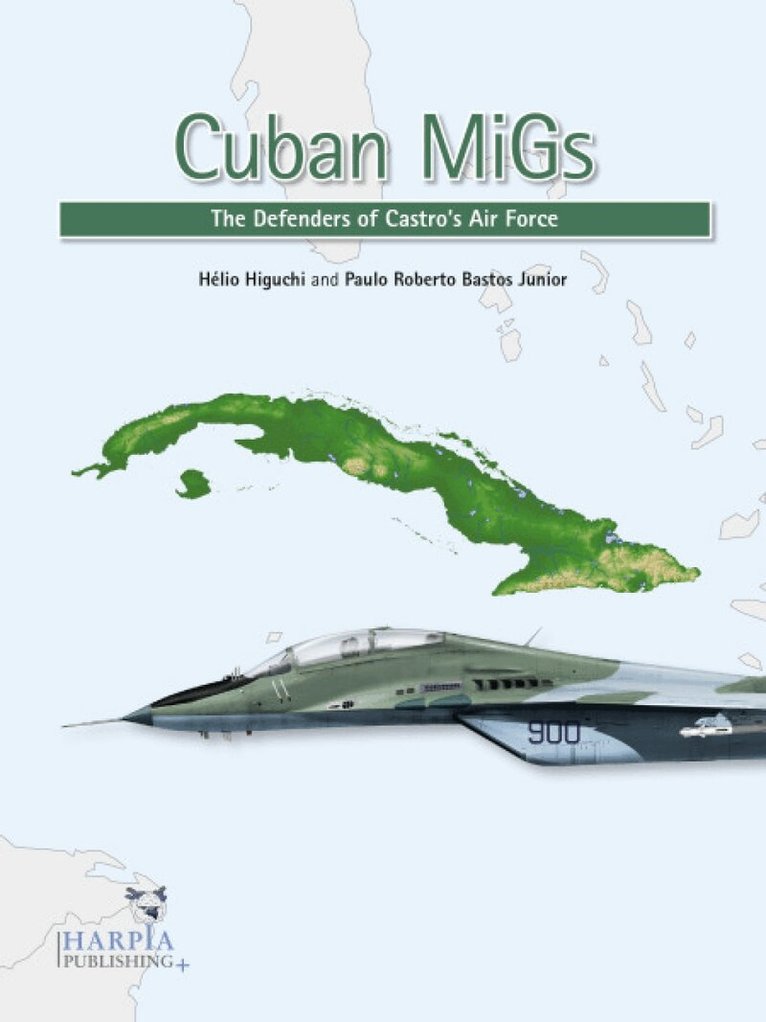
The Fuerza Aérea Revolucionaria (FAR), one of the most powerful and little-publicised air forces in the Americas, had Mikoyan-Gurevich (MiG) fighters as its main fighter aircraft, both in the defence of Cuban territory against the threat of US invasion and in support of Cuban leader’s efforts to export their revolutionary ideals. The book casts an unprecedented look at the introduction and utilisation of all MiG models in Cuban service, since their arrival before the Cuban Missile Crisis, to current times, going through all of the conflicts in which Cuba was involved, from incidents with the Dominican Republic (‘Operación Pico’) and the Bahamas, to its entanglements in wars in Vietnam, Syria, Guinea, Southern Yemen, Angola, Ethiopia and Nicaragua and the recent apprehension of ‘export goods’ to North Korea in the Panama Canal. The story of military aviation in Cuba before the arrival of the MiGs is also briefly presented, from the beginning of their air corps and its role in the political crises that affected the country, in Castro's Revolution and the ill-fated attempted invasion at the Bay of Pigs, contextualising the times when they happened. This is the result of extensive research using Cuban publications, documents, interviews with former pilots, historians and contributions by veteran Cuban airmen both in exile and residing in their homeland. The book is richly illustrated with over 170 photographs and colour profiles detailing the history of all twenty models of MiG fighters operated by Cuba from 1962 to the present.
421 kr
Tillfälligt slut
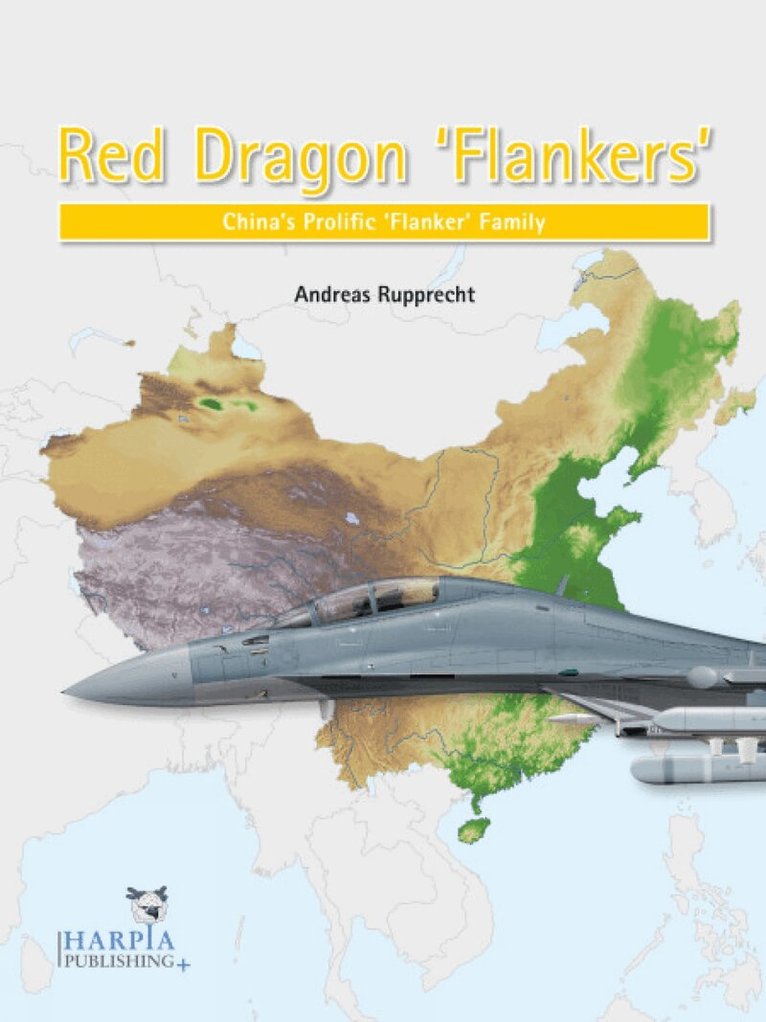
Noted for its exceptional performance, the Sukhoi Su-27 is not only one of the most capable fourth-generation fighters, but its development history is also remarkably rich. The ‘Flanker’ story took on a new industrial and political dimension when the Su-27 was chosen by China to meet the People’s Liberation Army Air Force’s requirement for a new fourth-generation type. This was a win-win-situation: Russia received a much-needed multi-billion-dollar contract and the PLAAF, for the first time, obtained a true high-end fourth-generation fighter. However, what followed was a complex drama, with both sides telling different stories. Following the direct sale from Russia, China obtained a contract for licence manufacturing. This yielded mixed success in the beginning and by the time the manufacturing procedures had evolved and improved, the licenced J-11 fighters no longer met the PLAAF’s requirements.Subsequently, China developed indigenous variants of the ‘Flanker’ equipped with improved avionics, weapons, and engines, which Russia regards as a breach of the formal agreement. Regardless of whether these ‘Sino-Flankers’ are illegal copies, evolved clones or indigenous versions, the Chinese ‘Flanker’ series ultimately evolved into a wide range of variants, sometimes with no true counterparts in Russia. This book provides a full overview of the Chinese ‘Flanker’ family, describing the genesis of this family and providing a review of the variants, their systems, and capabilities and how they are used by the People’s Liberation Army.
270 kr
Skickas inom 3-6 vardagar
Letar du efter digitala böcker?
E-böcker och ljudböcker handlar du än så länge på vår tidigare sajt.