A Berlin – författare
Visar alla böcker från författaren A Berlin. Handla med fri frakt och snabb leverans.
6 produkter
6 produkter
75 kr
Läs direkt efter köp
Hasan, ein Junge aus einem Dorf in der östlichen Türkei, erkundet die Schönheiten seiner Heimat und stößt auf ein mysteriöses Artefakt, das sein Leben verändert. Mit seiner Freundin Aylin begibt er sich auf die Suche nach einem verborgenen Schatz, erlebt Abenteuer und meistert Herausforderungen. Gemeinsam mit ihrer Familie und ihren Kindern genießen sie das Glück und die Liebe, die das Leben zu bieten hat, und schaffen eine Erinnerung, die für immer in den Herzen der Menschen ihres Dorfes weiterleben wird.
Inbunden, Engelska, 1979
2 238 kr
Skickas inom 10-15 vardagar
E-bok
PDF, Engelska, 2012714 kr
Läs direkt efter köp
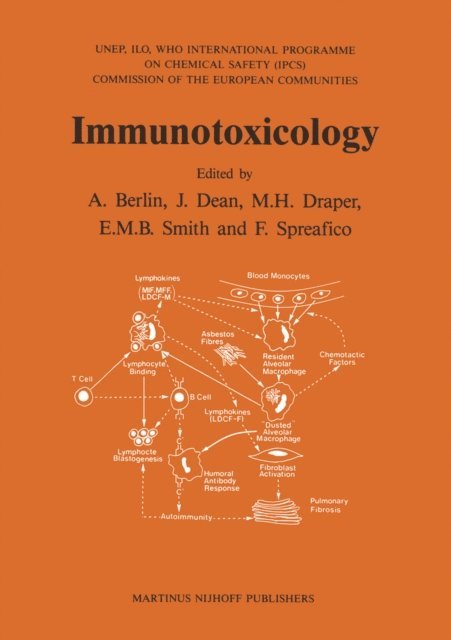
IX The International Seminar on the Immunological System as a Target for Toxic Damage was held at The Commission of the European Communities (CEC) in Luxembourg on 6-9 November 1984. It was organized by the CEC and the International Programme on Chemical Safety of UNEP/ILO/WHO with the support of the u. S. Environmental Protection Agency and the National Institute of Environmental Health Sciences - USA and with the participation of the International Society of Immunophar macology. These bodies are actively concerned with the scientific and applied aspects of immunotoxicology. The Seminar consisted of thirty-four invited papers and three major panel discussions covering current and future test strategies for the screening of immunotoxic substances, hypersensitivity and the health implications of immunotoxico logical problems. It was attended by more than 200 scien tists from 27 countries representing all the Member states of the European Economic Community and the six Regions of the World Health Organization. These scientists represented many different disciplines and interests. The Seminar''s principal objectives were: a review of recent advances in knowledge concerning the structure, function and dysfunction of the immunological system; - a review of the effects of xenobiotics on the immune system in animals and humans; an examination of the human health implications of immunotoxicity; discussion and critical analysis of the procedures for the assessment of immunological damage, a discussion of needs for the further development of laboratory and epidemiological methods and their validation, and a consideration of current test strategies.
E-bok
PDF, Engelska, 2012708 kr
Läs direkt efter köp
1.1 Organisation and aims This International Seminar, organised jointly by the Com mission of the European Communities and the United States authorities (Occupational Safety and Health Administration and the National Institute for Occupational Safety and Health) has brought together more than 150 participants from the Member States of the European Community, from the United States, and also from Greece, Finland, Sweden and Switzer land. The aim of the Seminar was to examine the roles of ambient and biological monitoring in protecting the health of workers exposed to toxic agents and to define a multidisciplinary approach to this monitoring. To achieve this aim expertise from the following disciplines, directly or indirectly involved with monitoring, was called upon: medicine, industrial hygiene, nursing, biology, engi neering, chemistry, epidemiology, statistics, economics and jurisprudence, and representatives from trade unions, indus try and government agencies. The difference in concepts that each of these disciplines has of monitoring and of its role in the team is fully reflected in the papers. 1.2 Current trends in occupational health and hygiene (as related to monitoring).
Häftad, Engelska, 2011
565 kr
Skickas inom 10-15 vardagar
1.1 Organisation and aims This International Seminar, organised jointly by the Com mission of the European Communities and the United States authorities (Occupational Safety and Health Administration and the National Institute for Occupational Safety and Health) has brought together more than 150 participants from the Member States of the European Community, from the United States, and also from Greece, Finland, Sweden and Switzer land. The aim of the Seminar was to examine the roles of ambient and biological monitoring in protecting the health of workers exposed to toxic agents and to define a multidisciplinary approach to this monitoring. To achieve this aim expertise from the following disciplines, directly or indirectly involved with monitoring, was called upon: medicine, industrial hygiene, nursing, biology, engi neering, chemistry, epidemiology, statistics, economics and jurisprudence, and representatives from trade unions, indus try and government agencies. The difference in concepts that each of these disciplines has of monitoring and of its role in the team is fully reflected in the papers. 1.2 Current trends in occupational health and hygiene (as related to monitoring).
Häftad, Engelska, 2011
565 kr
Skickas inom 10-15 vardagar
IX The International Seminar on the Immunological System as a Target for Toxic Damage was held at The Commission of the European Communities (CEC) in Luxembourg on 6-9 November 1984. It was organized by the CEC and the International Programme on Chemical Safety of UNEP/ILO/WHO with the support of the u. S. Environmental Protection Agency and the National Institute of Environmental Health Sciences - USA and with the participation of the International Society of Immunophar macology. These bodies are actively concerned with the scientific and applied aspects of immunotoxicology. The Seminar consisted of thirty-four invited papers and three major panel discussions covering current and future test strategies for the screening of immunotoxic substances, hypersensitivity and the health implications of immunotoxico logical problems. It was attended by more than 200 scien tists from 27 countries representing all the Member states of the European Economic Community and the six Regions of the World Health Organization. These scientists represented many different disciplines and interests. The Seminar's principal objectives were: a review of recent advances in knowledge concerning the structure, function and dysfunction of the immunological system; - a review of the effects of xenobiotics on the immune system in animals and humans; an examination of the human health implications of immunotoxicity; discussion and critical analysis of the procedures for the assessment of immunological damage, a discussion of needs for the further development of laboratory and epidemiological methods and their validation, and a consideration of current test strategies.