A. C. Duke – författare
Visar alla böcker från författaren A. C. Duke. Handla med fri frakt och snabb leverans.
6 produkter
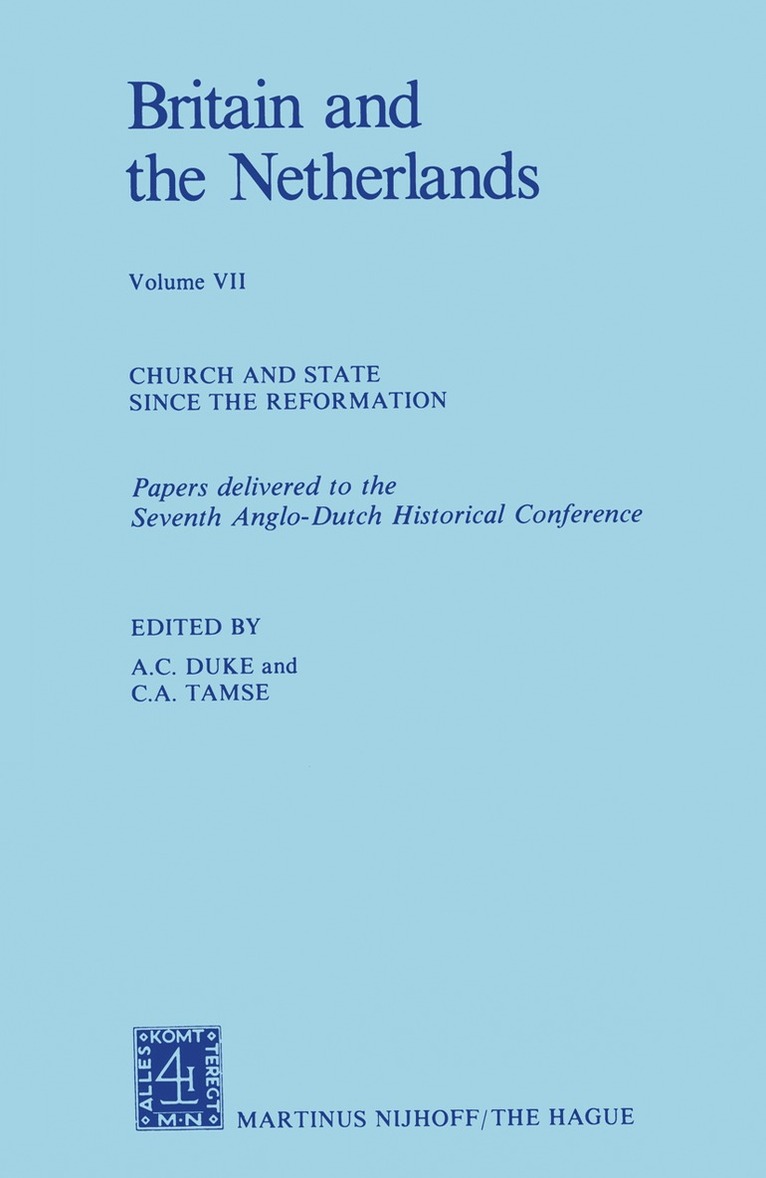
Britain and The Netherlands
Volume VII Church and State Since the Reformation Papers Delivered to the Seventh Anglo-Dutch Historical Conference
Häftad, 1982
568 kr
Lägg i varukorg
The theme chosen for the seventh conference of Dutch and British historians - relations between Church and State in the two countries since the Reformation - cannot pretend to any originality. A subject so germane to the history of Europe, and indeed of those parts of the world colonized by …
Britain and The Netherlands
Volume VII Church and State Since the Reformation Papers Delivered to the Seventh Anglo-Dutch Historical Conference
E-bok, 2012
755 kr
Lägg i varukorg
The theme chosen for the seventh conference of Dutch and British historians - relations between Church and State in the two countries since the Reformation - cannot pretend to any originality. A subject so germane to the history of Europe, and indeed of those parts of the world colonized by …
Britain and the Netherlands
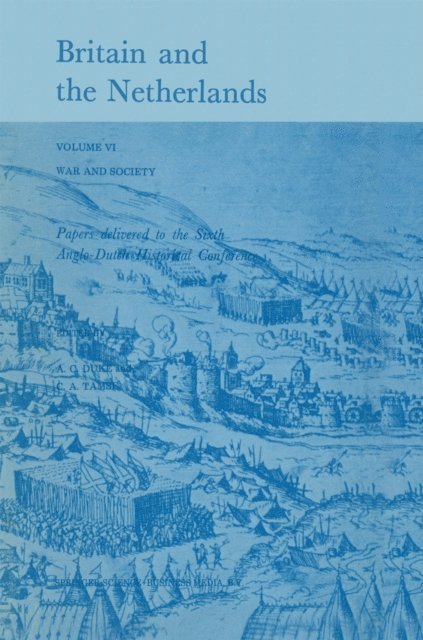
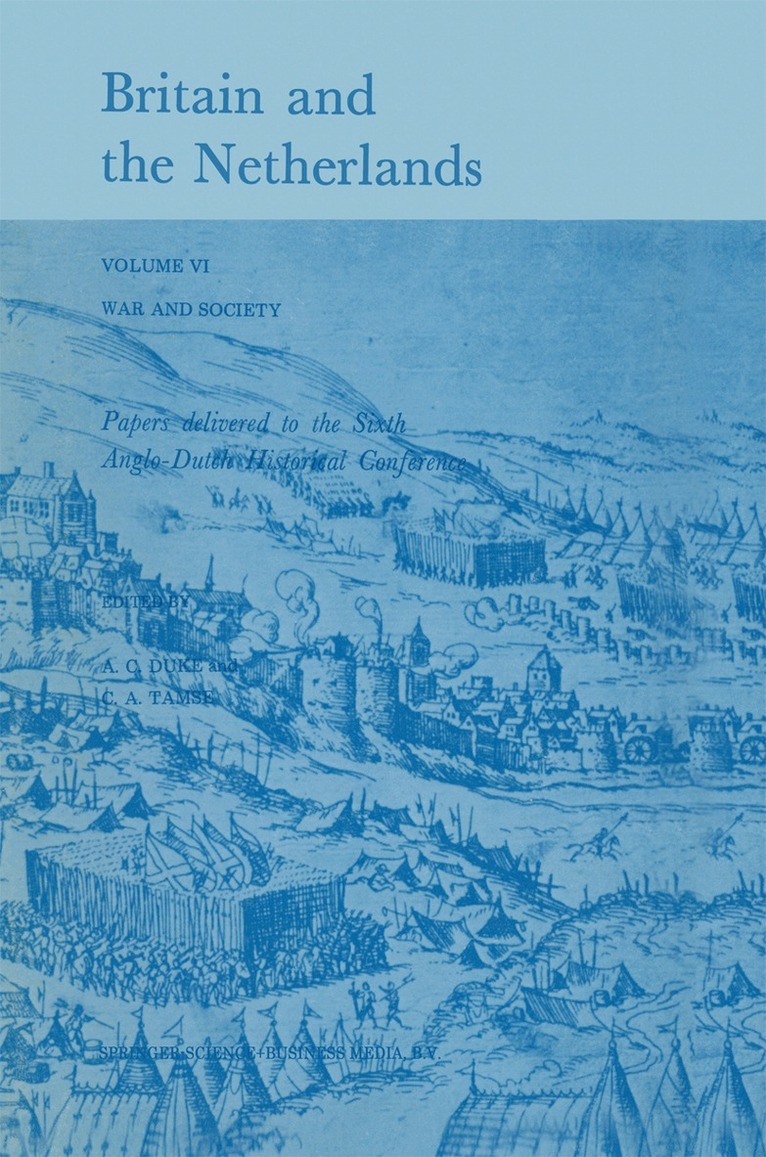
Volume VI War and Society Paper Delivered to the Sixth Anglo-Dutch Historical Conference
Av A. C. Duke
E-bok, 2012
734 kr
Lägg i varukorg
War has ever exercised a great appeal on men''s minds. Oscar Wilde''s witticism notwithstanding this fascination cannot be attri buted simply to the wicked character of war. The demonic forces released by war have caught the artistic imagination, while sages have reflected on the enigmatic …
Britain and the Netherlands
Volume VI War and Society Paper Delivered to the Sixth Anglo-Dutch Historical Conference
Av A. C. Duke
Häftad, 2011
552 kr
Lägg i varukorg
War has ever exercised a great appeal on men's minds. Oscar Wilde's witticism notwithstanding this fascination cannot be attri buted simply to the wicked character of war. The demonic forces released by war have caught the artistic imagination, while sages have reflected on the enigmatic readiness …
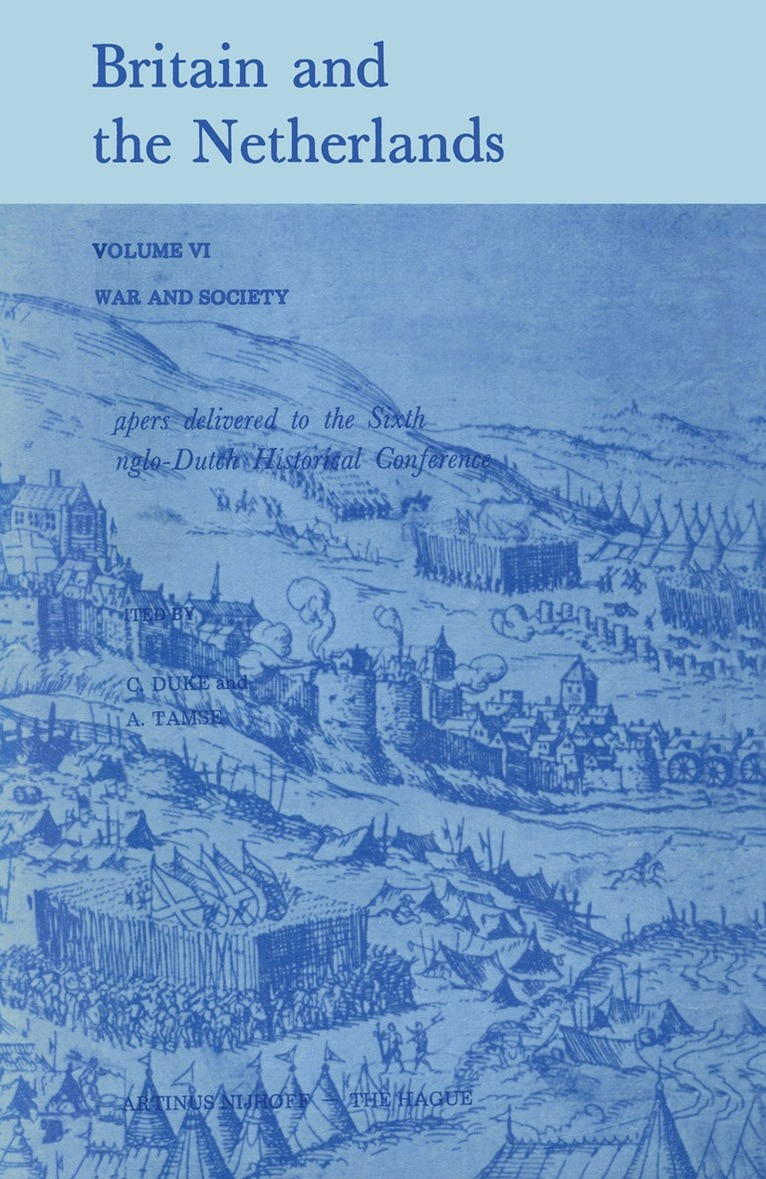
Britain and the Netherlands
Volume VI: War and Society. Papers Delivered to the Sixth Anglo-Dutch Historical Conference
Av A. C. Duke
E-bok, 2012
710 kr
Lägg i varukorg
War has ever exercised a great appeal on men''s minds. Oscar Wilde''s witticism notwithstanding this fascination cannot be attri buted simply to the wicked character of war. The demonic forces released by war have caught the artistic imagination, while sages have reflected on the enigmatic …
Britain and the Netherlands
Volume VI: War and Society. Papers Delivered to the Sixth Anglo-Dutch Historical Conference
Av A. C. Duke
Häftad, 1977
552 kr
Lägg i varukorg
War has ever exercised a great appeal on men's minds. Oscar Wilde's witticism notwithstanding this fascination cannot be attri buted simply to the wicked character of war. The demonic forces released by war have caught the artistic imagination, while sages have reflected on the enigmatic readiness …