A Das – författare
Visar alla böcker från författaren A Das. Handla med fri frakt och snabb leverans.
6 produkter
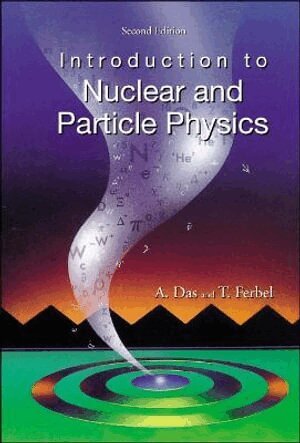
INTRODUCTION TO NUCLEAR AND PARTICLE PHYSICS (2ND EDITION)
Häftad, 2003
725 kr
Lägg i varukorg
The original edition of Introduction to Nuclear and Particle Physics was used with great success for single-semester courses on nuclear and particle physics offered by American and Canadian universities at the undergraduate level. It was also translated into German, and used overseas. Being less …
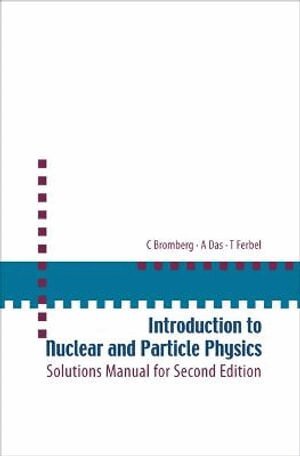
INTRODUCTION TO NUCLEAR AND PARTICLE PHYSICS: SOLUTIONS MANUAL FOR SECOND EDITION OF TEXT BY DAS AND FERBEL
Av C Bromberg, A Das m. fl.
Häftad, 2006
553 kr
Lägg i varukorg
This manual gives the solutions to all problems given in the book by A Das and T Ferbel. The problems are discussed in full detail, to help both the student and teacher get a better grasp of the issues brought up in the text and in the associated problems.
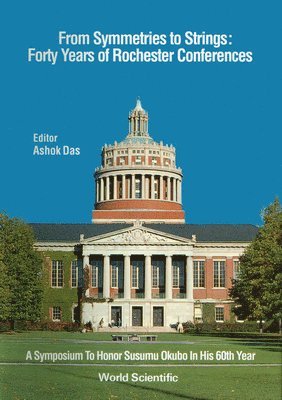
FROM SYMMETRIES TO STRINGS: FORTY YEARS OF ROCHESTER CONFERENCES
Inbunden, 1990
1966 kr
Tillfälligt slut
This conference celebrates the 40th anniversary of the first Rochester Conference and honours Prof. Susumu Okubo on his 60th birthday. The original Rochester Conference brought a small group of leading physicists to discuss current results and trends in both theory and experiment. The present …