A. David Napier – författare
Visar alla böcker från författaren A. David Napier. Handla med fri frakt och snabb leverans.
5 produkter
5 produkter
Inbunden, Engelska, 2014
1 839 kr
Skickas inom 5-8 vardagar
In Making Things Better, A. David Napier demonstrates how anthropological description of non-Western exchange practices and beliefs can be a tonic for contemporary economic systems in which our impersonal relationship to ''things'' transforms the animate elements of social life into inanimate sets of commodities. Such a fundamental transformation, Napier suggests, makes us automatons in globally integrated social circuits that generate a cast of a winners and losers engaged in hostile competition for wealth and power. Our impersonal relations to ''things''--and to people as well--are so ingrained in our being, we take them for granted as we sleepwalk through routine life. Like the surrealist artists of the 1920s who, through their art, poetry, films, and photography, fought a valiant battle against mind-numbing conformity, Napier provides exercises and practica designed to shock the reader from their wakeful sleep. These demonstrate powerfully the positively integrative social effects of more socially entangled, non-Western orientations to ''things'' and to ''people.'' His arguments also have implications for the rights and legal status of indigenous peoples, which are drawn out in the course of the book.
Häftad, Engelska, 2014
373 kr
Skickas inom 5-8 vardagar
In Making Things Better, A. David Napier demonstrates how anthropological description of non-Western exchange practices and beliefs can be a tonic for contemporary economic systems in which our impersonal relationship to ''things'' transforms the animate elements of social life into inanimate sets of commodities. Such a fundamental transformation, Napier suggests, makes us automatons in globally integrated social circuits that generate a cast of a winners and losers engaged in hostile competition for wealth and power. Our impersonal relations to ''things''--and to people as well--are so ingrained in our being, we take them for granted as we sleepwalk through routine life. Like the surrealist artists of the 1920s who, through their art, poetry, films, and photography, fought a valiant battle against mind-numbing conformity, Napier provides exercises and practica designed to shock the reader from their wakeful sleep. These demonstrate powerfully the positively integrative social effects of more socially entangled, non-Western orientations to ''things'' and to ''people.'' His arguments also have implications for the rights and legal status of indigenous peoples, which are drawn out in the course of the book.
E-bok
PDF, Engelska, 2013301 kr
Läs direkt efter köp
In Making Things Better, A. David Napier demonstrates how anthropological description of non-Western exchange practices and beliefs can be a tonic for contemporary economic systems in which our impersonal relationship to ''''things'''' transforms the animate elements of social life into inanimate sets of commodities. Such a fundamental transformation, Napier suggests, makes us automatons in globally integrated social circuits that generate a cast of a winners and losers engaged in hostile competition for wealth and power. Our impersonal relations to ''''things''''--and to people as well--are so ingrained in our being, we take them for granted as we sleepwalk through routine life. Like the surrealist artists of the 1920s who, through their art, poetry, films, and photography, fought a valiant battle against mind-numbing conformity, Napier provides exercises and practica designed to shock the reader from their wakeful sleep. These demonstrate powerfully the positively integrative social effects of more socially entangled, non-Western orientations to ''''things'''' and to ''''people.'''' His arguments also have implications for the rights and legal status of indigenous peoples, which are drawn out in the course of the book.
E-bok
PDF, Engelska, 20101 269 kr
Läs direkt efter köp
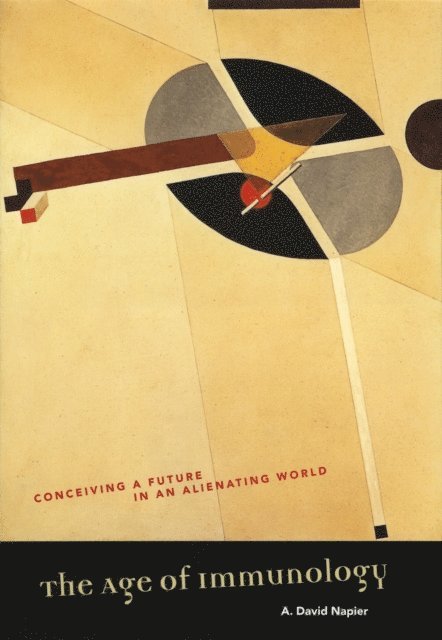
In this fascinating and inventive work, A. David Napier argues that the central assumption of immunology—that we survive through the recognition and elimination of non-self—has become a defining concept of the modern age. Tracing this immunological understanding of self and other through an incredibly diverse array of venues, from medical research to legal and military strategies and the electronic revolution, Napier shows how this defensive way of looking at the world not only destroys diversity but also eliminates the possibility of truly engaging difference, thereby impoverishing our culture and foreclosing tremendous opportunities for personal growth. To illustrate these destructive consequences, Napier likens the current craze for embracing diversity and the use of politically correct speech to a cultural potluck to which we each bring different dishes, but at which no one can eat unless they abide by the same rules. Similarly, loaning money to developing nations serves as a tool both to make the peoples in those nations more like us and to maintain them in the nonthreatening status of distant dependents. To break free of the resulting downward spiral of homogenization and self-focus, Napier suggests that we instead adopt a new defining concept based on embryology, in which development and self-growth take place through a process of incorporation and transformation. In this effort he suggests that we have much to learn from non-Western peoples, such as the Balinese, whose ritual practices require them to take on the considerable risk of injecting into their selves the potential dangers of otherness—and in so doing ultimately strengthen themselves as well as their society. The Age of Immunology, with its combination of philosophy, history, and cultural inquiry, will be seen as a manifesto for a new age and a new way of thinking about the world and our place in it.
E-bok
Engelska, 2023337 kr
Läs direkt efter köp
In five wide-ranging essays, A. David Napier explores the ways in which the foreign becomes literally and metaphorically embodied as a part of cultural identity rather than being seen as something outside it. Pre-classical Greece, Baroque Italy, and Western postmodernism are among the artistic domains Napier considers, while the symbolic terrain ranges from Balinese cosmography to body symbolism in biomedicine.This title was originally published in 1992. In five wide-ranging essays, A. David Napier explores the ways in which the foreign becomes literally and metaphorically embodied as a part of cultural identity rather than being seen as something outside it. Pre-classical Greece, Baroque Italy, and Weste