A Demichev – författare
Visar alla böcker från författaren A Demichev. Handla med fri frakt och snabb leverans.
8 produkter
Path Integrals in Physics
Volume II Quantum Field Theory, Statistical Physics and other Modern Applications
Inbunden, 2001
2139 kr
Lägg i varukorg
The path integral approach has proved extremely useful for the understanding of the most complex problems in quantum field theory, cosmology, and condensed matter physics. Path Integrals in Physics: Volume II, Quantum Field Theory, Statistical Physics and other Modern Applications covers the …
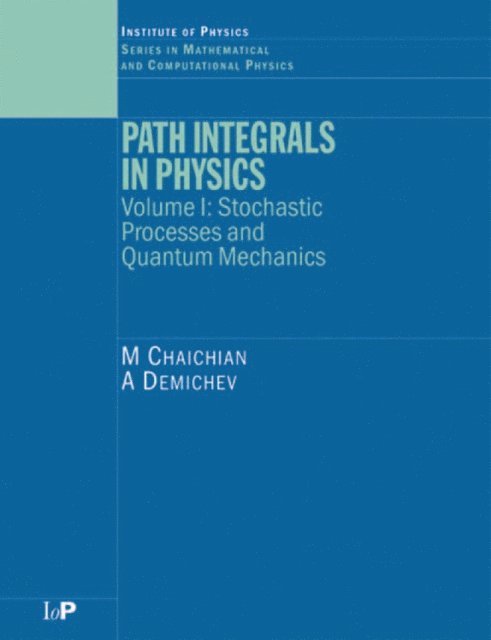
Path Integrals in Physics
Volume I Stochastic Processes and Quantum Mechanics
E-bok, 2018
1230 kr
Lägg i varukorg
Path Integrals in Physics: Volume I, Stochastic Processes and Quantum Mechanics presents the fundamentals of path integrals, both the Wiener and Feynman type, and their many applications in physics. Accessible to a broad community of theoretical physicists, the book deals with systems possessing a …
Path Integrals in Physics
Volume II Quantum Field Theory, Statistical Physics and other Modern Applications
E-bok, 2018
2528 kr
Lägg i varukorg
The path integral approach has proved extremely useful for the understanding of the most complex problems in quantum field theory, cosmology, and condensed matter physics. Path Integrals in Physics: Volume II, Quantum Field Theory, Statistical Physics and other Modern Applications covers the …
Path Integrals in Physics
Volume II Quantum Field Theory, Statistical Physics and other Modern Applications
E-bok, 2018
2528 kr
Lägg i varukorg
The path integral approach has proved extremely useful for the understanding of the most complex problems in quantum field theory, cosmology, and condensed matter physics. Path Integrals in Physics: Volume II, Quantum Field Theory, Statistical Physics and other Modern Applications covers the …
Path Integrals in Physics
Volume I Stochastic Processes and Quantum Mechanics
E-bok, 2018
1230 kr
Lägg i varukorg
Path Integrals in Physics: Volume I, Stochastic Processes and Quantum Mechanics presents the fundamentals of path integrals, both the Wiener and Feynman type, and their many applications in physics. Accessible to a broad community of theoretical physicists, the book deals with systems possessing a …
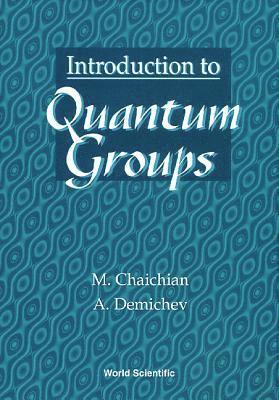
INTRODUCTION TO QUANTUM GROUPS
Inbunden, 1996
987 kr
Lägg i varukorg
In the past decade there has been an extemely rapid growth in the interest and development of quantum group theory.This book provides students and researchers with a practical introduction to the principal ideas of quantum groups theory and its applications to quantum mechanical and modern field …
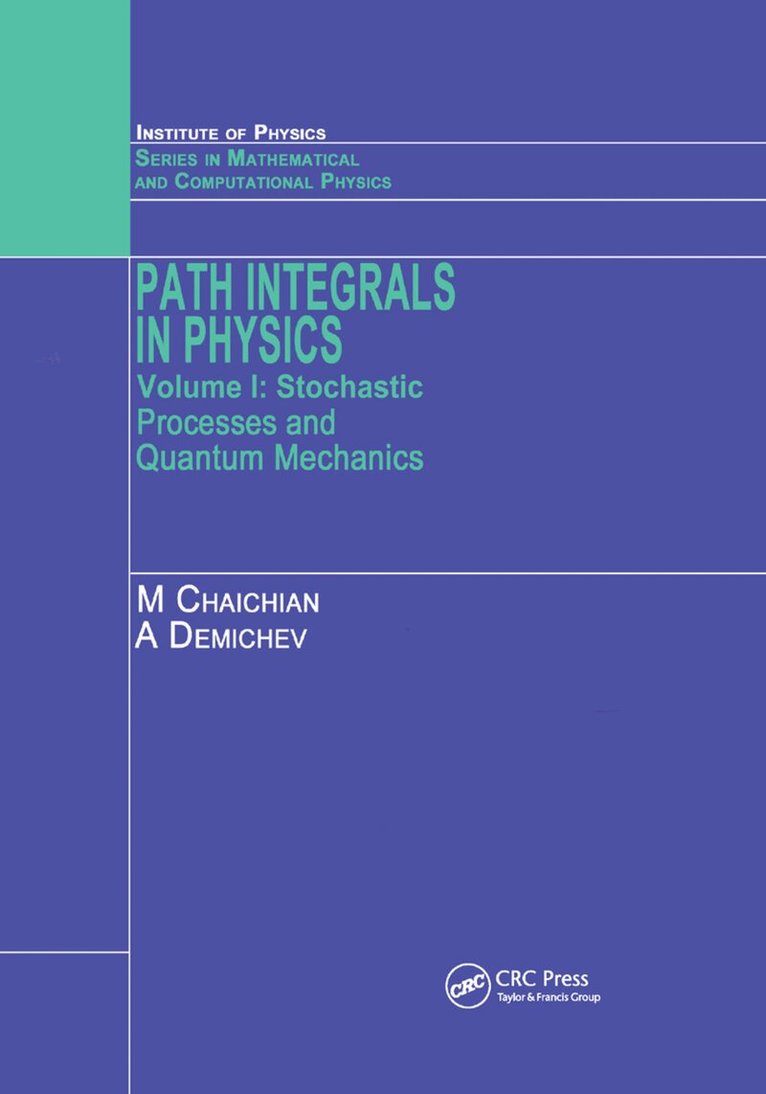
Path Integrals in Physics
Volume I Stochastic Processes and Quantum Mechanics
Häftad, 2019
1029 kr
Tillfälligt slut
Path Integrals in Physics: Volume I, Stochastic Processes and Quantum Mechanics presents the fundamentals of path integrals, both the Wiener and Feynman type, and their many applications in physics. Accessible to a broad community of theoretical physicists, the book deals with systems possessing a …
Path Integrals in Physics
Volume I Stochastic Processes and Quantum Mechanics
Inbunden, 2001
2483 kr
Tillfälligt slut
Path Integrals in Physics: Volume I, Stochastic Processes and Quantum Mechanics presents the fundamentals of path integrals, both the Wiener and Feynman type, and their many applications in physics. Accessible to a broad community of theoretical physicists, the book deals with systems possessing a …