A. Franklin – författare
Visar alla böcker från författaren A. Franklin. Handla med fri frakt och snabb leverans.
6 produkter
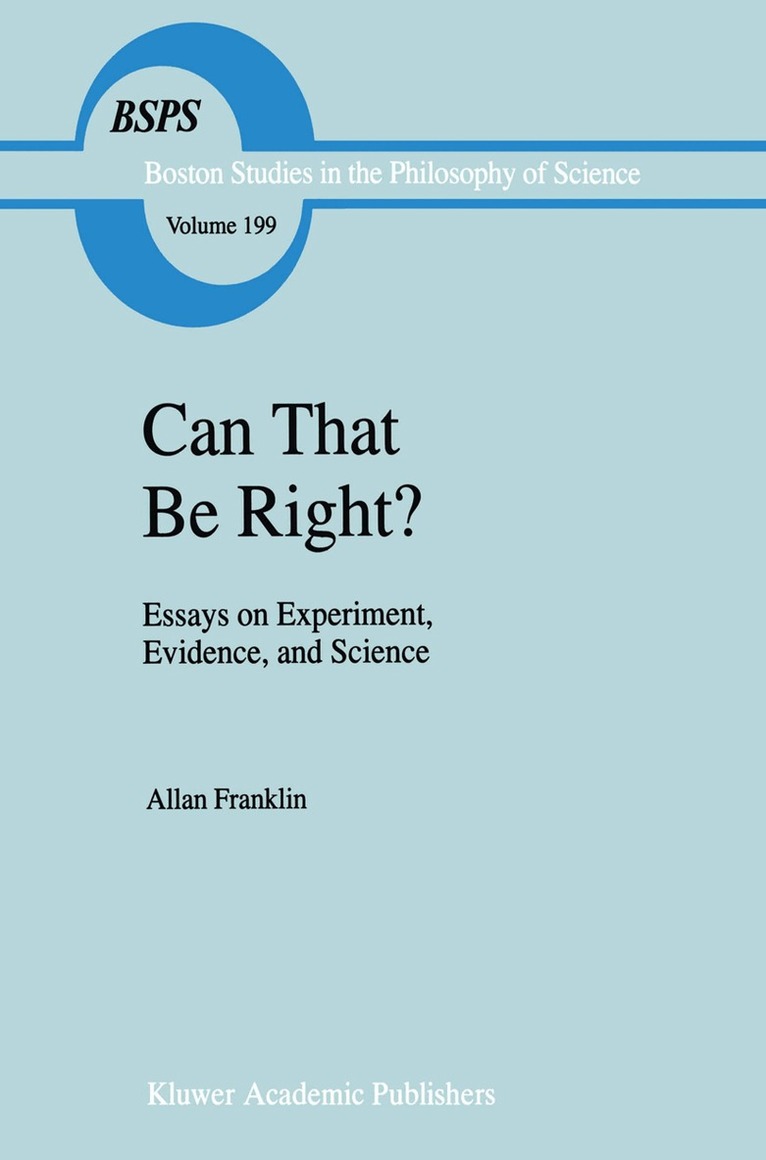
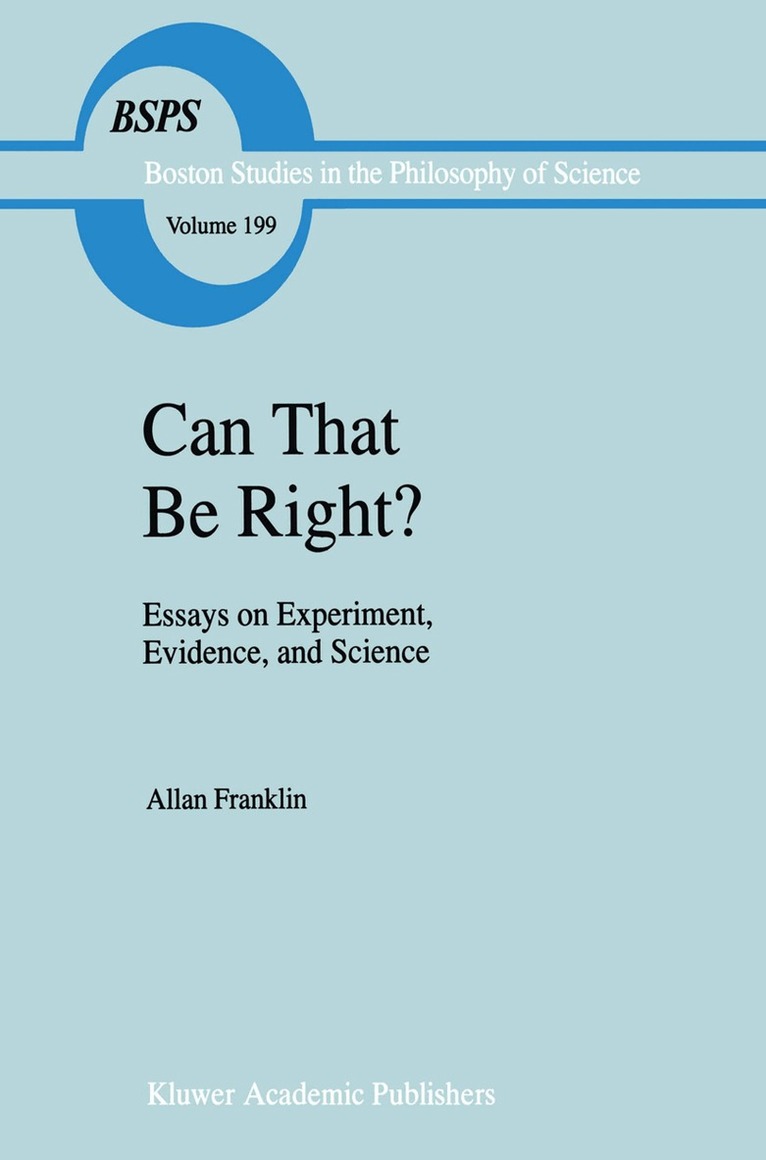
Can that be Right?
Essays on Experiment, Evidence, and Science
Av A. Franklin
Inbunden, 1998
1639 kr
Lägg i varukorg
In this collection of essays Allan Franklin defends the view that science provides us with knowledge about the world which is based on experimental evidence and on reasoned and critical discussion. In short, he argues that science is a reasonable enterprise. He begins with detailed studies of four …
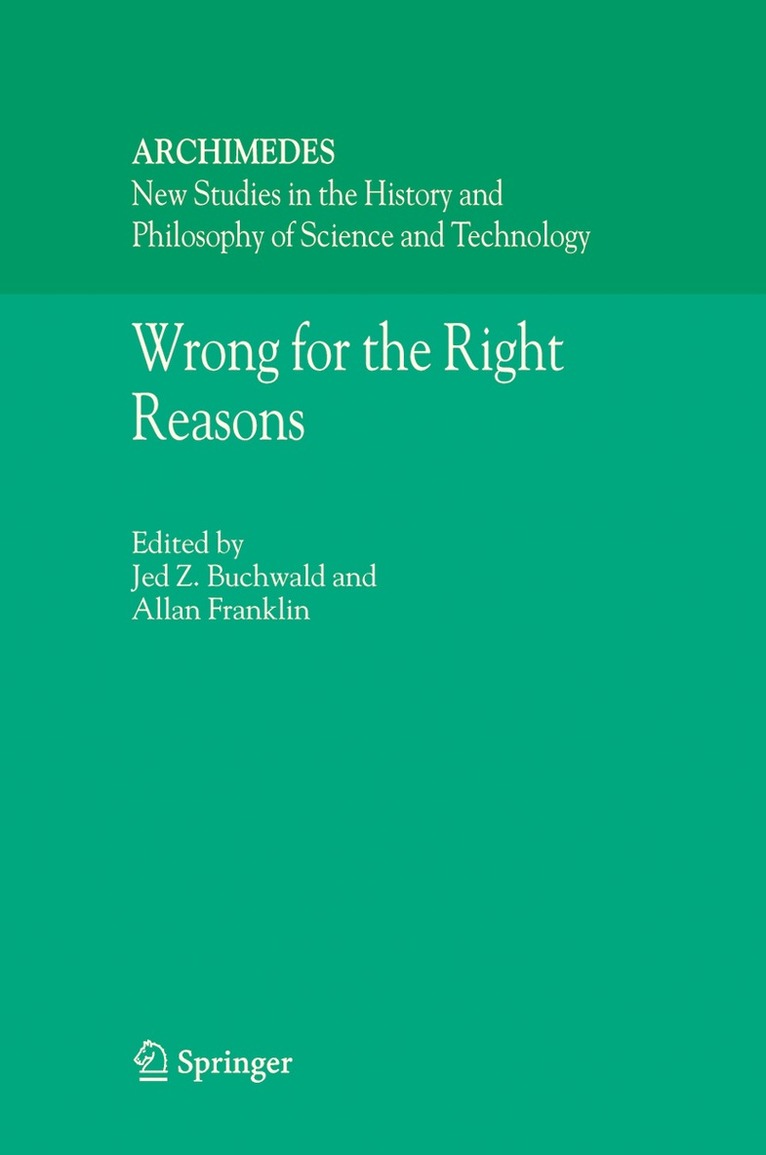
Wrong for the Right Reasons
Av Jed Z. Buchwald, A. Franklin
Inbunden, 2005
1095 kr
Lägg i varukorg
The rapidity with which knowledge changes makes much of past science obsolete, and often just wrong, from the present's point of view. We no longer think, for example, that heat is a material substance transferred from hot to cold bodies. But is wrong science always or even usually bad science? The …
Wrong for the Right Reasons
Av A. Franklin, Jed Z. Buchwald
E-bok, 2006
1413 kr
Lägg i varukorg
The rapidity with which knowledge changes makes much of past science obsolete, and often just wrong, from the present''s point of view. We no longer think, for example, that heat is a material substance transferred from hot to cold bodies. But is wrong science always or even usually bad science? …
Wrong for the Right Reasons
Av Jed Z. Buchwald, A. Franklin
Häftad, 2010
1095 kr
Lägg i varukorg
The rapidity with which knowledge changes makes much of past science obsolete, and often just wrong, from the present's point of view. We no longer think, for example, that heat is a material substance transferred from hot to cold bodies. But is wrong science always or even usually bad science? The …
Can that be Right?
Essays on Experiment, Evidence, and Science
Av A. Franklin
Häftad, 2012
1688 kr
Lägg i varukorg
In this collection of essays Allan Franklin defends the view that science provides us with knowledge about the world which is based on experimental evidence and on reasoned and critical discussion. In short, he argues that science is a reasonable enterprise. He begins with detailed studies of four …
Can that be Right?
Essays on Experiment, Evidence, and Science
Av A. Franklin
E-bok, 2012
2105 kr
Lägg i varukorg
In this collection of essays Allan Franklin defends the view that science provides us with knowledge about the world which is based on experimental evidence and on reasoned and critical discussion. In short, he argues that science is a reasonable enterprise. He begins with detailed studies of four …