A. G. Hopkins - Böcker
Visar alla böcker från författaren A. G. Hopkins. Handla med fri frakt och snabb leverans.
11 produkter
11 produkter
2 445 kr
Skickas inom 10-15 vardagar
This pioneering and celebrated work was the first, and remains the standard, account of the economic history of the huge area conventionally known as West Africa.The book ranges from prehistoric times to independence and covers the former French territories, as well as those colonised by the British. It criticises conventional beliefs about economic backwardness, offers an alternative account that explains the particular configuration of poverty that characterised the pre-colonial period, and assesses the consequences of the region’s interaction with the wider world – from the growth of the Saharan and Atlantic trades to the rise and demise of colonial rule. This edition contains a substantial new Introduction that discusses the development of the subject during the past 50 years, evaluates the debate over the original interpretation, and provides a valuable guide to additional reading, bringing the reader up to date with current scholarship on the subject, as well as providing avenues for further independent research.Appearing at a time when the study of African economic history is enjoying a revival and is engaging economists as well as historians, the book fills a large gap in African studies, provides newcomers with a stimulating point of entry into the subject, and contributes to our understanding of wider issues of global underdevelopment.
787 kr
Skickas inom 10-15 vardagar
This pioneering and celebrated work was the first, and remains the standard, account of the economic history of the huge area conventionally known as West Africa.The book ranges from prehistoric times to independence and covers the former French territories, as well as those colonised by the British. It criticises conventional beliefs about economic backwardness, offers an alternative account that explains the particular configuration of poverty that characterised the pre-colonial period, and assesses the consequences of the region’s interaction with the wider world – from the growth of the Saharan and Atlantic trades to the rise and demise of colonial rule. This edition contains a substantial new Introduction that discusses the development of the subject during the past 50 years, evaluates the debate over the original interpretation, and provides a valuable guide to additional reading, bringing the reader up to date with current scholarship on the subject, as well as providing avenues for further independent research.Appearing at a time when the study of African economic history is enjoying a revival and is engaging economists as well as historians, the book fills a large gap in African studies, provides newcomers with a stimulating point of entry into the subject, and contributes to our understanding of wider issues of global underdevelopment.
1 957 kr
Skickas inom 10-15 vardagar
This volume brings together important articles from the Cambridge historian A. G. Hopkins and reflect the enlargement and evolution of historical studies during the last half century. The essays cover four of the principal historiographical developments of the period: the extraordinary revolution that has led to the writing of non-Western indigenous history; the revitalization of new types of imperial history; the now ubiquitous engagement with global history, including a reinterpretation of American Empire, and the current revival of economic history after several decades of neglect.
648 kr
Skickas inom 10-15 vardagar
This volume brings together important articles from the Cambridge historian A. G. Hopkins and reflect the enlargement and evolution of historical studies during the last half century. The essays cover four of the principal historiographical developments of the period: the extraordinary revolution that has led to the writing of non-Western indigenous history; the revitalization of new types of imperial history; the now ubiquitous engagement with global history, including a reinterpretation of American Empire, and the current revival of economic history after several decades of neglect.
331 kr
Skickas inom 7-10 vardagar
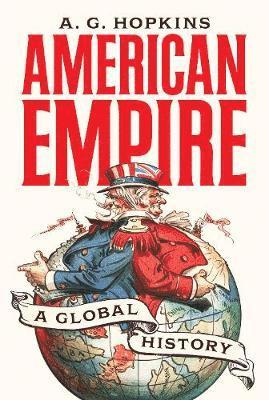
A new history of the United States that turns American exceptionalism on its head American Empire is a panoramic work of scholarship that presents a bold new global perspective on the history of the United States. Drawing on his expertise in economic history and the imperial histories of Britain and Europe, A. G. Hopkins takes readers from the colonial era to today to show how, far from diverging, the United States and Western Europe followed similar trajectories throughout this long period, and how America's dependency on Britain and Europe extended much later into the nineteenth century than previously understood. In a sweeping narrative spanning three centuries, Hopkins describes how the revolt of the mainland colonies was the product of a crisis that afflicted the imperial states of Europe generally, and how the history of the American republic between 1783 and 1865 was a response not to the termination of British influence but to its continued expansion. He traces how the creation of a U.S. industrial nation-state after the Civil War paralleled developments in Western Europe, fostered similar destabilizing influences, and found an outlet in imperialism through the acquisition of an insular empire in the Caribbean and Pacific.The period of colonial rule that followed reflected the history of the European empires in its ideological justifications, economic relations, and administrative principles. After 1945, a profound shift in the character of globalization brought the age of the great territorial empires to an end. American Empire goes beyond the myth of American exceptionalism to place the United States within the wider context of the global historical forces that shaped the Western empires and the world.
233 kr
Skickas inom 7-10 vardagar
A new history of the United States that turns American exceptionalism on its headAmerican Empire is a panoramic work of scholarship that presents a bold new global perspective on the history of the United States. Taking readers from the colonial era to today, A. G. Hopkins shows how, far from diverging, the United States and Western Europe followed similar trajectories throughout this long period, and how America's dependency on Britain and Europe extended much later into the nineteenth century than previously understood. A sweeping narrative spanning three centuries, American Empire goes beyond the myth of American exceptionalism to place the United States within the wider context of the global historical forces that shaped Western empires and the world.
411 kr
Skickas inom 7-10 vardagar
An account that challenges the conventional views of African merchants under colonialism, examining the emergence and changing fortunes of indigenous entrepreneurs in Lagos, NigeriaIn Capitalism in the Colonies, A. G. Hopkins provides the first substantial assessment of the fortunes of African entrepreneurs under colonial rule. Examining the lives and careers of 100 merchants in Lagos, Nigeria, between 1850 and 1931, Hopkins challenges conventional views of the contribution made by indigenous entrepreneurs to the long-run economic development of Nigeria. He argues that African merchants in Lagos not only survived, but were also responsible for key innovations in trade, construction, farming, and finance that are essential for understanding the development of Nigeria’s economy.The book is based on a large, representative sample and covers a time span that traces mercantile fortunes over two and three generations. Drawing on a wide range of sources, Hopkins shows that indigenous entrepreneurs were far more adventurous than expatriate firms. African merchants in Lagos pioneered motor vehicles, sewing machines, publishing, tanneries, and new types of internal trade. They founded the construction industry that built Lagos into a major port city, moved inland to start the cocoa-farming industry, and developed the finance sector that is still vital to Nigeria’s economy. They also took the lead in changing single-owned businesses into limited liability companies, creating freehold property rights and promoting wage labour. In short, Hopkins argues, they were the capitalists who introduced the institutions of capitalism into Nigeria. The story of African merchants in Nigeria reminds us, he writes, that economic structures have no life of their own until they are animated by the actions of creative individuals.
250 kr
Skickas inom 7-10 vardagar
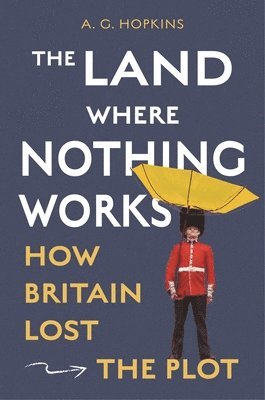
Tracing the origins of Britain’s current malaise to the abandonment of social democracyWhat has happened to Britain? As drivers on its roads can attest, it is the pothole capital of Europe. Once-beautiful towns now feature peeling paint, weeds, and broken railings. Public services are no longer fit for purpose. A malaise seems to infect every aspect of British life: its economy, polity, social order, sense of well-being, domestic regional relationships, and place in the world. In The Land Where Nothing Works, the distinguished historian A. G. Hopkins offers an explanation, tracing Britain’s current problems to decisions made in the 1980s that abandoned its postwar experiment in social democracy and mimicked policies of deregulation and privatisation promoted by the United States.In 1945, the new Labour government’s development programme aimed at creating a social democracy that would benefit all members of society. The counterrevolution launched by Margaret Thatcher’s government in 1979, which remains in force today, promoted individualism and deregulation. The transition from one programme to another was a response to the growth of finance and services centred on the City of London, and to decolonisation, which redirected trade to Europe. The expansion of credit led to the financial crisis of 2008 and the years of austerity that followed, and fuelled the populist movement that culminated in Brexit. Hopkins argues that, instead of following the free-market policies of its mentor, the United States, Britain should draw on its own history of social democracy and borrow from its neighbours in Europe, where communitarian principles continue to be upheld.
2 305 kr
Skickas inom 10-15 vardagar
A milestone in the understanding of British history and imperialism, this ground-breaking book radically reinterprets the course of modern economic development and the causes of overseas expansion during the past three centuries. Employing their concept of 'gentlemanly capitalism', the authors draw imperial and domestic British history together to show how the shape of the nation and its economy depended on international and imperial ties, and how these ties were undone to produce the post-colonial world of today. Containing a significantly expanded and updated Foreword and Afterword, this third edition assesses the development of the debate since the book’s original publication, discusses the imperial era in the context of the controversy over globalization, and shows how the study of the age of empires remains relevant to understanding the post-colonial world. Covering the full extent of the British empire from China to South America and taking a broad chronological view from the seventeenth century to post-imperial Britain today, British Imperialism: 1688–2015 is the perfect read for all students of imperial and global history.
857 kr
Skickas inom 10-15 vardagar
A milestone in the understanding of British history and imperialism, this ground-breaking book radically reinterprets the course of modern economic development and the causes of overseas expansion during the past three centuries. Employing their concept of 'gentlemanly capitalism', the authors draw imperial and domestic British history together to show how the shape of the nation and its economy depended on international and imperial ties, and how these ties were undone to produce the post-colonial world of today. Containing a significantly expanded and updated Foreword and Afterword, this third edition assesses the development of the debate since the book’s original publication, discusses the imperial era in the context of the controversy over globalization, and shows how the study of the age of empires remains relevant to understanding the post-colonial world. Covering the full extent of the British empire from China to South America and taking a broad chronological view from the seventeenth century to post-imperial Britain today, British Imperialism: 1688–2015 is the perfect read for all students of imperial and global history.
1 754 kr
Skickas inom 10-15 vardagar
Globalization is the buzz-word of today. It envelops our world, but it also has long historical roots. This edited volume shows how the universal principles embodied in the process of globalization have interacted with diverse localities across the globe during the past two centuries.A. G. Hopkins presents a collection of fresh case studies that draw on different parts of the world - ranging from the Navajo reservation to Japan, via the Middle East and Vietnam - and cover various types of history: economic, political, social, cultural and intellectual. Hopkins's Introduction places the new global history in the context of national history and world history; William H. McNeill, the pioneering historian of large-scale history, concludes the volume with a reflective Afterword. The historical record demonstrates that globalization has not only produced uniformity but has also reinforced difference. Global History offers a coherent explanation of these diverging outcomes, and in doing so points towards a new type of world history. It is essential reading for anyone studying international history, world history, globalization, or world politics.