A. Maeder - Böcker
Visar alla böcker från författaren A. Maeder. Handla med fri frakt och snabb leverans.
6 produkter
6 produkter
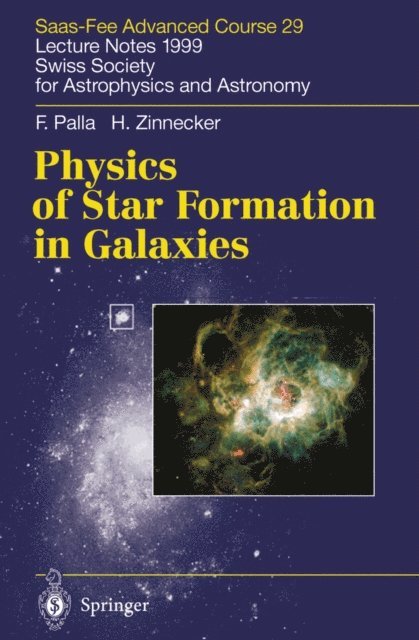
Physics of Star Formation in Galaxies
Saas-Fee Advanced Course 29. Lecture Notes 1999. Swiss Society for Astrophysics and Astronomy
Inbunden, Engelska, 2002
1 064 kr
Skickas inom 10-15 vardagar
The book begins with a historical introduction, "Star Formation: The Early History", that presents new material of interest for students and historians of science. This is followed by two long articles on "Pre-Main-Sequence Evolution of Stars and Young Clusters" and "Observations of Young Stellar Objects". These articles on the fascinating problem of star formation from interstellar matter give a thorough overview of present-day theories and observations. The articles contain material so far unpublished in the astronomical literature. The book addresses graduate students and can be used as a textbook for advanced courses in stellar astrophysics.
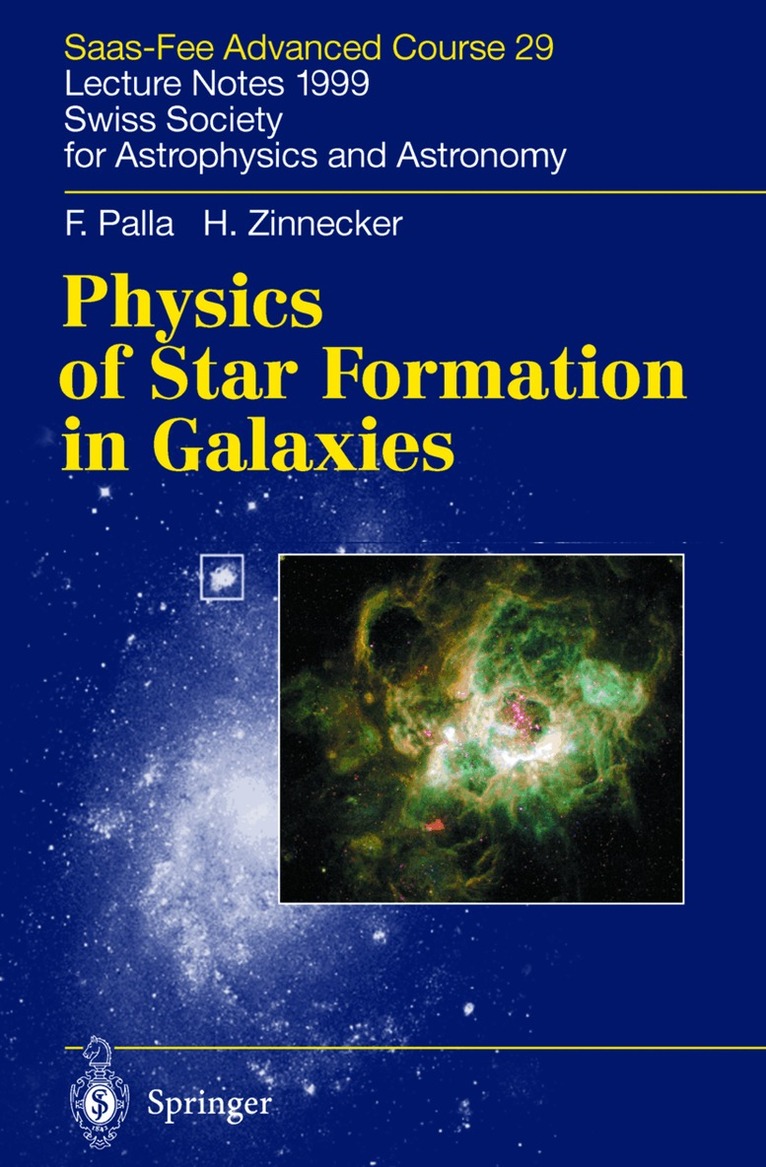
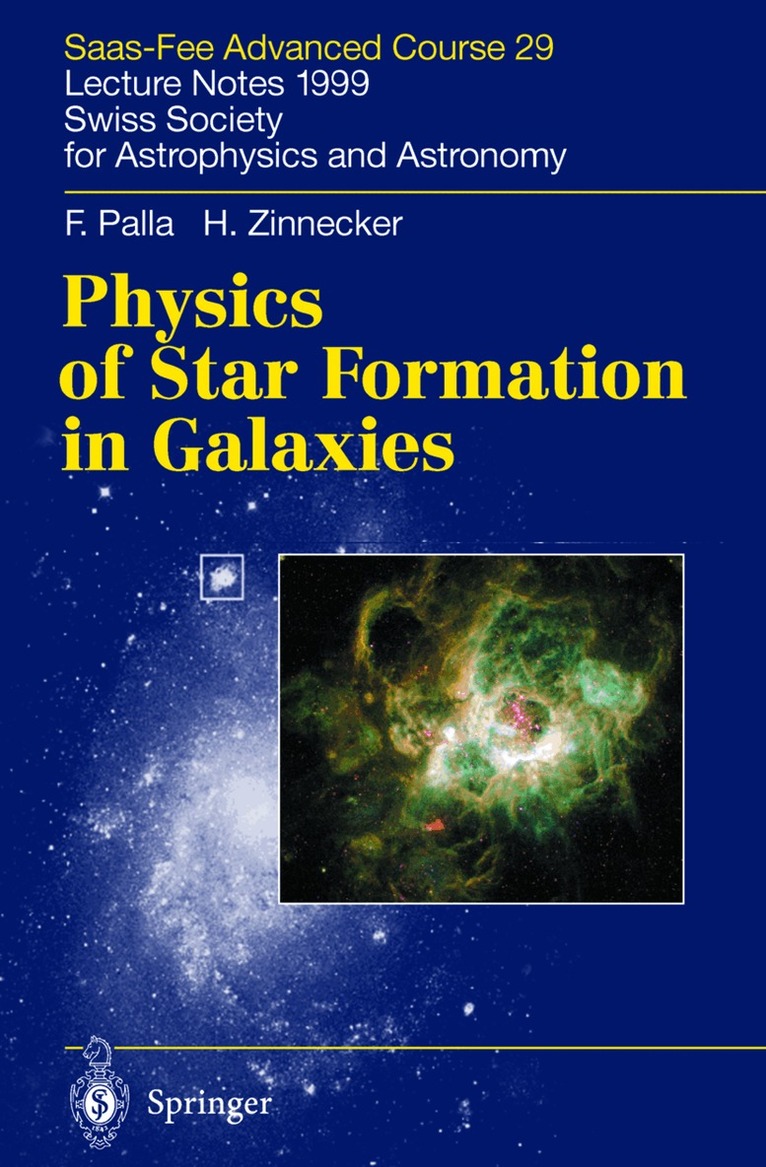
Physics of Star Formation in Galaxies
Saas-Fee Advanced Course 29. Lecture Notes 1999. Swiss Society for Astrophysics and Astronomy
Häftad, Engelska, 2010
1 064 kr
Skickas inom 10-15 vardagar
The book begins with a historical introduction, "Star Formation: The Early History", that presents new material of interest for students and historians of science. This is followed by two long articles on "Pre-Main-Sequence Evolution of Stars and Young Clusters" and "Observations of Young Stellar Objects". These articles on the fascinating problem of star formation from interstellar matter give a thorough overview of present-day theories and observations. The articles contain material so far unpublished in the astronomical literature. The book addresses graduate students and can be used as a textbook for advanced courses in stellar astrophysics.
1 578 kr
Skickas inom 10-15 vardagar
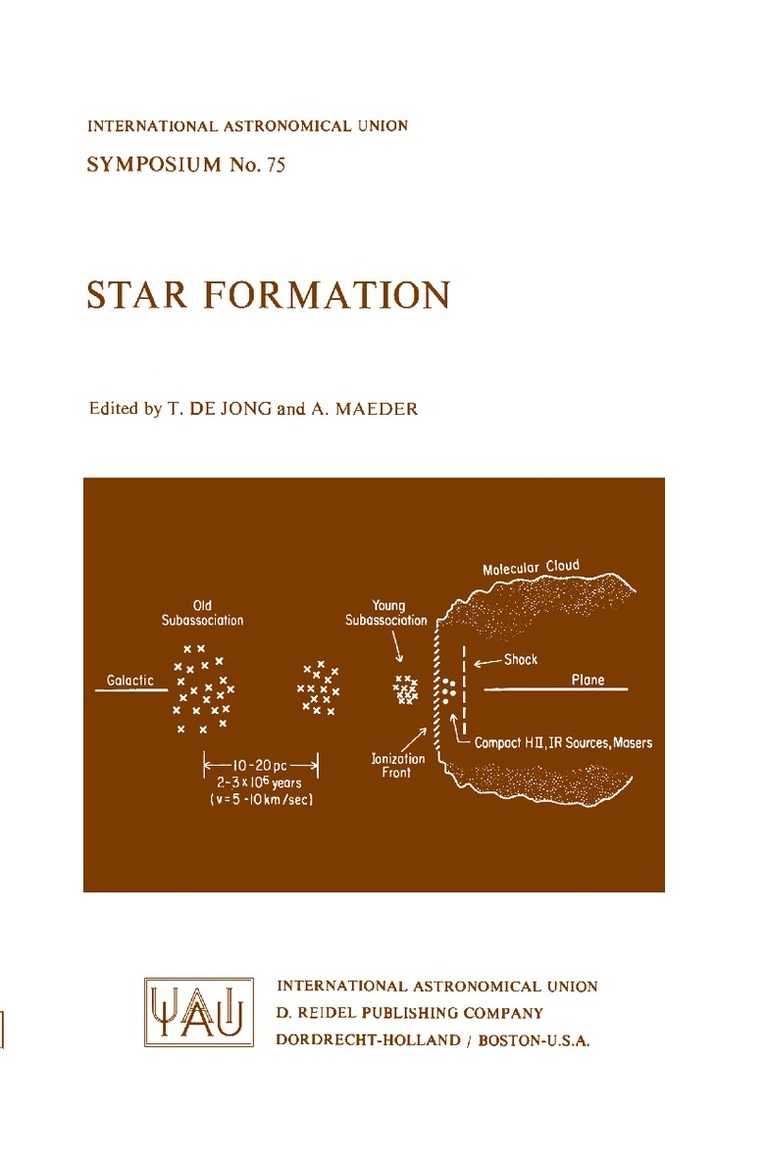
Proceedings of IAU Symposium No. 75 held in Geneva, Switzerland, September 6-10, 1976. Dedicated to Solomon Pikel'ner
1 578 kr
Skickas inom 10-15 vardagar
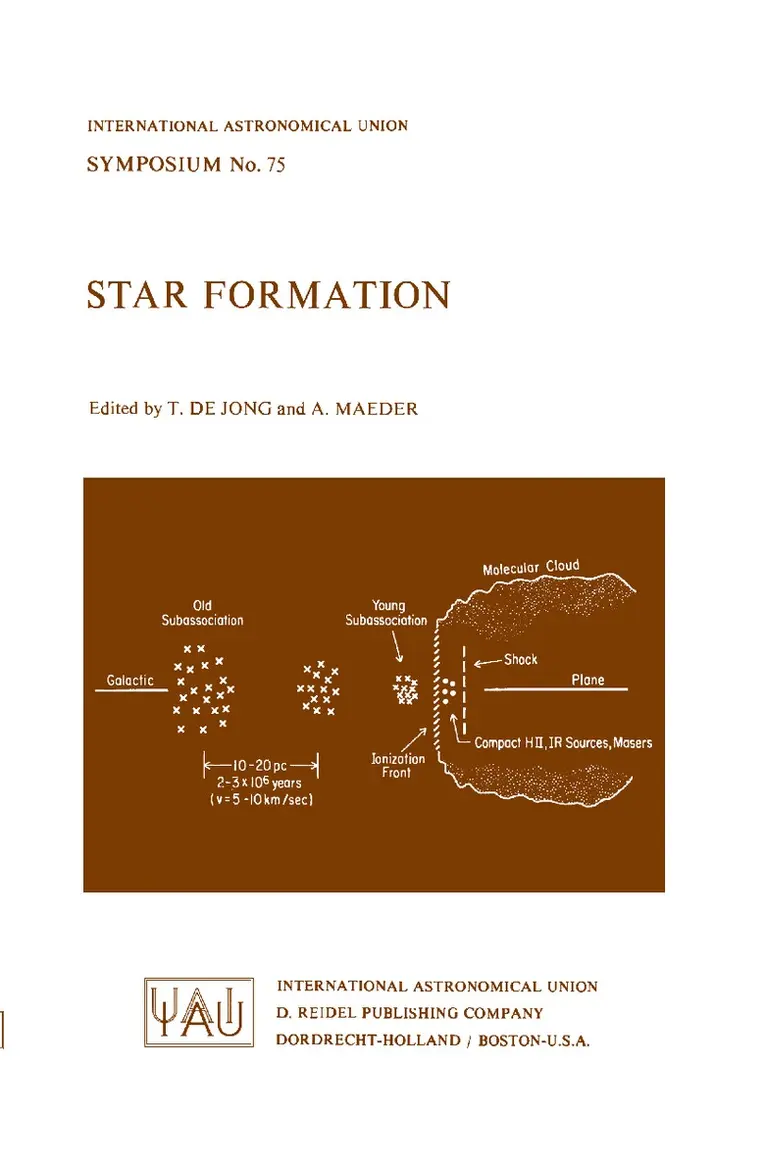
Proceedings of IAU Symposium No. 75 held in Geneva, Switzerland, September 6-10, 1976. Dedicated to Solomon Pikel'ner
2 101 kr
Skickas inom 10-15 vardagar
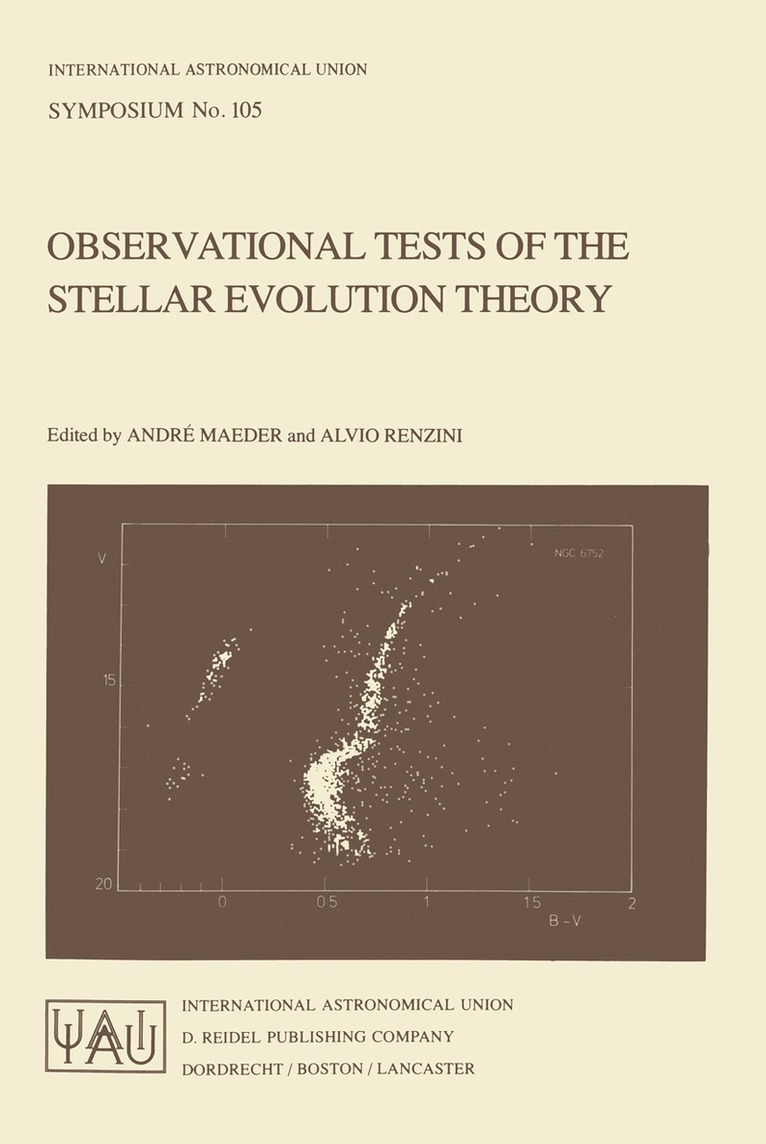
"If simple perfect laws uniquely rule the universe, should not pure thought be capable of uncovering this perfect set of laws without having to lean on the crutches of tediously assembled observations? True, the laws to be discovered may be perfect, but the human brain is not. Left on its own, it is prone to stray, as many past examples sadly prove. In fact, we have missed few chances to err until new data freshly gleaned from nature set us right again for the next steps. Thus pillars rather than crutches are the observations on which we base our theories; and for the theory of stellar evolution these pillars must be there before we can get far on the right track. " These words written by Martin Schwarzschi1d in his famous book en titled "Structure and Evolution of the Stars"(1958) remind us how necessary and fruitful is the interplay of stellar evolution theory and observations. Clearly, observations are the great censor by their possibility of confirming or contradicting theoretical constructions. In addition, they have a driving role: new and sometimes unexpected facts may give rise to progressive ideas and stimulate further theoretical developments. In turn, theory, in its major role of sifting out and placing the facts in a logical sequence based on physical laws, must also be predictive and indicate new and pertinent observations to be undertaken.
2 101 kr
Skickas inom 10-15 vardagar
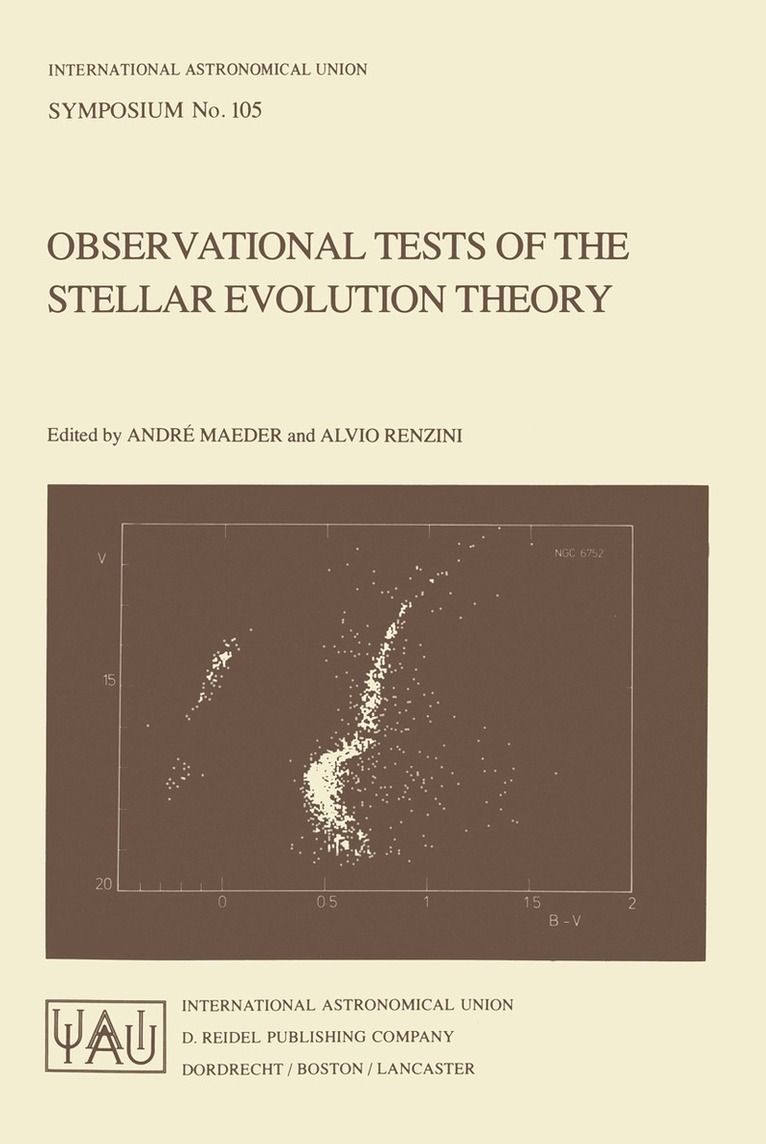
"If simple perfect laws uniquely rule the universe, should not pure thought be capable of uncovering this perfect set of laws without having to lean on the crutches of tediously assembled observations? True, the laws to be discovered may be perfect, but the human brain is not. Left on its own, it is prone to stray, as many past examples sadly prove. In fact, we have missed few chances to err until new data freshly gleaned from nature set us right again for the next steps. Thus pillars rather than crutches are the observations on which we base our theories; and for the theory of stellar evolution these pillars must be there before we can get far on the right track. " These words written by Martin Schwarzschi1d in his famous book en titled "Structure and Evolution of the Stars"(1958) remind us how necessary and fruitful is the interplay of stellar evolution theory and observations. Clearly, observations are the great censor by their possibility of confirming or contradicting theoretical constructions. In addition, they have a driving role: new and sometimes unexpected facts may give rise to progressive ideas and stimulate further theoretical developments. In turn, theory, in its major role of sifting out and placing the facts in a logical sequence based on physical laws, must also be predictive and indicate new and pertinent observations to be undertaken.