A. Preumont – författare
Visar alla böcker från författaren A. Preumont. Handla med fri frakt och snabb leverans.
13 produkter
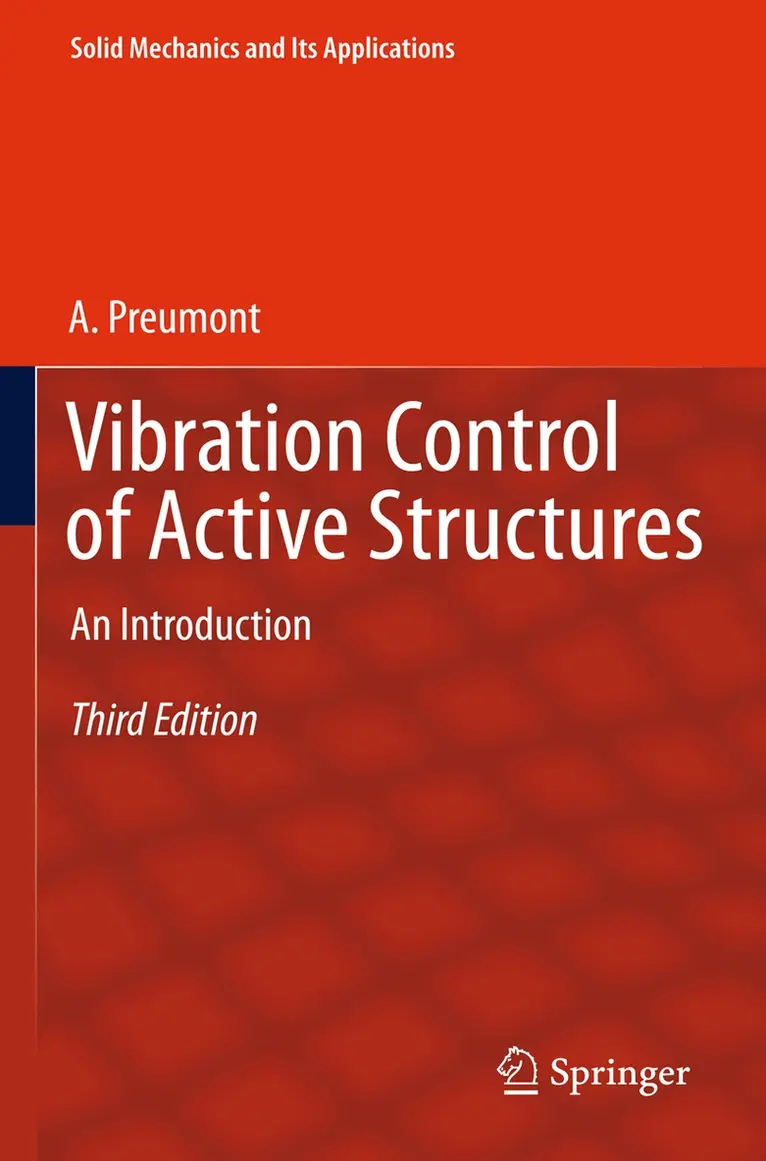
Vibration Control of Active Structures
An Introduction
Av A. Preumont
E-bok, 2006
1148 kr
Lägg i varukorg
My objective in writing this book was to cross the bridge between the structural dynamics and control communities, while providing an overview of the potential of SMART materials for sensing and actuating purposes in active vibration c- trol. I wanted to keep it relatively simple and focused on …
Random Vibration and Spectral Analysis/Vibrations aléatoires et analyse spectral
Av A. Preumont
Inbunden, 1994
1861 kr
Lägg i varukorg
I became interested in Random Vibration during the preparation of my PhD dissertation, which was concerned with the seismic response of nuclear reactor cores. I was initiated into this field through the cla.ssical books by Y.K.Lin, S.H.Crandall and a few others. After the completion of my PhD, in …
Responsive Systems for Active Vibration Control
Av Andre Preumont, NATO Advanced Study Institute on Respons m. fl.
Häftad, 2002
552 kr
Lägg i varukorg
Structural vibrations have become the critical factor limiting the performance of many engineering systems, typical amplitudes ranging from meters to a few nanometers. Many acoustic nuisances in transportation systems and residential and office buildings are also related to structural vibrations. …
Mechatronics
Dynamics of Electromechanical and Piezoelectric Systems
Av A. Preumont
Inbunden, 2006
1206 kr
Lägg i varukorg
This volume treats Lagrange equations for electromechanical systems, including piezoelectric transducers and selected applications. It is essentially an extension to piezoelectric systems of the work by Crandall et al.:"Dynamics of Mechanical and Electromechanical Systems", McGraw-Hill, published …
Mechatronics
Dynamics of Electromechanical and Piezoelectric Systems
Av A. Preumont
E-bok, 2006
1573 kr
Lägg i varukorg
Random Vibration and Spectral Analysis/Vibrations aléatoires et analyse spectral
Av A. Preumont
Häftad, 2010
1861 kr
Lägg i varukorg
This text constitutes a revised edition of the book published in French by the 'Presses Polytechniques et Universitaires Romandes' in 1991. It contains a comprehensive treatment of the theory of random vibration of linear structures subjected to stationary or nonstationary excitations. The book …
Mechatronics
Dynamics of Electromechanical and Piezoelectric Systems
Av A. Preumont
Häftad, 2011
1207 kr
Lägg i varukorg
This volume treats Lagrange equations for electromechanical systems, including piezoelectric transducers and selected applications. It is essentially an extension to piezoelectric systems of the work by Crandall et al.:"Dynamics of Mechanical and Electromechanical Systems", published in 1968. The …
Vibration Control of Active Structures
An Introduction
Av A. Preumont
E-bok, 2011
712 kr
Lägg i varukorg
This text is an introduction to the dynamics of active structures and to the feedback control of lightly damped flexible structures; the emphasis is placed on basic issues and simple control strategies that work. Now in its third edition, more chapters have been added, and comments and feedback …
Responsive Systems for Active Vibration Control
Av A. Preumont
E-bok, 2012
734 kr
Lägg i varukorg
Structural vibrations have become the critical factor limiting the performance of many engineering systems, typical amplitudes ranging from meters to a few nanometers. Many acoustic nuisances in transportation systems and residential and office buildings are also related to structural vibrations. …
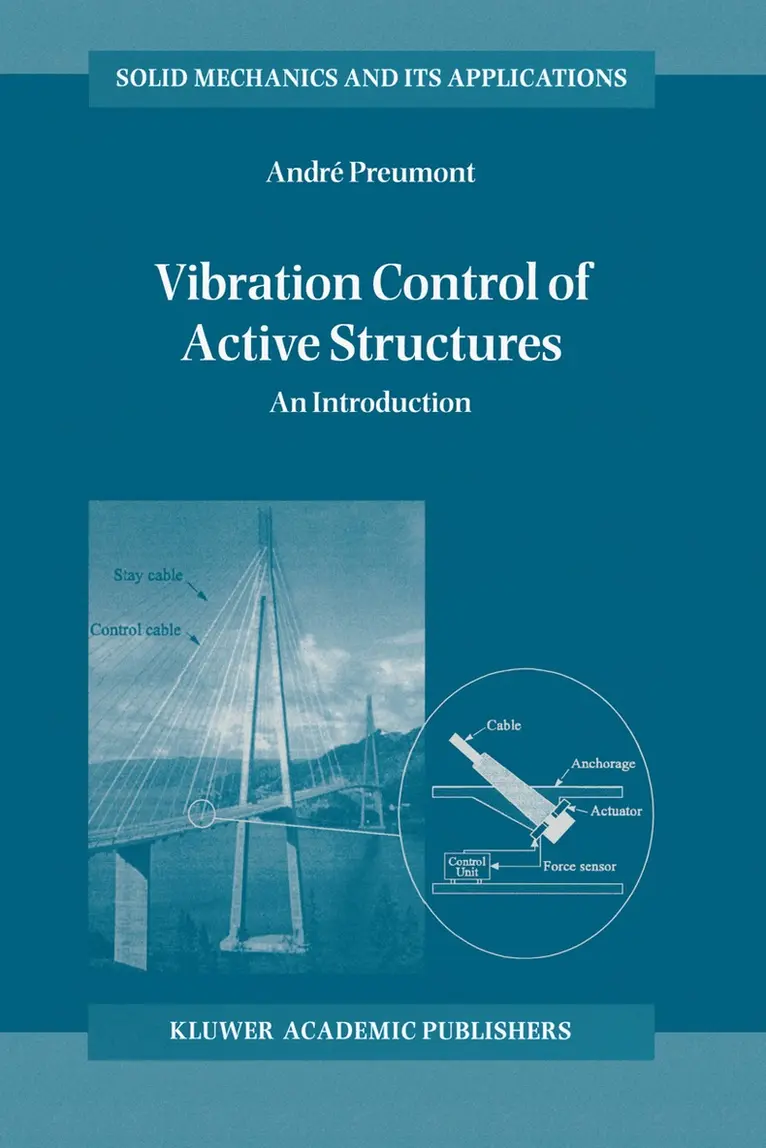
Vibration Control of Active Structures
An Introduction
Av A. Preumont
Häftad, 2012
551 kr
Lägg i varukorg
I was introduced to structural control by Raphael Haftka and Bill Hallauer during a one year stay at the Aerospace and Ocean Engineering department of Virginia Tech., during the academic year 1985-1986. At that time, there was a tremendous interest in large space structures in the USA, mainly …
Vibration Control of Active Structures
An Introduction
Av A. Preumont
E-bok, 2012
734 kr
Lägg i varukorg
I was introduced to structural control by Raphael Haftka and Bill Hallauer during a one year stay at the Aerospace and Ocean Engineering department of Virginia Tech., during the academic year 1985-1986. At that time, there was a tremendous interest in large space structures in the USA, mainly …
Random Vibration and Spectral Analysis/Vibrations aleatoires et analyse spectral
Av A. Preumont
E-bok, 2013
2359 kr
Lägg i varukorg
I became interested in Random Vibration during the preparation of my PhD dissertation, which was concerned with the seismic response of nuclear reactor cores. I was initiated into this field through the cla.ssical books by Y.K.Lin, S.H.Crandall and a few others. After the completion of my PhD, in …
Vibration Control of Active Structures
An Introduction
Av A. Preumont
Inbunden, 2011
748 kr
Tillfälligt slut
This text is an introduction to the dynamics of active structures and to the feedback control of lightly damped flexible structures; the emphasis is placed on basic issues and simple control strategies that work.Now in its third edition, more chapters have been added, and comments and feedback from …