A. R. J. Fisher – författare
Visar alla böcker från författaren A. R. J. Fisher. Handla med fri frakt och snabb leverans.
9 produkter
9 produkter
E-bok
PDF, Engelska, 2018842 kr
Läs direkt efter köp
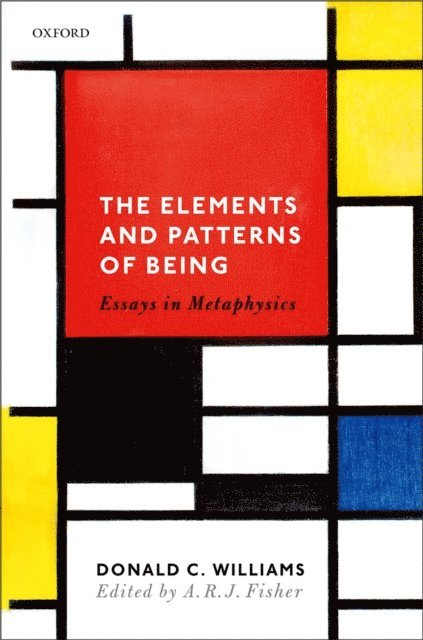
The Harvard philosopher Donald C. Williams (1899-1983) was a key figure in the history of analytic philosophy.He played a crucial role in reviving metaphysics at a time when other philosophers ridiculed, criticized, and committed it to the flames. He constructed an explanatorily powerful and parsimonious ontology and cosmology founded on logic, science, and common sense. His most influential articles were on the metaphysics of properties (''The Elements of Being'') and the metaphysics of time (''The Sea Fight Tomorrow'', ''The Myth of Passage''). His ontology of abstract particulars or tropes and hisfour-dimensional manifold theory of time remain leading hypotheses in metaphysics. Because of his novel contributions and his defense of metaphysics he made a lasting impact on philosophers of the next generation who in turn believed in the substance of metaphysical inquiry.A. R. J. Fisher brings together Williams''s seminal articles in metaphysics along with previously unpublished essays that shed new light on his philosophical outlook and complete his metaphysical vision. This volume, with its comprehensive Introduction, is set to be the definitive source for Williams''s work, both for historians of analytic philosophy and for contemporary metaphysicians.
E-bok
Engelska, 2018849 kr
Läs direkt efter köp
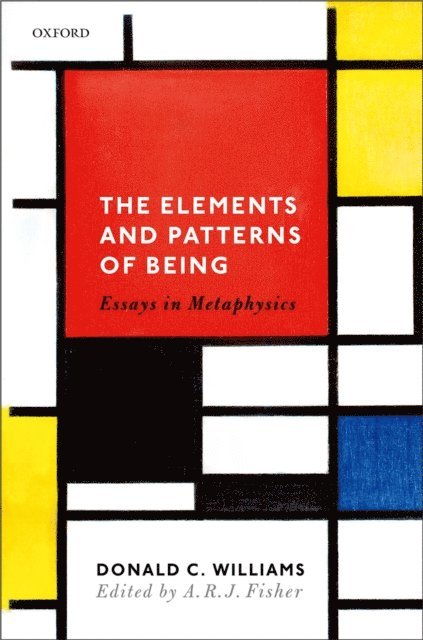
The Harvard philosopher Donald C. Williams (1899-1983) was a key figure in the history of analytic philosophy.He played a crucial role in reviving metaphysics at a time when other philosophers ridiculed, criticized, and committed it to the flames. He constructed an explanatorily powerful and parsimonious ontology and cosmology founded on logic, science, and common sense. His most influential articles were on the metaphysics of properties (''The Elements of Being'') and the metaphysics of time (''The Sea Fight Tomorrow'', ''The Myth of Passage''). His ontology of abstract particulars or tropes and hisfour-dimensional manifold theory of time remain leading hypotheses in metaphysics. Because of his novel contributions and his defense of metaphysics he made a lasting impact on philosophers of the next generation who in turn believed in the substance of metaphysical inquiry.A. R. J. Fisher brings together Williams''s seminal articles in metaphysics along with previously unpublished essays that shed new light on his philosophical outlook and complete his metaphysical vision. This volume, with its comprehensive Introduction, is set to be the definitive source for Williams''s work, both for historians of analytic philosophy and for contemporary metaphysicians.
E-bok
PDF, Engelska, 20201 769 kr
Läs direkt efter köp
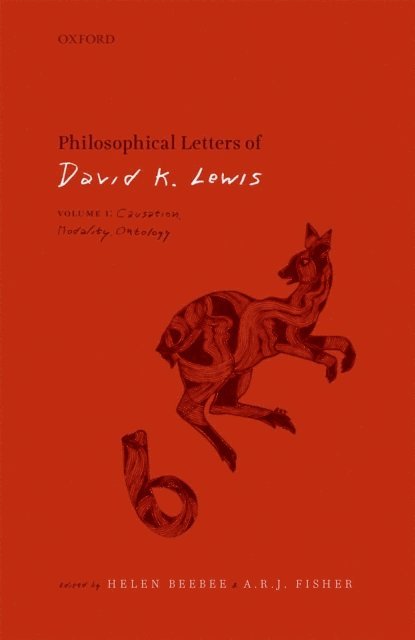
David Kellogg Lewis (1941-2001) was one of the most influential philosophers of the twentieth century. He made significant contributions to almost every area of analytic philosophy including metaphysics, philosophy of language, philosophy of mind, and philosophy of science, and set the agenda for various debates in these areas which carry on to this day. In several respects he remains a contemporary figure, yet enough time has now passed for historians of philosophy to begin to study his place in twentieth century thought. His philosophy was constructed and refined not just through his published writing, but also crucially through his life-long correspondence with fellow philosophers, including leading figures such as D.M. Armstrong, Saul Kripke, W.V. Quine, J.J.C. Smart, and Peter van Inwagen. His letters formed the undercurrent of his published work and became the medium through which he proposed many of his well-known theories and discussed a range of philosophical topics in depth.A selection of his vast correspondence over a 40-year period is presented here across two volumes. As metaphysics is arguably where Lewis made his greatest contribution, this forms the focus of Volume 1. Arranged under the broad areas of Causation, Modality, and Ontology, the letters offer an organic story of the origins, development, breadth, and depth of his metaphysics in its historical context, as well as a glimpse into the influence of his many interlocutors. This volume will be an indispensable resource for contemporary metaphysics and for those interested in the Lewisian perspective.
1 769 kr
Läs direkt efter köp
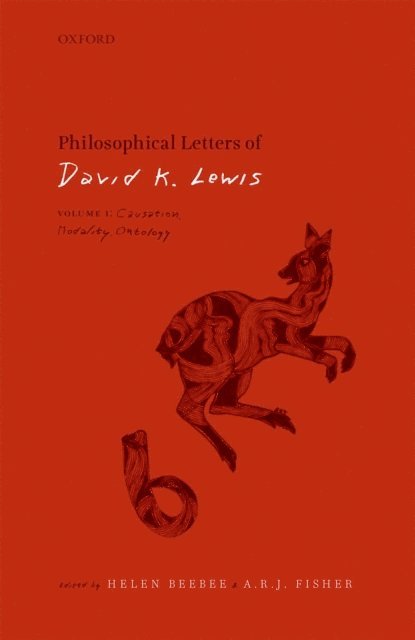
David Kellogg Lewis (1941-2001) was one of the most influential philosophers of the twentieth century. He made significant contributions to almost every area of analytic philosophy including metaphysics, philosophy of language, philosophy of mind, and philosophy of science, and set the agenda for various debates in these areas which carry on to this day. In several respects he remains a contemporary figure, yet enough time has now passed for historians of philosophy to begin to study his place in twentieth century thought. His philosophy was constructed and refined not just through his published writing, but also crucially through his life-long correspondence with fellow philosophers, including leading figures such as D.M. Armstrong, Saul Kripke, W.V. Quine, J.J.C. Smart, and Peter van Inwagen. His letters formed the undercurrent of his published work and became the medium through which he proposed many of his well-known theories and discussed a range of philosophical topics in depth.A selection of his vast correspondence over a 40-year period is presented here across two volumes. As metaphysics is arguably where Lewis made his greatest contribution, this forms the focus of Volume 1. Arranged under the broad areas of Causation, Modality, and Ontology, the letters offer an organic story of the origins, development, breadth, and depth of his metaphysics in its historical context, as well as a glimpse into the influence of his many interlocutors. This volume will be an indispensable resource for contemporary metaphysics and for those interested in the Lewisian perspective.
E-bok
PDF, Engelska, 20201 495 kr
Läs direkt efter köp
David Kellogg Lewis (1941-2001) was one of the most influential philosophers of the twentieth century. He made significant contributions to almost every area of analytic philosophy including metaphysics, philosophy of language, philosophy of mind, and philosophy of science, and set the agenda for various debates in these areas which carry on to this day. In several respects he remains a contemporary figure, yet enough time has now passed for historians of philosophy to begin to study his place in twentieth century thought. His philosophy was constructed and refined not just through his published writing, but also crucially through his life-long correspondence with fellow philosophers, including leading figures such as D.M. Armstrong, Saul Kripke, W.V. Quine, J.J.C. Smart, and Peter van Inwagen. His letters formed the undercurrent of his published work and became the medium through which he proposed many of his well-known theories and discussed a range of philosophical topics in depth.A selection of his vast correspondence over a 40-year period is presented here across two volumes. Structured in three parts, Volume 2 explores Lewis'' contributions to philosophical questions of mind, language, and epistemology respectively. The letters address Lewis''s answer to the mind-body problem, propositional attitudes and the purely subjective character of conscious experience, meaning and reference as well as grammar in language, vagueness, truth in fiction, the problem of scepticism, and Lewis''s work on decision theory and rationality, among many other topics. This volume is a testament to Lewis'' achievement in these areas and will be an invaluable resource for those exploring contemporary debates concerning mind, language, and epistemology.
1 495 kr
Läs direkt efter köp
David Kellogg Lewis (1941-2001) was one of the most influential philosophers of the twentieth century. He made significant contributions to almost every area of analytic philosophy including metaphysics, philosophy of language, philosophy of mind, and philosophy of science, and set the agenda for various debates in these areas which carry on to this day. In several respects he remains a contemporary figure, yet enough time has now passed for historians of philosophy to begin to study his place in twentieth century thought. His philosophy was constructed and refined not just through his published writing, but also crucially through his life-long correspondence with fellow philosophers, including leading figures such as D.M. Armstrong, Saul Kripke, W.V. Quine, J.J.C. Smart, and Peter van Inwagen. His letters formed the undercurrent of his published work and became the medium through which he proposed many of his well-known theories and discussed a range of philosophical topics in depth.A selection of his vast correspondence over a 40-year period is presented here across two volumes. Structured in three parts, Volume 2 explores Lewis'' contributions to philosophical questions of mind, language, and epistemology respectively. The letters address Lewis''s answer to the mind-body problem, propositional attitudes and the purely subjective character of conscious experience, meaning and reference as well as grammar in language, vagueness, truth in fiction, the problem of scepticism, and Lewis''s work on decision theory and rationality, among many other topics. This volume is a testament to Lewis'' achievement in these areas and will be an invaluable resource for those exploring contemporary debates concerning mind, language, and epistemology.
Inbunden, Engelska, 2022
1 290 kr
Skickas inom 5-8 vardagar
David K. Lewis (1941-2001) was unquestionably one of the most important analytic philosophers of the twentieth century, writing papers and books, largely but not exclusively in metaphysics, that set the intellectual agenda across a huge variety of topics in the last three decades. Some twenty years after his death, this collection of essays reflects the historical importance of Lewis's work by bringing together a range of scholarly reflections on his work. The essays consider a range of topics including the nature of metaphysics, the epistemology of necessary truths, possibility, naturalness, supervenience, time travel, causation, semantics, and ethics. Several of them draw on an exciting new body of material in the Lewisian corpus, his extensive correspondence, recently published in two volumes (OUP, 2020). The wide-ranging topics of these essays illustrate the impressive extent of Lewis's thought and his reach across most areas of analytic philosophy. The chapters collected in this volume adds to the increasing literature on the philosophy of David K. Lewis and will be an important book for those examining his role in the history of analytic philosophy.
Inbunden, Engelska, 2018
1 116 kr
Skickas inom 7-10 vardagar
The Harvard philosopher Donald C. Williams (1899-1983) was a key figure in the history of analytic philosophy.He played a crucial role in reviving metaphysics at a time when other philosophers ridiculed, criticized, and committed it to the flames. He constructed an explanatorily powerful and parsimonious ontology and cosmology founded on logic, science, and common sense. His most influential articles were on the metaphysics of properties ('The Elements of Being') and the metaphysics of time ('The Sea Fight Tomorrow', 'The Myth of Passage'). His ontology of abstract particulars or tropes and his four-dimensional manifold theory of time remain leading hypotheses in metaphysics. Because of his novel contributions and his defense of metaphysics he made a lasting impact on philosophers of the next generation who in turn believed in the substance of metaphysical inquiry.A. R. J. Fisher brings together Williams's seminal articles in metaphysics along with previously unpublished essays that shed new light on his philosophical outlook and complete his metaphysical vision. This volume, with its comprehensive Introduction, is set to be the definitive source for Williams's work, both for historians of analytic philosophy and for contemporary metaphysicians.
Inbunden, Engelska, 2026
1 797 kr
Skickas inom 5-8 vardagar
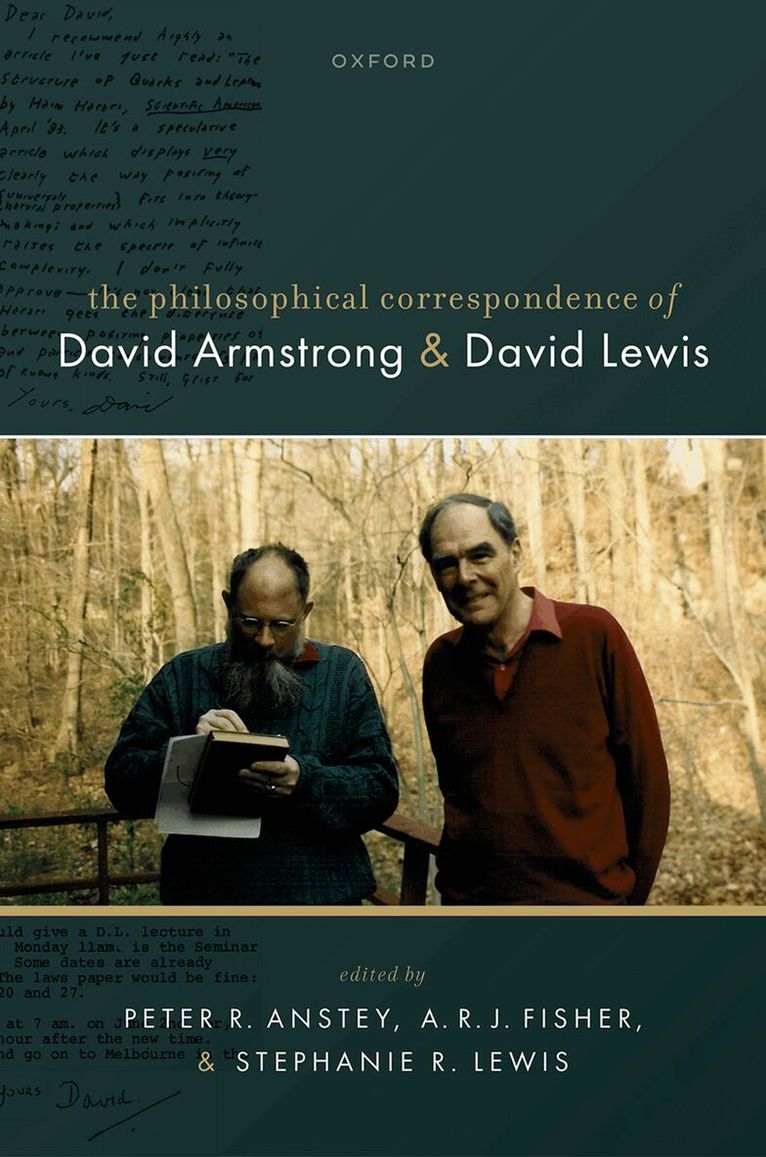
This volume contains the complete correspondence of two of the leading analytic philosophers of the late twentieth century, David Armstrong and David Lewis. Comprising some 345 letters, including letters to and from third parties, this correspondence is at once a deep philosophical resource shedding new light on the philosophical development of two of the great late twentieth-century philosophers, and a record of the development of a philosophical friendship. The letters are valuable, not only for the light they shed on the background to many of Armstrong's and Lewis' major publications, but also for what they show us about the practice of philosophy. The correspondence is a window into both the philosophical content of two leading thinkers' minds and an exemplar of how philosophy of the highest level can be done.