A. S. King – författare
Visar alla böcker från författaren A. S. King. Handla med fri frakt och snabb leverans.
8 produkter
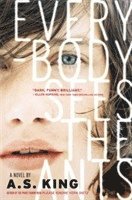
Everybody Sees the Ants
Av A. S. King
Häftad, 2012
5,0 utav 5 stjärnor. Totalt antal röster: (1)
151 kr
Lägg i varukorg
Attack of the Black Rectangles (Scholastic Gold)
Av A. S. King
Häftad, 1900
178 kr
Lägg i varukorg
Award-winning author Amy Sarig King takes on censorship and intolerance in a novel she was born to write. Attack of the Black Rectangles joins the Scholastic Gold line, which features award-winning and beloved novels. Includes exclusive bonus content! When Mac first opens his classroom copy of Jane …
Social Innovations for Development
A Conference at Ulriksdal Palace, Organized for the Sven and Dagmar Salén Foundation by the International Federation of Institutes for Advanced Study (IFIAS) in Its Ulriksdal Seminar Series, from Vision to Action
E-bok, 2016
367 kr
Lägg i varukorg
Social Innovations for Development focuses on the need for the advancement of social innovations relative to the progress of science and technology. The selection is composed of works of authors who have conducted research on the need to enhance social innovations and cope with the advancement of …
Beyond the Age of Waste
A Report to the Club of Rome
Av A. S. King, U. Colombo m. fl.
E-bok, 2016
807 kr
Lägg i varukorg
Beyond the Age of Waste: A Report to the Club of Rome, Second Edition discusses the results of the study conducted by the Club of Rome, which tackles the issues of the depletion of resources and its implication for the world in general. The opening chapter is an introduction that covers the history …