Aaron Carico – författare
Visar alla böcker från författaren . Handla med fri frakt och snabb leverans.
6 produkter
6 produkter
Inbunden, Engelska, 2020
1 214 kr
Skickas inom 10-15 vardagar
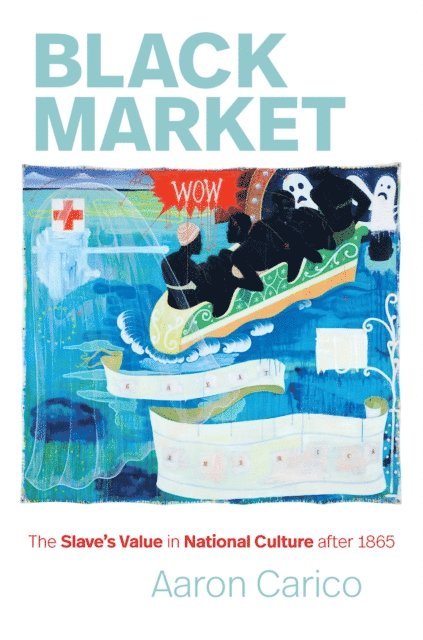
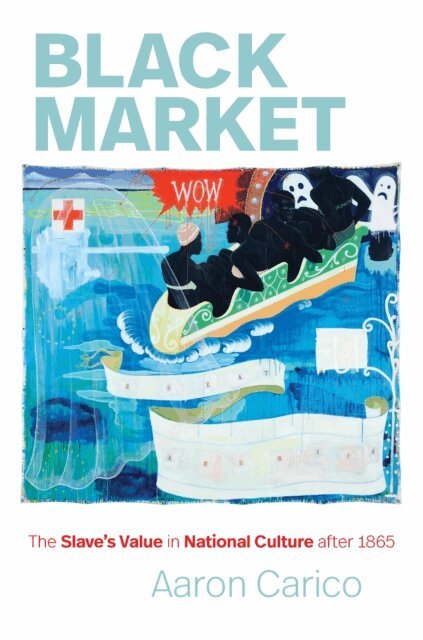
By 1860, the value of the slave population in the United States exceeded $3 billion--triple that of investments nationwide in factories, railroads, and banks combined, and worth more even than the South's lucrative farmland. The slave was not only a commodity to be traded but also a kind of currency and the basis for a range of credit relations. But the value associated with slavery was not destroyed in the Civil War. In Black Market, Aaron Carico reveals how the slave commodity survived emancipation, arguing that the enslaved person--understood here in legal, economic, social, and embodied contexts--still operated as an indispensable form of value in national culture. Through both archival research and lucid readings of literature, art, and law, from the Fourteenth Amendment to the first western, Carico breaks open the icons of liberalism to expose the shaping influence of slavery's political economy in America after 1865. Ultimately, Carico explains how a radically incomplete--and fundamentally failed--abolition enabled the emergence of a modern nation-state, in which slavery still determined--and now goes on to determine--economic, political, and cultural life.
Häftad, Engelska, 2020
395 kr
Skickas inom 10-15 vardagar
By 1860, the value of the slave population in the United States exceeded $3 billion--triple that of investments nationwide in factories, railroads, and banks combined, and worth more even than the South's lucrative farmland. The slave was not only a commodity to be traded but also a kind of currency and the basis for a range of credit relations. But the value associated with slavery was not destroyed in the Civil War. In Black Market, Aaron Carico reveals how the slave commodity survived emancipation, arguing that the enslaved person--understood here in legal, economic, social, and embodied contexts--still operated as an indispensable form of value in national culture. Through both archival research and lucid readings of literature, art, and law, from the Fourteenth Amendment to the first western, Carico breaks open the icons of liberalism to expose the shaping influence of slavery's political economy in America after 1865. Ultimately, Carico explains how a radically incomplete--and fundamentally failed--abolition enabled the emergence of a modern nation-state, in which slavery still determined--and now goes on to determine--economic, political, and cultural life.
E-bok
Engelska, 2020312 kr
Läs direkt efter köp
On the eve of the Civil War, the estimated value of the U.S. enslaved population exceeded $3 billion — triple that of investments nationwide in factories, railroads, and banks combined, and worth more even than the South’s lucrative farmland. Not only an object to be traded and used, the slave was also a kind of currency, a form of value that anchored the market itself. And this value was not destroyed in the war. Slavery still structured social relations and cultural production in the United States more than a century after it was formally abolished. As Aaron Carico reveals in Black Market, slavery’s engine of capital accumulation was preserved and transformed, and the slave commodity survived emancipation. Through both archival research and lucid readings of literature, art, and law, from the plight of the Fourteenth Amendment to the myth of the cowboy, Carico breaks open the icons of liberalism to expose the shaping influence of slavery’s political economy in America after 1865. Ultimately, Black Market shows how a radically incomplete and fundamentally failed abolition enabled the emergence of a modern nation-state, in which slavery still determined — and now goes on to determine — economic, political, and cultural life.
E-bok
Engelska, 20201 991 kr
Läs direkt efter köp
On the eve of the Civil War, the estimated value of the U.S. enslaved population exceeded $3 billion — triple that of investments nationwide in factories, railroads, and banks combined, and worth more even than the South’s lucrative farmland. Not only an object to be traded and used, the slave was also a kind of currency, a form of value that anchored the market itself. And this value was not destroyed in the war. Slavery still structured social relations and cultural production in the United States more than a century after it was formally abolished. As Aaron Carico reveals in Black Market, slavery’s engine of capital accumulation was preserved and transformed, and the slave commodity survived emancipation. Through both archival research and lucid readings of literature, art, and law, from the plight of the Fourteenth Amendment to the myth of the cowboy, Carico breaks open the icons of liberalism to expose the shaping influence of slavery’s political economy in America after 1865. Ultimately, Black Market shows how a radically incomplete and fundamentally failed abolition enabled the emergence of a modern nation-state, in which slavery still determined — and now goes on to determine — economic, political, and cultural life.
E-bok
PDF, Engelska, 2020312 kr
Läs direkt efter köp
On the eve of the Civil War, the estimated value of the U.S. enslaved population exceeded $3 billion — triple that of investments nationwide in factories, railroads, and banks combined, and worth more even than the South’s lucrative farmland. Not only an object to be traded and used, the slave was also a kind of currency, a form of value that anchored the market itself. And this value was not destroyed in the war. Slavery still structured social relations and cultural production in the United States more than a century after it was formally abolished. As Aaron Carico reveals in Black Market, slavery’s engine of capital accumulation was preserved and transformed, and the slave commodity survived emancipation. Through both archival research and lucid readings of literature, art, and law, from the plight of the Fourteenth Amendment to the myth of the cowboy, Carico breaks open the icons of liberalism to expose the shaping influence of slavery’s political economy in America after 1865. Ultimately, Black Market shows how a radically incomplete and fundamentally failed abolition enabled the emergence of a modern nation-state, in which slavery still determined — and now goes on to determine — economic, political, and cultural life.
E-bok
PDF, Engelska, 20201 565 kr
Läs direkt efter köp
On the eve of the Civil War, the estimated value of the U.S. enslaved population exceeded $3 billion — triple that of investments nationwide in factories, railroads, and banks combined, and worth more even than the South’s lucrative farmland. Not only an object to be traded and used, the slave was also a kind of currency, a form of value that anchored the market itself. And this value was not destroyed in the war. Slavery still structured social relations and cultural production in the United States more than a century after it was formally abolished. As Aaron Carico reveals in Black Market, slavery’s engine of capital accumulation was preserved and transformed, and the slave commodity survived emancipation. Through both archival research and lucid readings of literature, art, and law, from the plight of the Fourteenth Amendment to the myth of the cowboy, Carico breaks open the icons of liberalism to expose the shaping influence of slavery’s political economy in America after 1865. Ultimately, Black Market shows how a radically incomplete and fundamentally failed abolition enabled the emergence of a modern nation-state, in which slavery still determined — and now goes on to determine — economic, political, and cultural life.