Aaron J Kleist - Böcker
Visar alla böcker från författaren Aaron J Kleist. Handla med fri frakt och snabb leverans.
3 produkter
3 produkter
1 203 kr
Skickas inom 7-10 vardagar
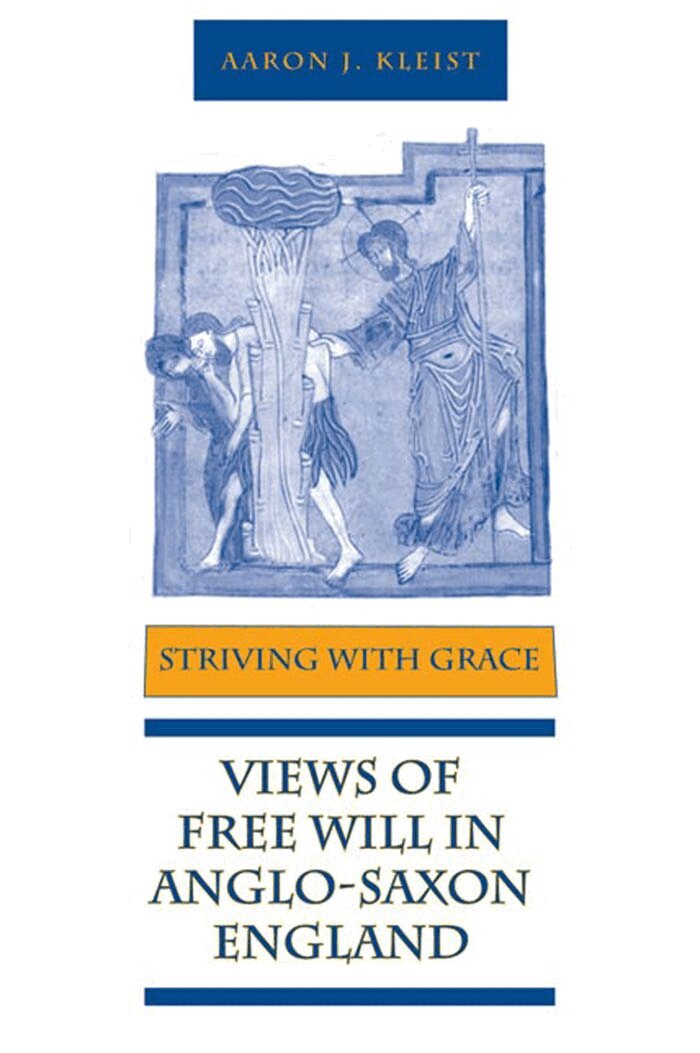
The question of whether or not our decisions and efforts make a difference in an uncertain and uncontrollable world had enormous significance for writers in Anglo-Saxon England. Striving with Grace looks at seven authors who wrote either in Latin or Old English, and the ways in which they sought to resolve this fundamental question. For Anglo-Saxon England, as for so much of the medieval West, the problem of individual will was complicated by a widespread theistic tradition that influenced writers, thinkers, and their hypotheses.Aaron J Kleist examines the many factors that produced strikingly different, though often complementary, explanations of free will in early England. Having first established the perspectives of Augustine, he considers two Church Fathers who rivalled Augustine's impact on early England, Gregory the Great and the Venerable Bede, and reconstructs their influence on later English writers. He goes on to examine Alfred the Great's Old English Boethius and Lantfred of Winchester's Carmen de libero arbitrio, and the debt that both texts owe to Boethius' classic De consolatione Philosophiae. Finally, Kleist discusses Wulfstan the Homilist and Ælfric of Eynsham, two seminal writers of late Anglo-Saxon England. Striving with Grace shows that all of these authors, despite striking differences in their sources and logic, underscore humanity's need for grace even as they labour to affirm the legitimacy of human effort.
1 613 kr
Skickas inom 7-10 vardagar
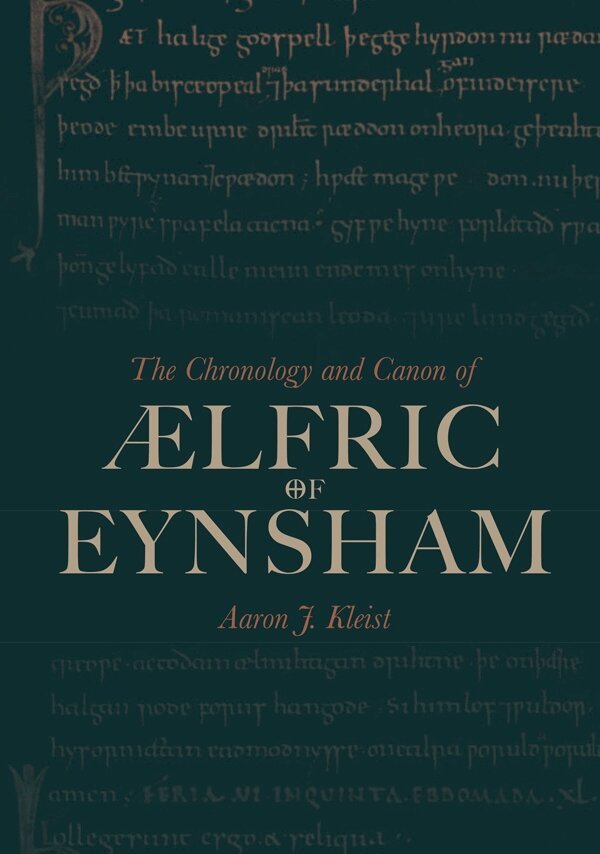
A fresh approach to the works and manuscripts of this influential monk, whose writings synthesised some of the finest minds of the period.A thousand years and more ago, with Vikings ravaging the coastlines and the millennium drawing nigh, a monk named Ælfric embarked on studies that would make him the most erudite, prolific, and influential author writing in English before Chaucer. What drove Ælfric was no desire to leave his mark on history, however, but the belief that he held a treasure on which the temporal and eternal welfare of his contemporaries depended: knowledge of the rich moral teachings of the early Christian church. What he produced was an astonishing synthesis of some of the finest minds in history, conveyed with remarkable authorial transparency and an elegantly simple style.While there is much we know about Ælfric, both from his own self-disclosure and the wealth of surviving manuscripts containing work by him, there is also much that muddies the waters: his feverish pace of simultaneous composition, his habit of reshaping and repurposing his writings, the staggering complexities of textual transmission, and competing scholarly interpretive voices. This volume seeks to take it all into account, setting forth a comprehensive picture of work and the manuscripts in which it may be found. Integrating scholars' best understanding to date and framing new avenues for inquiry, it offers a launching point for new research into this pivotal figure of early England. AARON J KLEIST is Professor of English at Biola University.
Del 13 - Anglo-Saxon Texts
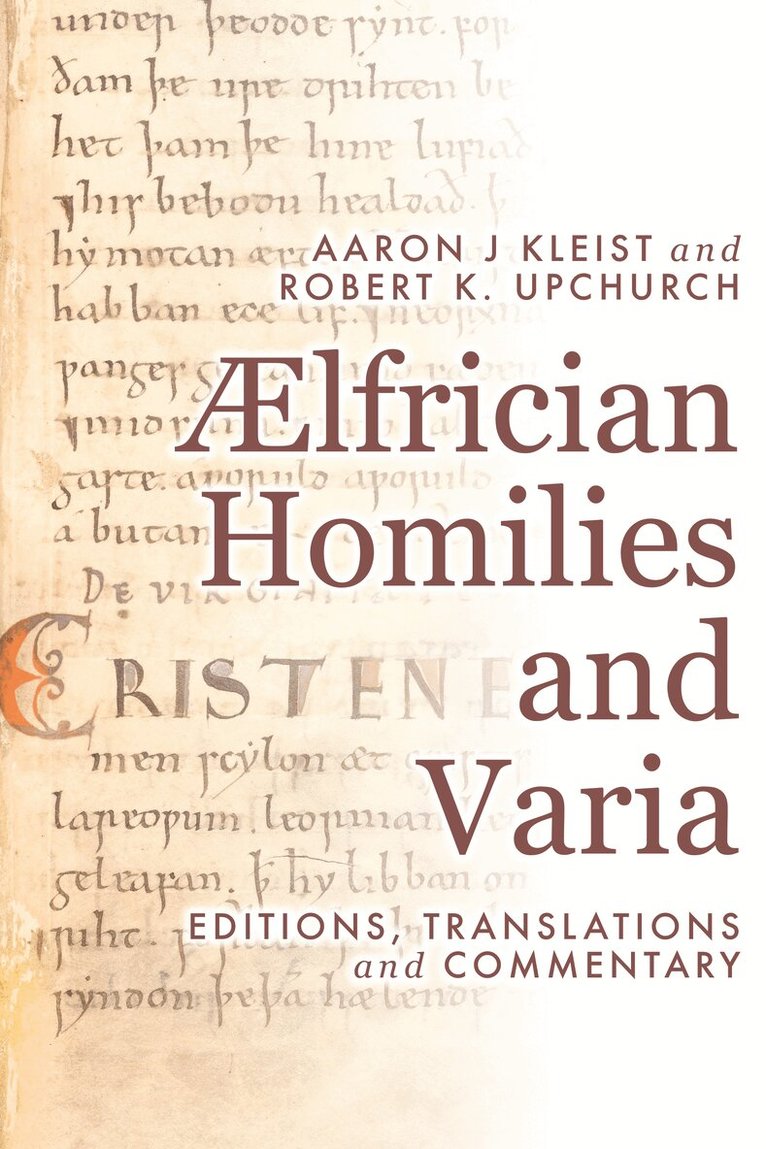
Ælfrician Homilies and Varia
Editions, Translations, and Commentary
Inbunden, Engelska, 2022
2 082 kr
Skickas inom 7-10 vardagar
First modern edition and translation of the homilies of one of the most important religious figures of his time.Ælfric of Eynsham stands supreme as a distinguished homilist, translator, and moralist - one whose writings were sought by the most powerful churchmen and landed warlords of his day. In his sermons, the dead are raised to life, innocents are betrayed, civilizations come to ruin, prophecies are finally fulfilled, and sorrow is swallowed up in salvation. He offers guidance regarding sex, financial counsel, botanical excursuses, etymological asides, lions cowed by roosters, arch-heretics disemboweled, and seemingly inconsequential figures receiving everlasting crowns. He also considers the origin of Antichrist, recounts supernatural visions of damnation and deliverance, teases out the tension between predestination and free will, explores the multifarious nature of the soul, seeks to categorize creation, and presses the boundaries of conceptual capacity in describing the divine nature. Treatises take up such subjects as the Holy Spirit, cognition, penitence, and proper comportment. Private prayers appear alongside public declarations of the Christian faith found in the Paternoster and the Apostles' and Nicene Creeds. The thirty-one texts presented here, with facing translations, span the course of his career: Old English and Latin, ordinary and alliterative prose, pithy prayers and exhaustive exegesis. Nine appear in print for the first time; others for the first time in well over 100 years. Introductions to the texts offer overviews of the content, composition, and circulation of each work, using the fruits of the latest research to envision real-world contexts for their use in specific places, among particular groups, and by certain individuals. Meanwhile, the commentary traces Ælfric's role in the history of ideas, examining his relationship to over 100 sources, 200 other Ælfrician works, and over 1,000 biblical passages; it seeks to clarify Ælfric's compositional aims and further to establish the authorship and date of these remarkable writings from early England.