Aaron James Wendland – författare
Visar alla böcker från författaren Aaron James Wendland. Handla med fri frakt och snabb leverans.
7 produkter
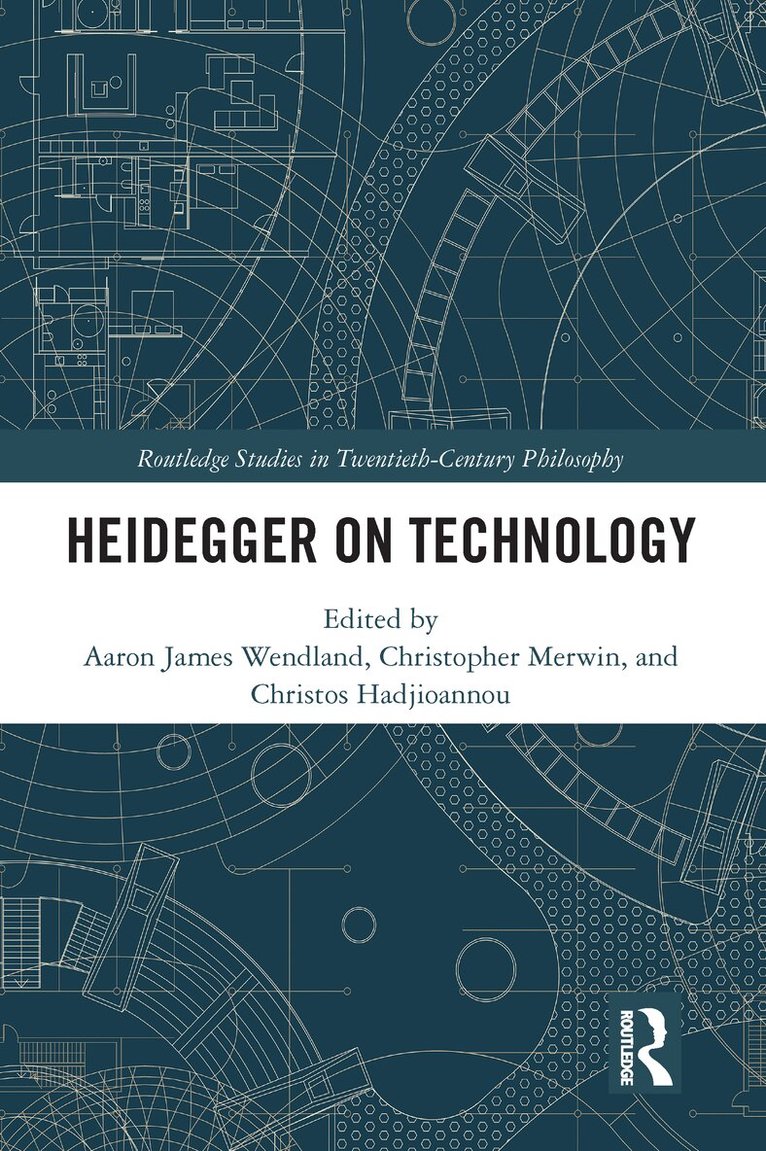
Heidegger on Technology
Av Aaron James Wendland, Christopher Merwin m. fl.
Häftad, 2020
735 kr
Lägg i varukorg
This collection offers the first comprehensive and definitive account of Martin Heidegger’s philosophy of technology. It does so through a detailed analysis of canonical texts and recently published primary sources on two crucial concepts in Heidegger’s later thought: Gelassenheit and Gestell. …
Heidegger's Being and Time
A Critical Guide
Av Aaron James Wendland, Tobias Keiling
Inbunden, 2025
1481 kr
Lägg i varukorg
Martin Heidegger's Being and Time, published in 1927, is widely regarded as his most important work and it has had a profound influence on twentieth-century philosophy. This Critical Guide draws on recently translated and published primary sources as well as the latest developments in Heidegger …
Heidegger's Being and Time
A Critical Guide
Av Aaron James Wendland, Tobias Keiling
Häftad, 2026
420 kr
Kommande
Martin Heidegger's Being and Time, published in 1927, is widely regarded as his most important work and it has had a profound influence on twentieth-century philosophy. This Critical Guide draws on recently translated and published primary sources as well as the latest developments in Heidegger …
Heidegger's Being and Time
A Critical Guide
Av Tobias Keiling, Aaron James Wendland
E-bok, 2025
1467 kr
Lägg i varukorg
Heidegger's Being and Time
A Critical Guide
Av Tobias Keiling, Aaron James Wendland
E-bok, 2025
1435 kr
Lägg i varukorg
Heidegger on Technology
Av Aaron James Wendland, Christopher Merwin m. fl.
Inbunden, 2018
2519 kr
Lägg i varukorg
This collection offers the first comprehensive and definitive account of Martin Heidegger’s philosophy of technology. It does so through a detailed analysis of canonical texts and recently published primary sources on two crucial concepts in Heidegger’s later thought: Gelassenheit and Gestell. …
Heidegger on Technology
Av Christos Hadjioannou, Christopher Merwin m. fl.
E-bok, 2018
866 kr
Lägg i varukorg
This collection offers the first comprehensive and definitive account of Martin Heidegger’s philosophy of technology. It does so through a detailed analysis of canonical texts and recently published primary sources on two crucial concepts in Heidegger’s later thought: Gelassenheit and Gestell . …