Aaron M. Kuntz – författare
596 kr
Skickas inom 10-15 vardagar
2 111 kr
Skickas inom 10-15 vardagar
784 kr
Läs direkt efter köp
784 kr
Läs direkt efter köp
2 179 kr
Skickas inom 10-15 vardagar
679 kr
Skickas inom 10-15 vardagar
544 kr
Läs direkt efter köp
Winner of The University of Alabama 2017 President’s Faculty Research Award
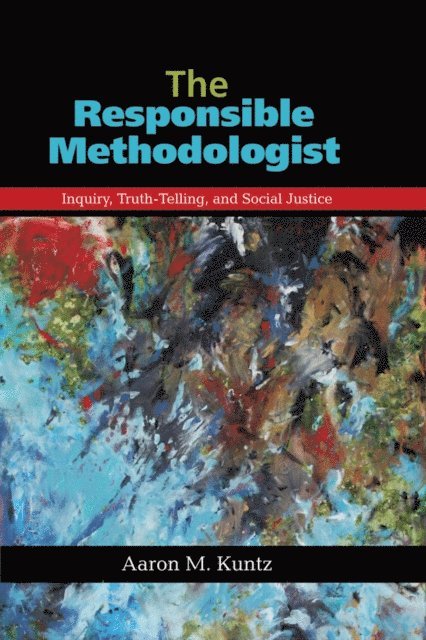
What does it mean to be a responsible methodologist? Certainly it is more than being a research middle-manager who ensures that the tools used in a thesis or dissertation are of the right gauge. In The Responsible Methodologist, leading education scholar Aaron Kuntz uses the latest movements in social theory to challenge qualitative researchers to reconceptualize their work away from the technocratic toward an intervention, an ethical disruption of the norm, an activist stance toward progressive social change. Inviting creativity and vision, he insists that the responsible methodologist become a force leading the discourse toward social justice. His book-challenges the technocratic role given to qualitative methodologists in university settings;-urges them to become a force for change through Foucault’s parrhesia, risky truth-telling;-includes research projects that have incorporated this vision.
http://amkuntz.people.ua.edu/
544 kr
Läs direkt efter köp
Winner of The University of Alabama 2017 President’s Faculty Research Award
What does it mean to be a responsible methodologist? Certainly it is more than being a research middle-manager who ensures that the tools used in a thesis or dissertation are of the right gauge. In The Responsible Methodologist, leading education scholar Aaron Kuntz uses the latest movements in social theory to challenge qualitative researchers to reconceptualize their work away from the technocratic toward an intervention, an ethical disruption of the norm, an activist stance toward progressive social change. Inviting creativity and vision, he insists that the responsible methodologist become a force leading the discourse toward social justice. His book-challenges the technocratic role given to qualitative methodologists in university settings;-urges them to become a force for change through Foucault’s parrhesia, risky truth-telling;-includes research projects that have incorporated this vision.
http://amkuntz.people.ua.edu/
757 kr
Läs direkt efter köp
What are the problems to which materialist methodologies are posed as a solution? In this book, Aaron M. Kuntz maps the impact of materialism on contemporary practices of inquiry in education and the social sciences. Through this work, the author challenges readers to consider inquiry as a mode of ethically engaged citizenship with implications for resisting our contemporary moment towards a more equitable future.
The author engages his own inquiry as radical cartographic work, drawing forth distinctions between dialectical and dialogic formations of materialism in order to develop what he terms relational materialism—an engaged orientation to living that dwells in the entangled relations of affirmative ethics and enduring practices of resistance and refusal. Drawing upon examples from higher education, contemporary culture, and normative assumptions of governance, the author considers the potential that we might generate living alternatives to the contemporary status quo; daily practices no longer dependent on binary division or standardized calculations of what "matters." As such, the author advocates for practices of virtuous inquiry (future-orientated ethical assertions of what one should do) that orient inquiry as materially ethical activity.
Despite the often-overwhelming state of inequity and exploitation in our contemporary world, Kuntz generates an affirmative ethical stance that we can become relationally different, guided by a virtuous determination to articulate inquiry as the cartographic work of disruption and imagination. This text will prove valuable to graduate students and faculty who take inquiry seriously and seek the means to understand their work as engaged in the necessary challenge for material change.
757 kr
Läs direkt efter köp
What are the problems to which materialist methodologies are posed as a solution? In this book, Aaron M. Kuntz maps the impact of materialism on contemporary practices of inquiry in education and the social sciences. Through this work, the author challenges readers to consider inquiry as a mode of ethically engaged citizenship with implications for resisting our contemporary moment towards a more equitable future.
The author engages his own inquiry as radical cartographic work, drawing forth distinctions between dialectical and dialogic formations of materialism in order to develop what he terms relational materialism—an engaged orientation to living that dwells in the entangled relations of affirmative ethics and enduring practices of resistance and refusal. Drawing upon examples from higher education, contemporary culture, and normative assumptions of governance, the author considers the potential that we might generate living alternatives to the contemporary status quo; daily practices no longer dependent on binary division or standardized calculations of what "matters." As such, the author advocates for practices of virtuous inquiry (future-orientated ethical assertions of what one should do) that orient inquiry as materially ethical activity.
Despite the often-overwhelming state of inequity and exploitation in our contemporary world, Kuntz generates an affirmative ethical stance that we can become relationally different, guided by a virtuous determination to articulate inquiry as the cartographic work of disruption and imagination. This text will prove valuable to graduate students and faculty who take inquiry seriously and seek the means to understand their work as engaged in the necessary challenge for material change.
1 072 kr
Skickas inom 3-6 vardagar
"Because the authors are critically aware of even the smallest detail and its ultimate effects on policy and stakeholders, their conclusions are not only logical but very well thought out and can be applied for maximum benefit."—Michael Fisher, Critical Thinking SpecialistStarpoint Middle School, Lockport, NY
"The authors do an excellent job of recommending practical strategies to help school leaders reason through policy dilemmas. As an academic, a former practitioner, and former member of an educational policy and advocacy organization, I give a 'hats off' to the authors for approaching educational policy and school leadership in this way."—Carri A. Schneider, Adjunct Faculty Urban Educational Leadership Program University of Cincinnati
A practical guide for creating, implementing, and evaluating school policy.
This companion book to Principals of Dynamic Schools and Dynamic Teachers brings to life the process of making and enacting educational policy and helps decision makers evaluate, interpret, and analyze the policies that govern their schools.
In accessible language, Leading Dynamic Schools presents educational leaders with a conceptual framework for developing effective and ethical school policies. Organized by key issues such as English Language Learners, inclusion, and bullying, the text incorporates vignettes, research, and relevant theories to illustrate how readers can:
Create a dialogue that represents the needs of all stakeholdersDefine relevant policies that are ethically soundIntegrate legally mandated policies with schoolwide resolutionsProviding a forum for critical reflection and community deliberation, this insightful resource offers a practical policy-making process that encourages thoughtful leadership and schoolwide collaboration.
550 kr
Skickas inom 3-6 vardagar
"Because the authors are critically aware of even the smallest detail and its ultimate effects on policy and stakeholders, their conclusions are not only logical but very well thought out and can be applied for maximum benefit."—Michael Fisher, Critical Thinking SpecialistStarpoint Middle School, Lockport, NY
"The authors do an excellent job of recommending practical strategies to help school leaders reason through policy dilemmas. As an academic, a former practitioner, and former member of an educational policy and advocacy organization, I give a 'hats off' to the authors for approaching educational policy and school leadership in this way."—Carri A. Schneider, Adjunct Faculty Urban Educational Leadership Program University of Cincinnati
A practical guide for creating, implementing, and evaluating school policy.
This companion book to Principals of Dynamic Schools and Dynamic Teachers brings to life the process of making and enacting educational policy and helps decision makers evaluate, interpret, and analyze the policies that govern their schools.
In accessible language, Leading Dynamic Schools presents educational leaders with a conceptual framework for developing effective and ethical school policies. Organized by key issues such as English Language Learners, inclusion, and bullying, the text incorporates vignettes, research, and relevant theories to illustrate how readers can:
Create a dialogue that represents the needs of all stakeholdersDefine relevant policies that are ethically soundIntegrate legally mandated policies with schoolwide resolutionsProviding a forum for critical reflection and community deliberation, this insightful resource offers a practical policy-making process that encourages thoughtful leadership and schoolwide collaboration.
2 184 kr
Skickas inom 10-15 vardagar
483 kr
Skickas inom 10-15 vardagar