Abdoulaye Kane – författare
Visar alla böcker från författaren . Handla med fri frakt och snabb leverans.
3 produkter
3 produkter
Häftad, Engelska, 2013
333 kr
Skickas inom 5-8 vardagar
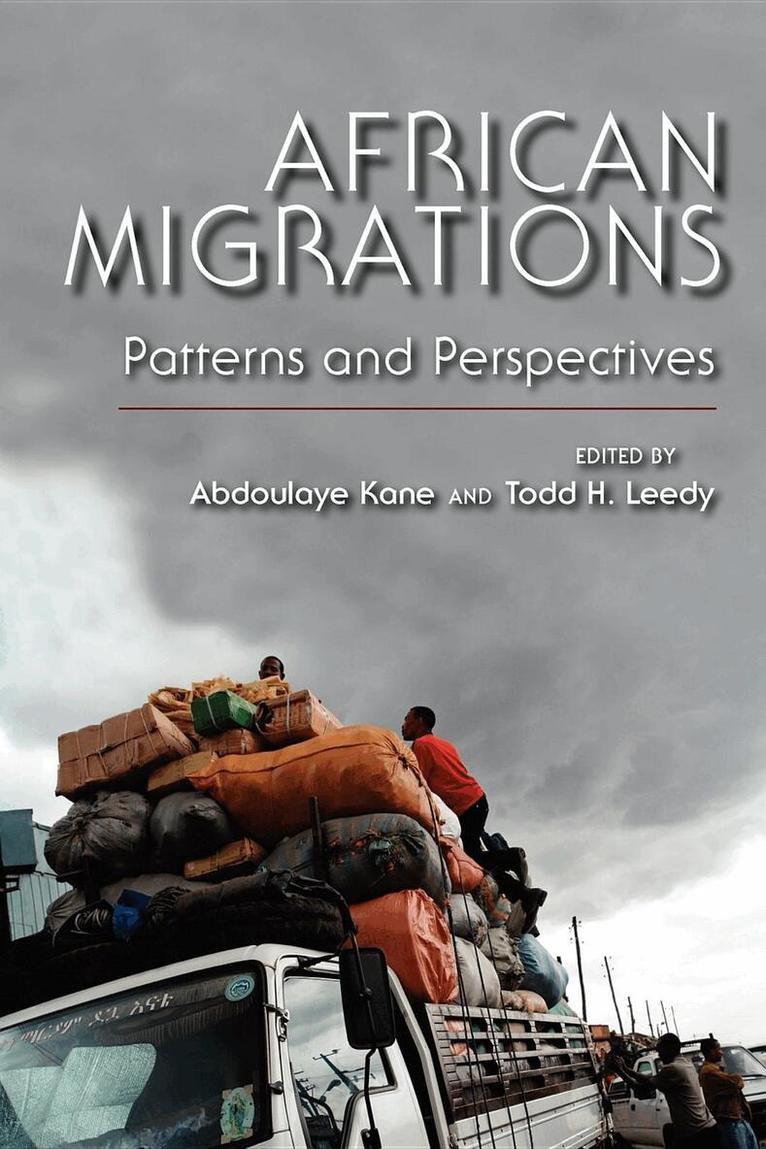
Spurred by major changes in the world economy and in local ecology, the contemporary migration of Africans, both within the continent and to various destinations in Europe and North America, has seriously affected thousands of lives and livelihoods. The contributors to this volume, reflecting a variety of disciplinary perspectives, examine the causes and consequences of this new migration. The essays cover topics such as rural-urban migration into African cities, transnational migration, and the experience of immigrants abroad, as well as the issues surrounding migrant identity and how Africans re-create community and strive to maintain ethnic, gender, national, and religious ties to their former homes.
Inbunden, Engelska, 2027
1 336 kr
Kommande
The Sahel has become one of the world's most closely watched regions, yet its peoples are often portrayed through simplified narratives of violence, extremism, and instability. Identity and Conflict in the Sahel offers a different perspective by exploring how identities, memories, and political claims are narrated, contested, and transformed among two of the region's most prominent communities: the Fulani and the Tuareg. Bringing together leading scholars from anthropology, political science, history, and sociology, this volume examines how community leaders, activists, religious figures, artists, and diaspora networks shape stories about belonging, marginalization, justice, and conflict. From social media campaigns and political mobilization to oral traditions, music, and historical memory, the contributors show how narratives influence both local realities and international understandings of the Sahel. Instead of reducing the Tuareg, Fulani, and other Sahel ethnic groups to "questions" or "problems" for the state, the contributors in this volume reveal the diversity and internal debates within Fulani and Tuareg societies, highlighting questions of status, race, gender, religion, and power. They also demonstrate how competing narratives can fuel polarization but also create opportunities for dialogue and coexistence. At a time when the Sahel faces overlapping political, security, ecological, and social crises, Identity and Conflict in the Sahel provides a nuanced and timely exploration of how communities make sense of a rapidly changing world—and how storytelling itself has become a key arena of power in the region.
Häftad, Engelska, 2027
479 kr
Kommande
The Sahel has become one of the world's most closely watched regions, yet its peoples are often portrayed through simplified narratives of violence, extremism, and instability. Identity and Conflict in the Sahel offers a different perspective by exploring how identities, memories, and political claims are narrated, contested, and transformed among two of the region's most prominent communities: the Fulani and the Tuareg. Bringing together leading scholars from anthropology, political science, history, and sociology, this volume examines how community leaders, activists, religious figures, artists, and diaspora networks shape stories about belonging, marginalization, justice, and conflict. From social media campaigns and political mobilization to oral traditions, music, and historical memory, the contributors show how narratives influence both local realities and international understandings of the Sahel. Instead of reducing the Tuareg, Fulani, and other Sahel ethnic groups to "questions" or "problems" for the state, the contributors in this volume reveal the diversity and internal debates within Fulani and Tuareg societies, highlighting questions of status, race, gender, religion, and power. They also demonstrate how competing narratives can fuel polarization but also create opportunities for dialogue and coexistence. At a time when the Sahel faces overlapping political, security, ecological, and social crises, Identity and Conflict in the Sahel provides a nuanced and timely exploration of how communities make sense of a rapidly changing world—and how storytelling itself has become a key arena of power in the region.