Abdul-Majeed Mahamadu - Böcker
Visar alla böcker från författaren Abdul-Majeed Mahamadu. Handla med fri frakt och snabb leverans.
7 produkter
7 produkter
724 kr
Skickas inom 10-15 vardagar
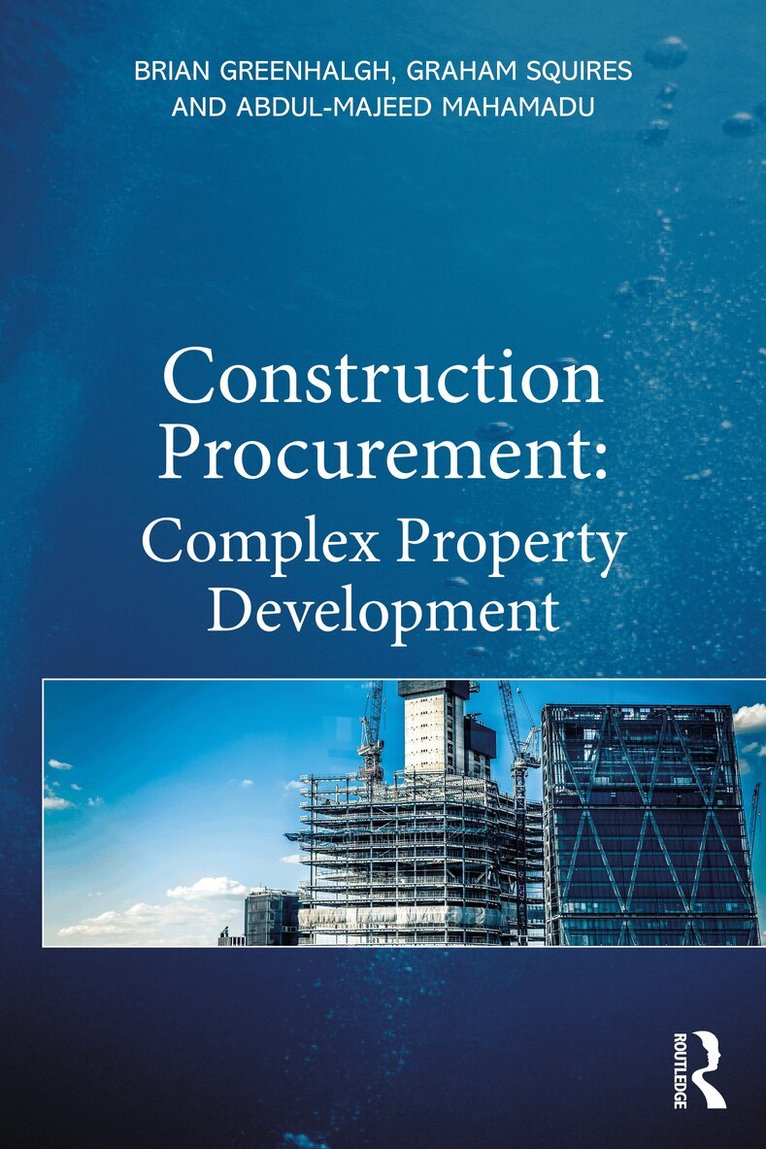
This book is an easy-to-read introduction to the principles and methods of building procurement and is aimed at first year students or non-cognate graduates starting out on a career in construction, property, quantity surveying and construction management. The book starts with a brief introduction to the construction industry, including how the industry is organised into contractors, consultants and clients. After a discussion of the historical development of procurement methods, which show a steady shift of risk and responsibility towards the supply side (contractors), the various roles and responsibilities which must be carried out in any project are discussed in detail. The aim is to show the reader that procurement routes are effectively a permutation of these responsibilities between the various parties. The book then explains the various methods by which the contractor(s) are paid, either by pre-negotiated lump sums or by some form of cost reimbursement. Variants of these two systems are also discussed. Several chapters are given to the detailed discussion of the main procurement routes together with the appropriate standard forms of contract designed for that route. More modern developments such as Private Financing and PPP are discussed and a chapter covering emerging trends in procurement completes the book. Containing discussion points, chapter summaries and case studies, this book is ideal for use in a variety of degree programs and courses across the built environment and engineering.
2 306 kr
Skickas inom 10-15 vardagar
This book is an easy-to-read introduction to the principles and methods of building procurement and is aimed at first year students or non-cognate graduates starting out on a career in construction, property, quantity surveying and construction management. The book starts with a brief introduction to the construction industry, including how the industry is organised into contractors, consultants and clients. After a discussion of the historical development of procurement methods, which show a steady shift of risk and responsibility towards the supply side (contractors), the various roles and responsibilities which must be carried out in any project are discussed in detail. The aim is to show the reader that procurement routes are effectively a permutation of these responsibilities between the various parties. The book then explains the various methods by which the contractor(s) are paid, either by pre-negotiated lump sums or by some form of cost reimbursement. Variants of these two systems are also discussed. Several chapters are given to the detailed discussion of the main procurement routes together with the appropriate standard forms of contract designed for that route. More modern developments such as Private Financing and PPP are discussed and a chapter covering emerging trends in procurement completes the book. Containing discussion points, chapter summaries and case studies, this book is ideal for use in a variety of degree programs and courses across the built environment and engineering.
Unlocking the Value of Business Intelligence Applications in Construction
From Digitalisation to Data-Driven Processes
Häftad, Engelska, 2026
1 837 kr
Kommande
Unlocking the Value of Business Intelligence Applications in Construction: From Digitalisation to Data-Driven Processes reviews and evaluates the major the challenges faced in the lifecycle delivery and management of construction projects. The role of business intelligence (BI) in overcoming these challenges is examined. The book covers the different applications of BI in the different phases of a project lifecycle. Following this, it reviews the applications of BI and how it can be integrated with other emerging technologies, such as AI, Machine Learning, Deep Learning and generative AI in construction. The various applications are illustrated using workflows to facilitate understanding. Applications of BI and/or BI integrated with related technologies are presented as case studies or real-life projects.For construction professionals, this book provides resources that addresses how to effectively transform the large volume and complexity of data in construction in order to improve the performance of projectsShows how to integrate data in order to optimize data processing and analysis for efficient decision-making in construction projectsDiscusses the applications of business intelligence and other emerging technologies in construction practice, providing greater insights into their capabilities
2 514 kr
Skickas inom 10-15 vardagar
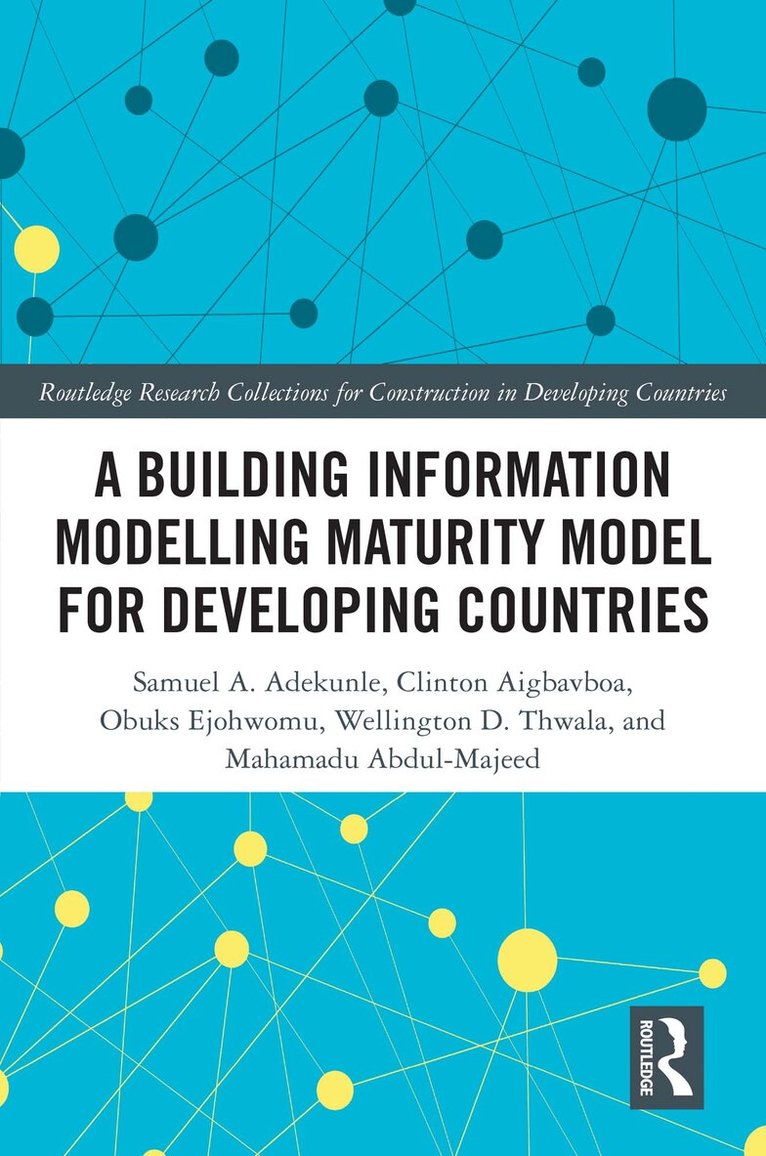
This book provides a reference point for the development of Building Information Modelling (BIM) maturity in the developing country context. Developing countries have been observed to have low BIM maturity and are struggling to adopt the technology amidst no clearly defined pathways for achieving BIM capability maturity. The research presented in this book provides construction industry stakeholders in developing countries with a framework and nomological map to aid in the advancement of BIM implementation. This work provides a pathway for overcoming the challenges inhibiting BIM maturity in developing countries and ultimately its diffusion in order to harness the benefits. The authors provide critical theoretical insights on BIM maturity in the developing country context, a comparative analysis of BIM maturity in both developing and developed countries, and finally, a conceptualisation of BIM maturity for developing countries. The book is unique as its construct is rooted in the state-of-the-art information management standards in the digitalisation era in the construction industry (ISO 19650). The book delivers a theoretical reference point to the academic and research community and for the industry stakeholder, an essential guide to achieving BIM maturity at macro and micro levels.
724 kr
Skickas inom 10-15 vardagar
This book provides a reference point for the development of Building Information Modelling (BIM) maturity in the developing country context. Developing countries have been observed to have low BIM maturity and are struggling to adopt the technology amidst no clearly defined pathways for achieving BIM capability maturity. The research presented in this book provides construction industry stakeholders in developing countries with a framework and nomological map to aid in the advancement of BIM implementation. This work provides a pathway for overcoming the challenges inhibiting BIM maturity in developing countries and ultimately its diffusion in order to harness the benefits. The authors provide critical theoretical insights on BIM maturity in the developing country context, a comparative analysis of BIM maturity in both developing and developed countries, and finally, a conceptualisation of BIM maturity for developing countries. The book is unique as its construct is rooted in the state-of-the-art information management standards in the digitalisation era in the construction industry (ISO 19650). The book delivers a theoretical reference point to the academic and research community and for the industry stakeholder, an essential guide to achieving BIM maturity at macro and micro levels.
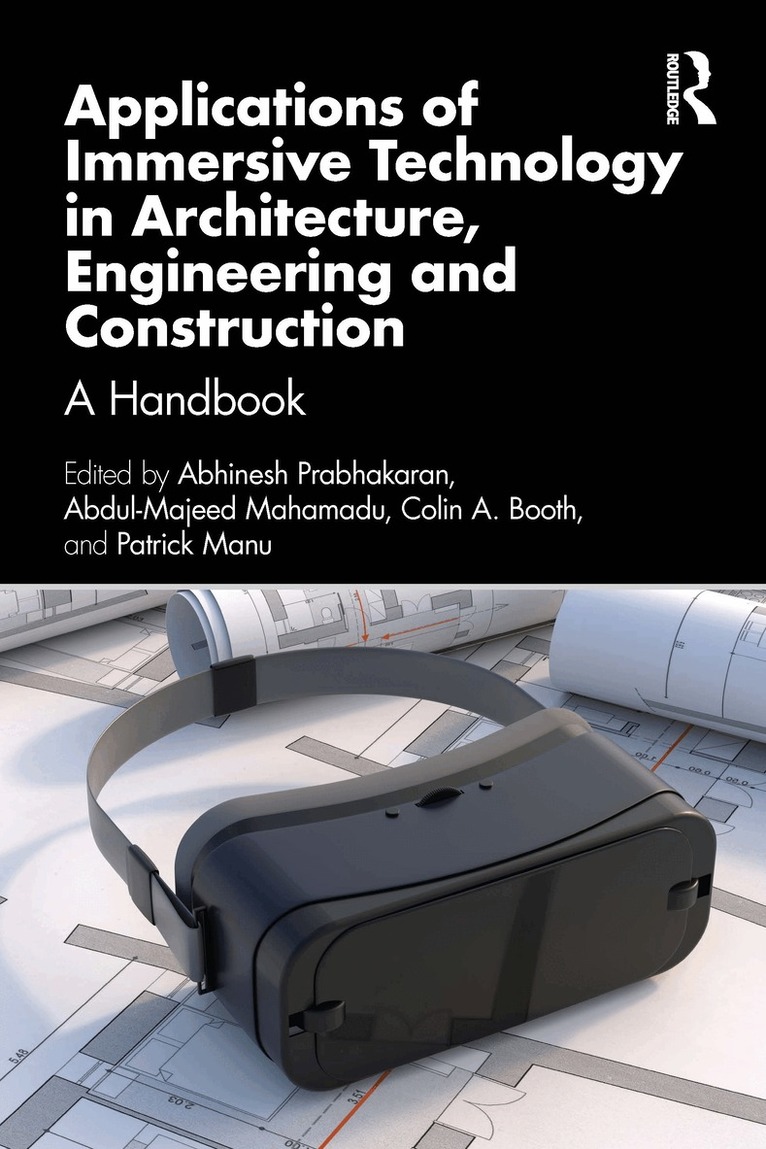
Applications of Immersive Technology in Architecture, Engineering and Construction
A Handbook
Inbunden, Engelska, 2025
2 445 kr
Skickas inom 10-15 vardagar
This edited book addresses a gap in literature by advancing current understandings of the applications of immersive technology within the architecture, engineering and construction (AEC) sector.Globally, the architecture, engineering and construction (AEC) sector makes an enormous contribution to the socio-economic development of nations, which is primarily evidenced by its creation/provision of the built environment. The sector has, however, often been criticised for inefficiencies, waste and diverse forms of adverse impacts that are associated with the lifecycle of the provision of built assets – design, construction, operations and maintenance and end-of-life phases. Over the years, the inefficiencies, waste and adverse impacts have often been a catalyst for calls and initiatives to transform the AEC sector. The advent of the fourth industrial revolution (commonly referred to as, ‘Industry 4.0’), which entails the automation and digitalisation of production, presents opportunities to leverage emerging technologies to improve the image and productivity of the sector. Prominent among the emerging technologies in the Industry 4.0 era is that of immersive technology, which includes virtual reality, mixed reality and augmented reality. The capability of immersive technology to deliver beneficial impacts for multiple construction sector stakeholders throughout the construction lifecycle has been acknowledged within the industry and this continues to stimulate interest amongst practitioners, policymakers and researchers. Despite this phenomenon, at present there is no dedicated compendium of research-informed text that focusses on the multifaceted applications of immersive technology throughout the lifecycle of the provision of built assets right from concept design to end-of-life.This book thus addresses this gap in literature by advancing current understanding of the applications of immersive technology within the AEC industry. Readers will understand how the technologies are applied, the resulting array of impacts including benefits, drawbacks, challenges and future directions for applications, research and development.
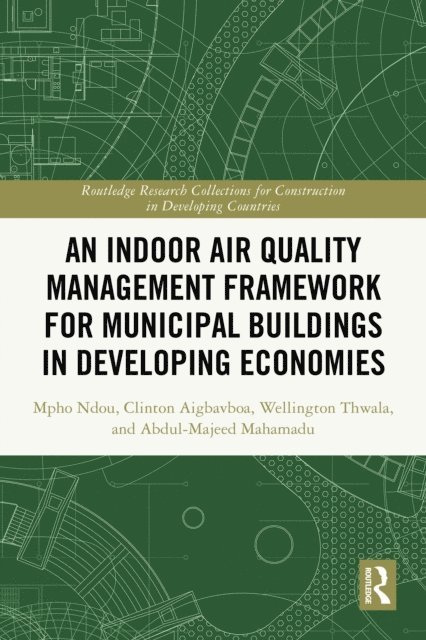
Indoor Air Quality Management Framework for Municipal Buildings in Developing Economies
Inbunden, Engelska, 2025
2 374 kr
Skickas inom 10-15 vardagar
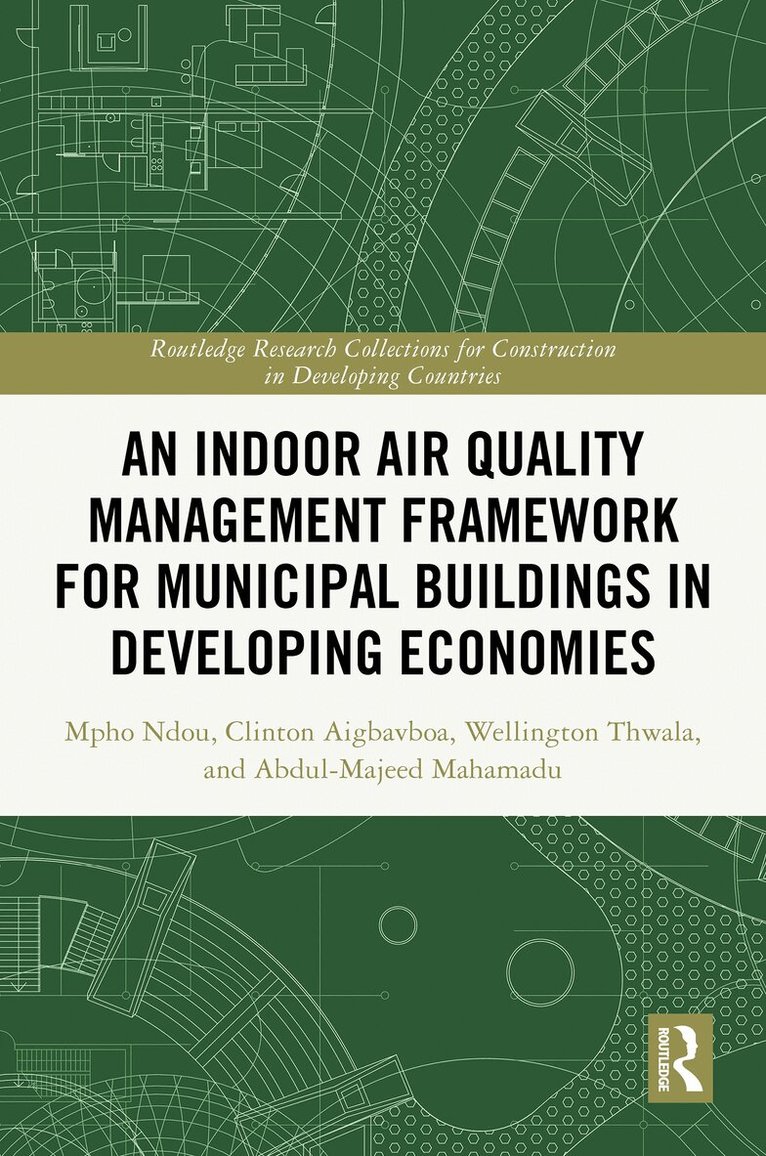
This book delves into the pivotal issue of Indoor Air Quality (IAQ) management in municipal buildings within developing economies, addressing a pressing need in today’s digital age, where individuals spend over 70% of their time indoors. With a strong focus on enhancing environmental quality, this book presents theoretical frameworks and practical recommendations designed explicitly for stakeholders in the higher education sector, encompassing both public and private institutions.As institutions strive to improve their learning environments, this book aligns with global Sustainable Development Goals (SDGs), highlighting the vital connection between effective IAQ management and the health and well-being of the institutional community, including students and staff members. It provides a comprehensive framework that advocates for improved IAQ management and emphasises the importance of quality education and lifelong learning.Furthermore, this book serves as a valuable resource for green building regulatory bodies, ensuring adherence to best practices in IAQ management within municipal buildings. By providing actionable strategies grounded on recent literature, the book is an essential guide for researchers and policymakers seeking to navigate the theoretical and empirical dimensions of IAQ management. Moreover, this book asserts that enhancing IAQ is necessary not only for regulatory compliance and community well-being but also as a vital investment in the academic and operational success of municipal buildings in developing economies.