Abdul Razzak Rumane - Böcker
Visar alla böcker från författaren Abdul Razzak Rumane. Handla med fri frakt och snabb leverans.
19 produkter
19 produkter
2 306 kr
Skickas inom 10-15 vardagar
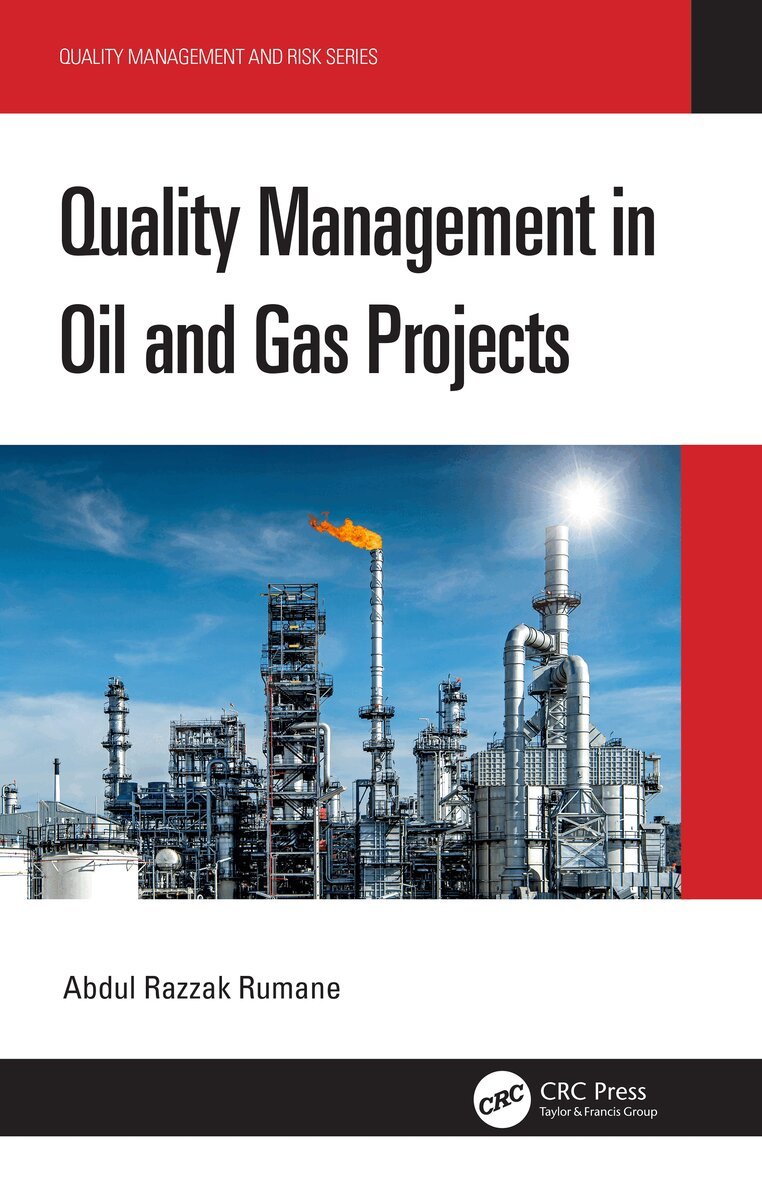
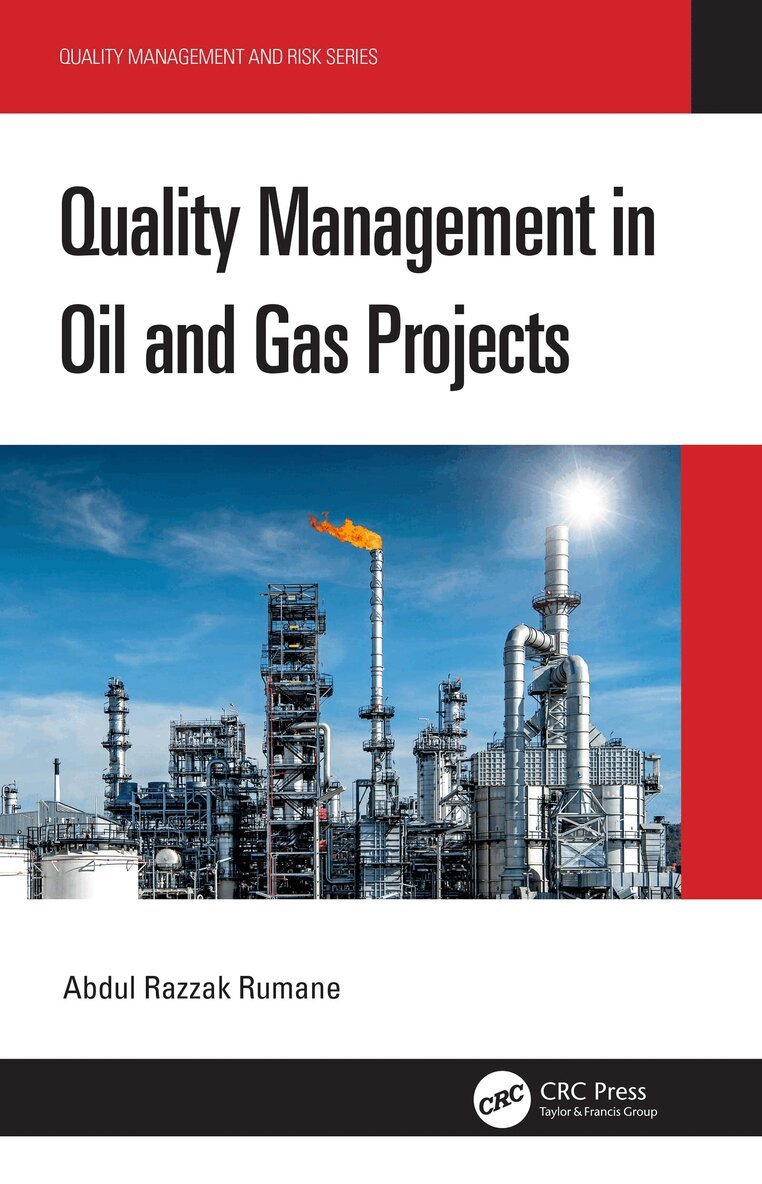
This book provides the tools and techniques, management principles, procedures, concepts, and methods to ensure the successful completion of an oil and gas project while also ensuring the proper design, procurement, and construction for making the project most qualitative, competitive, and economical for safer operational optimized performance.It discusses quality during design, FEED, detailed engineering, selection of project teams, procurement procedure of EPC contract, managing quality during mobilization, procurement, execution, planning, scheduling, monitoring, control, quality, and testing to achieve the desired results for an oil and gas project.This book provides all the related information to professional practitioners, designers, consultants, contractors, quality managers, project managers, construction managers, and academics/instructors involved in oil and gas projects and related industries.Features Provides information on the various quality tools used to manage construction projects from inception to handover Discusses the life cycle phases, developed on systems engineering approach, and how it is divided into manageable activity/element/components segments to manage and control the project Includes a wide range of tools, techniques, principles, and procedures used to address quality management Covers quality management systems and development of quality management systems manuals Discusses quality and risk management, and health, safety, and environmental management during the design and construction process
994 kr
Skickas inom 10-15 vardagar
This book provides the tools and techniques, management principles, procedures, concepts, and methods to ensure the successful completion of an oil and gas project while also ensuring the proper design, procurement, and construction for making the project most qualitative, competitive, and economical for safer operational optimized performance.It discusses quality during design, FEED, detailed engineering, selection of project teams, procurement procedure of EPC contract, managing quality during mobilization, procurement, execution, planning, scheduling, monitoring, control, quality, and testing to achieve the desired results for an oil and gas project.This book provides all the related information to professional practitioners, designers, consultants, contractors, quality managers, project managers, construction managers, and academics/instructors involved in oil and gas projects and related industries.Features Provides information on the various quality tools used to manage construction projects from inception to handover Discusses the life cycle phases, developed on systems engineering approach, and how it is divided into manageable activity/element/components segments to manage and control the project Includes a wide range of tools, techniques, principles, and procedures used to address quality management Covers quality management systems and development of quality management systems manuals Discusses quality and risk management, and health, safety, and environmental management during the design and construction process
1 184 kr
Skickas inom 10-15 vardagar
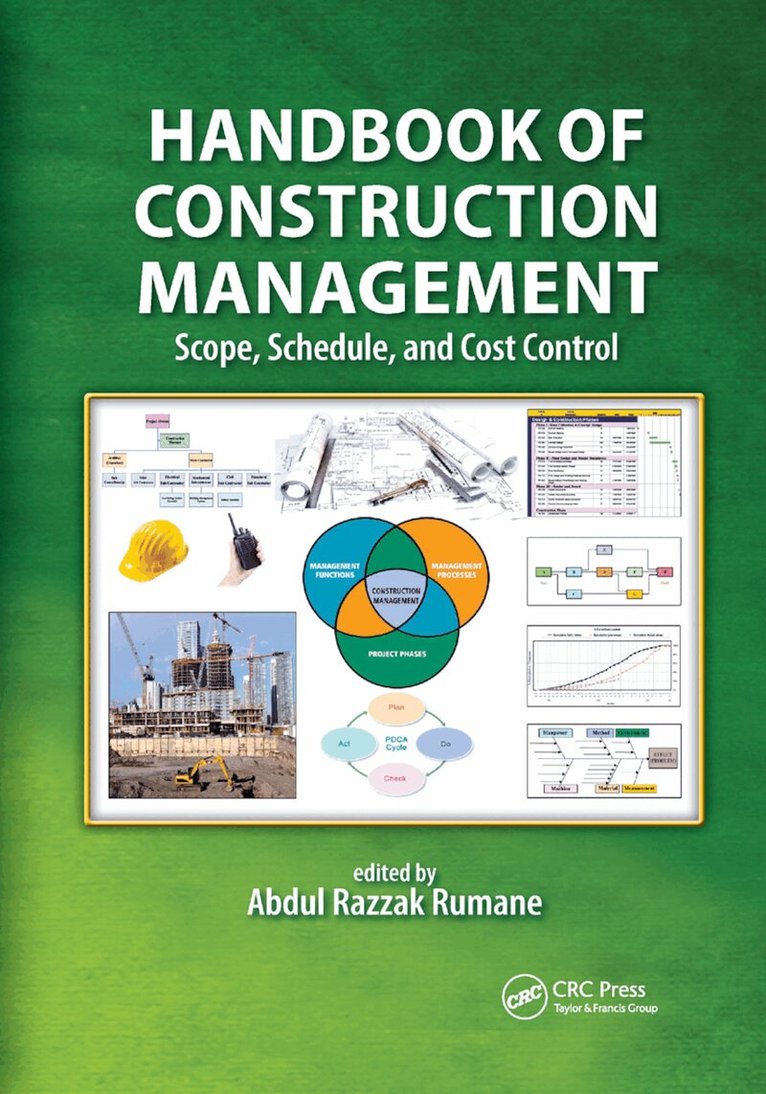
The book is developed to provide significant information and guidelines to construction and project management professionals (owners, designers, consultants, construction managers, project managers, supervisors, contractors, builders, developers, and many others from the construction-related industry) involved in construction projects (mainly civil construction projects, commercial-A/E projects) and construction-related industries. It covers the importance of construction management principles, procedures, concepts, methods, and tools, and their applications to various activities/components/subsystems of different phases of the life cycle of a construction project. These applications will improve the construction process in order to conveniently manage the project and make the project most qualitative, competitive, and economical. It also discuss the interaction and/or combination among some of the activities/elements of management functions, management processes, and their effective implementation and applications that are essential throughout the life cycle of project to conveniently manage the project.This handbook will: Focus on the construction management system to manage construction projects Include a number of figures and tables which will enhance reader comprehension Provide all related topics/areas of construction management Be of interest to all those involved in construction management and project management Provide information about Building Information Modeling (BIM), and ISO Certification in Construction Industry Offer a chapter on Lean constructionThe construction project life cycle phases and its activities/elements/subsystems are comprehensively developed and take into consideration Henri Fayol's Management Function concept which was subsequently modified by Koontz and O'Don
764 kr
Skickas inom 10-15 vardagar
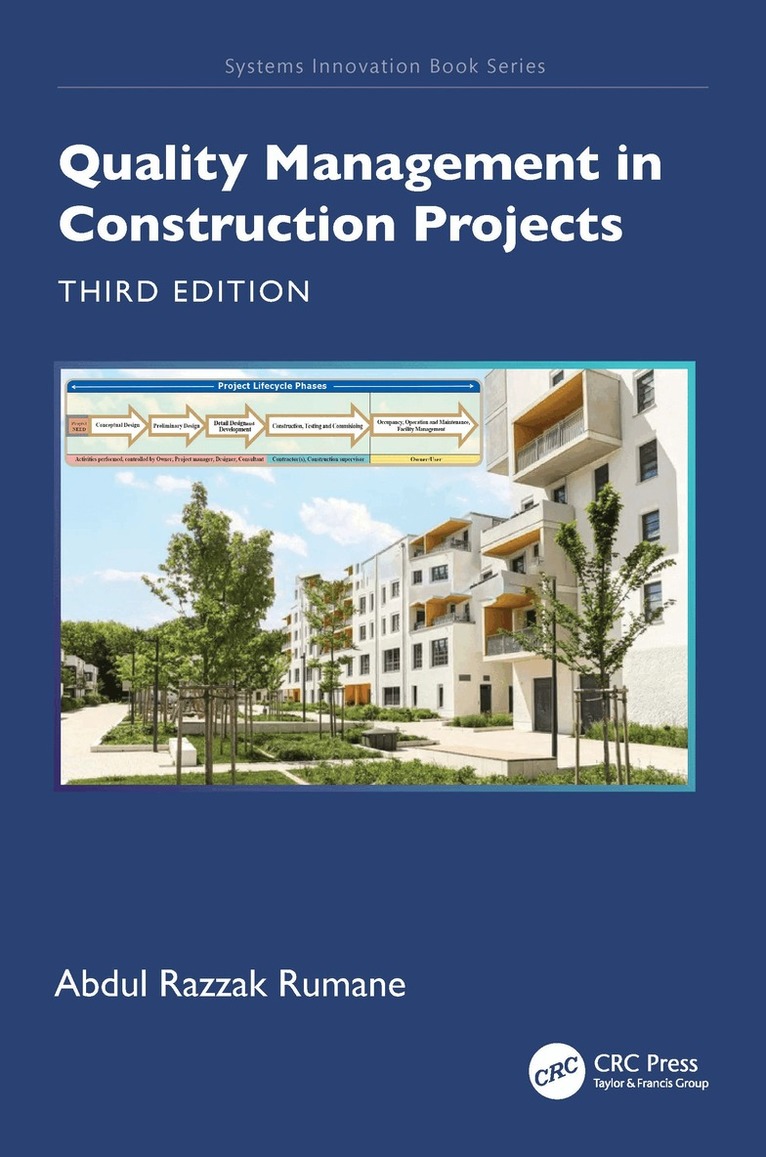
The first edition published in 2010. The response was encouraging and many people appreciated a book that was dedicated to quality management in construction projects. Since it published, ISO 9000: 2008 has been revised and ISO 9000: 2015 has published. The new edition will focus on risk-based thinking which must be considered from the beginning and throughout the project life cycle. There are quality-related topics such as Customer Relationship, Supplier Management, Risk Management, Quality Audits, Tools for Construction Projects, and Quality Management that were not covered in the first edition. Furthermore, some figures and tables needed to be updated to make the book more comprehensive.
2 306 kr
Skickas inom 10-15 vardagar
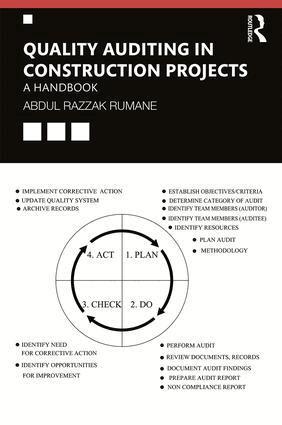
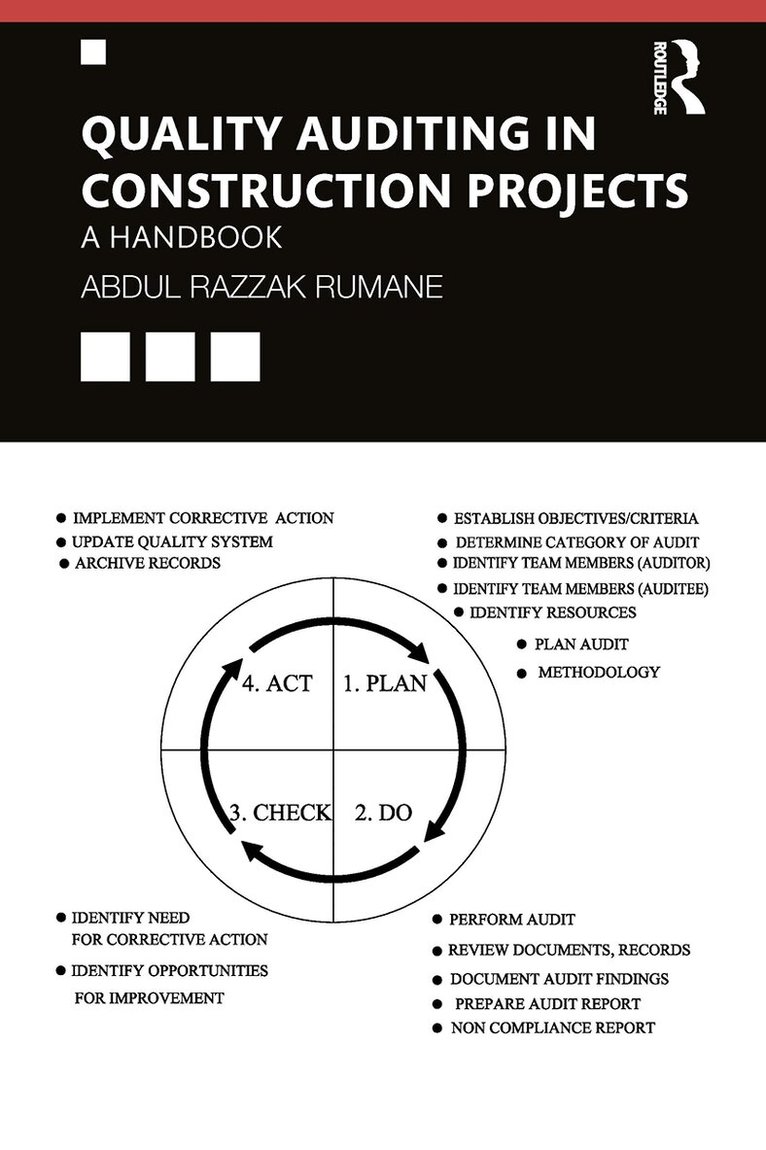
This book provides construction professionals, designers, contractors and quality auditors involved in construction projects with the auditing skills and processes required to improve construction quality and make their projects more competitive and economical.The processes within the book focus on auditing compliance to ISO, corporate quality management systems, project specific quality management systems, contract management, regulatory authorities’ requirements, safety, and environmental considerations. The book is divided into seven chapters and each chapter is divided into numbered sections covering auditing-related topics that have importance or relevance for understanding quality auditing concepts for construction projects.No other book covers construction quality auditing in such detail and with this level of practical application. It is an essential guide for construction and quality professionals, but also for students and academics interested in learning about quality auditing in construction projects.
710 kr
Skickas inom 10-15 vardagar
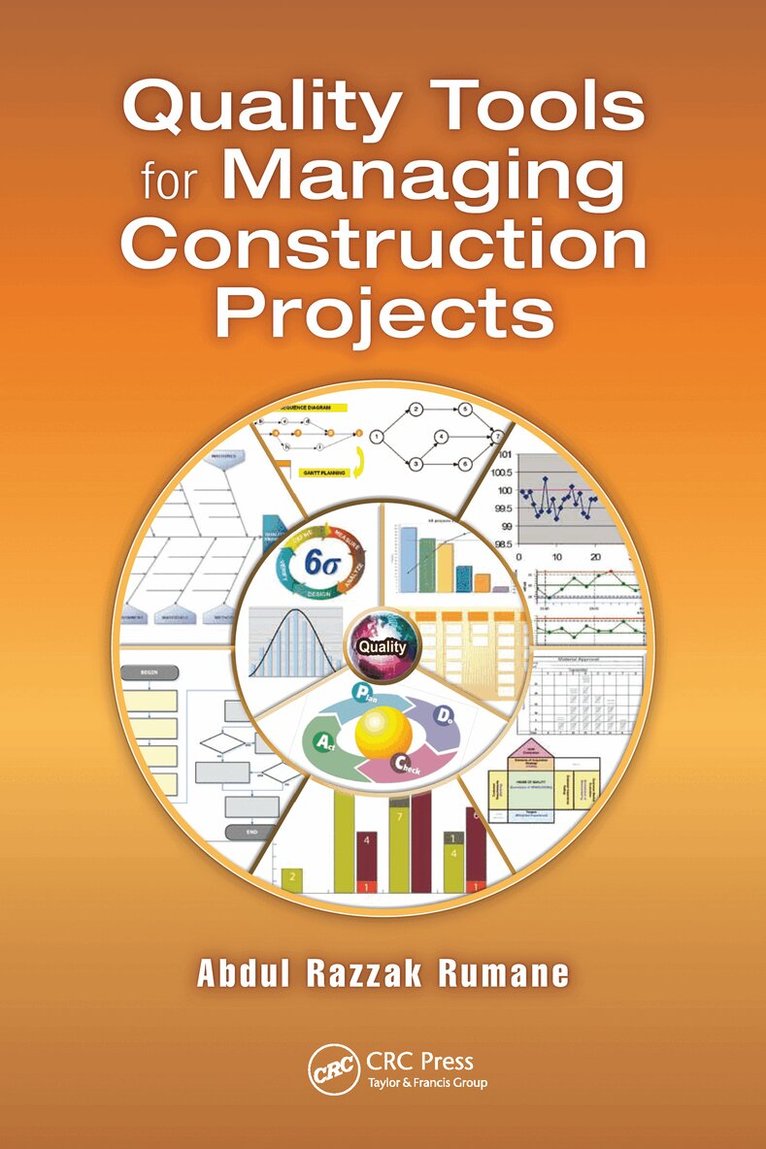
Dealing with such a multi-layered and fungible intangible as quality during the design and construction process is difficult for all parties involved. To the architect, quality means an appealing and enduring design, but to the builder, it means understandable documents that, when acted upon, lead to an enduring, well-made structure. To the owner, it is the end result: a building that is not only fit for the purpose, but a positive addition to its surroundings. Reconciling these seemingly contrasting priorities requires processes that are embedded not just at the project level, but within the entire enterprise with designer, builder, and owner committed to integrating quality into all their business processes.Quality Tools for Managing Construction Projects not only details the importance of developing a comprehensive management system, but provides the tools and techniques required to do so. The book examines the usage and applications of tools and techniques in different phases of a construction project, focusing on plan quality, quality assurance, and quality control. Following the construction cycle, Dr. Rumane delineates the quality tools and their application, ending with the implementation of quality systems throughout the entire design and construction cycle. The book demonstrates how these tools can help in planning, executing, monitoring, and controlling a project—evolving project management into a system that ensures project deliverables consistently meet the defined scope on schedule and within budget. The author’s systems perspective recognizes and supports the ideal collaborative approach that modern design and construction projects need. Dr. Rumane then demonstrates that successful quality management is more than a series of handoffs between teams who’ve completed tasks.
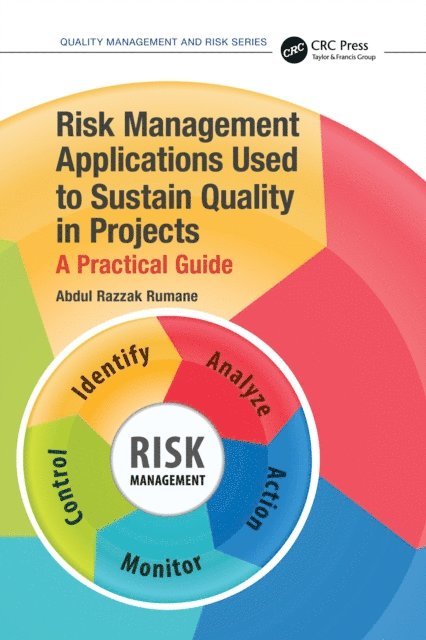
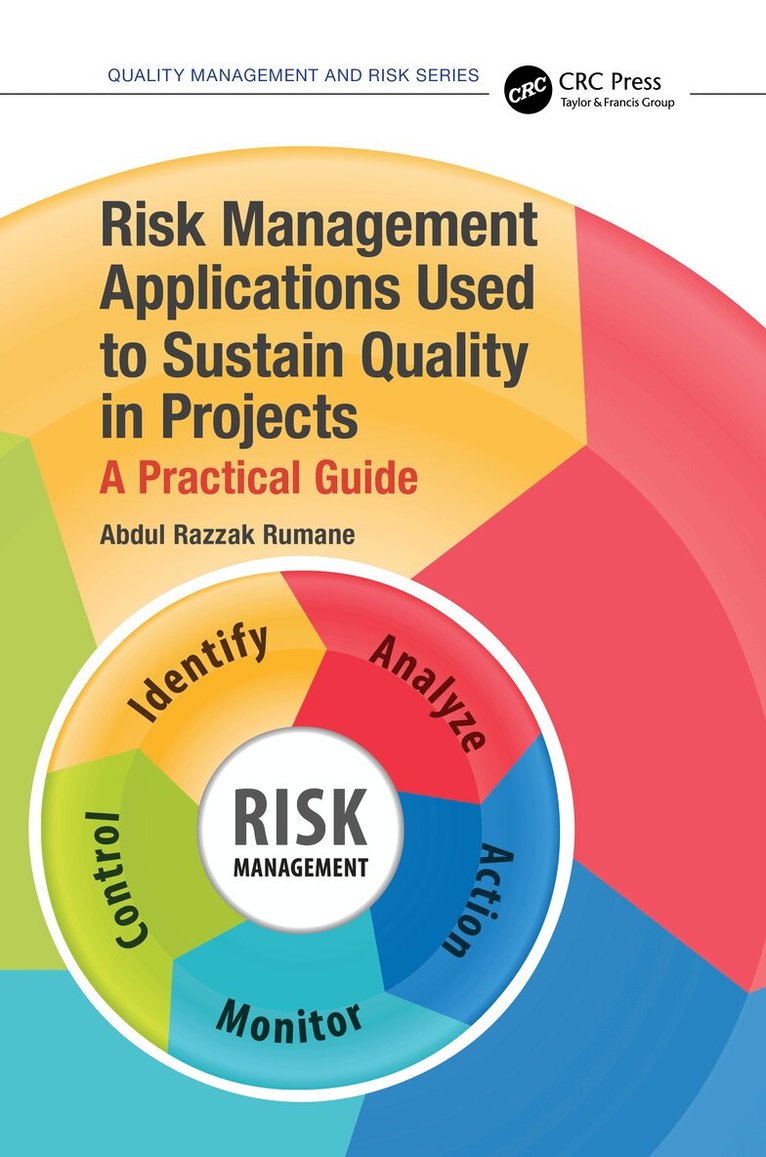
Risk Management Applications Used to Sustain Quality in Projects
A Practical Guide
Inbunden, Engelska, 2022
1 698 kr
Skickas inom 10-15 vardagar
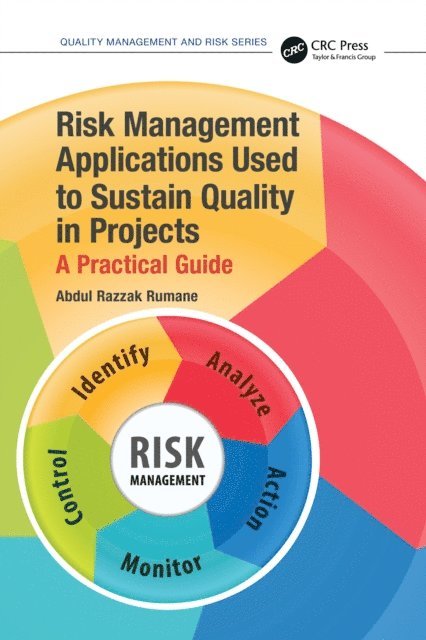
This practical guide covers the steps necessary to sustain quality in a project from start to finish. The book shows how to identify risks at different processes, phases, and stages and offers directions on how to mitigate and reduce risks using analysis, evaluation, and monitoring.Risk Management Applications Used to Sustain Quality in Projects: A Practical Guide focuses on applying risk management principles to manage quality in all project management processes, stages, and phases. The book discusses the potential risks that may occur at the different phases of the project life cycle, their effects on projects, and how to prevent them. It explores all the process elements and activities of risk management and provides steps on how to make the project more qualitative, competitive, and economical. Risk management processes are discussed at each project management processes and project lifecycle phase/stage to help the reader understand how various risks can occur and how to mitigate and reduce them.The main audience for this book is project management professionals, quality managers, systems engineers, construction managers, and risk management professionals as well as industrial engineers, academics, and students.
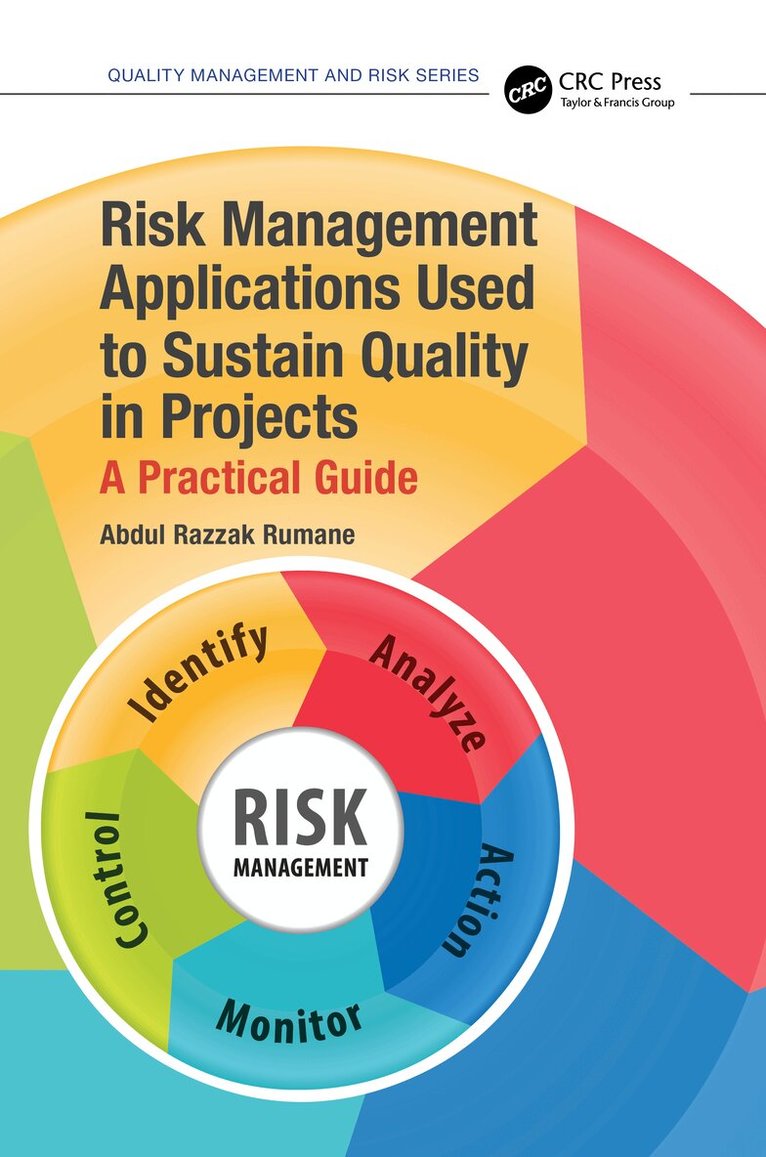
Risk Management Applications Used to Sustain Quality in Projects
A Practical Guide
Häftad, Engelska, 2024
670 kr
Skickas inom 10-15 vardagar
This practical guide covers the steps necessary to sustain quality in a project from start to finish. The book shows how to identify risks at different processes, phases, and stages and offers directions on how to mitigate and reduce risks using analysis, evaluation, and monitoring.Risk Management Applications Used to Sustain Quality in Projects: A Practical Guide focuses on applying risk management principles to manage quality in all project management processes, stages, and phases. The book discusses the potential risks that may occur at the different phases of the project life cycle, their effects on projects, and how to prevent them. It explores all the process elements and activities of risk management and provides steps on how to make the project more qualitative, competitive, and economical. Risk management processes are discussed at each project management processes and project lifecycle phase/stage to help the reader understand how various risks can occur and how to mitigate and reduce them.The main audience for this book is project management professionals, quality managers, systems engineers, construction managers, and risk management professionals as well as industrial engineers, academics, and students.
2 238 kr
Skickas inom 10-15 vardagar
Divided into four main chapters, this book covers the inception on through to the handover of a project and details the three main stages (study stage, design stage, and construction stage) involved with managing any type of project. The book discusses the sustainability framework and provides an overview of quality management with construction projects along with the most common quality tools used to manage quality and achieve sustainability in projects.Quality Management: How to Achieve Sustainability in Projects takes the reader from start to finish with a focus on the sustainability elements needed to manage quality in projects and details the application of sustainability principles at different stages. The book discusses the quality tools used in managing sustainability and provides concise and complete information on how to easily achieve it through to the project handover stage.The book is written for Project Management professionals such as Project Managers, Quality Managers, Industrial Engineers, and Construction Managers, as well as Design Management professionals, academics, trainers, and graduate students.
724 kr
Skickas inom 10-15 vardagar
Divided into four main chapters, this book covers the inception on through to the handover of a project and details the three main stages (study stage, design stage, and construction stage) involved with managing any type of project. The book discusses the sustainability framework and provides an overview of quality management with construction projects along with the most common quality tools used to manage quality and achieve sustainability in projects.Quality Management: How to Achieve Sustainability in Projects takes the reader from start to finish with a focus on the sustainability elements needed to manage quality in projects and details the application of sustainability principles at different stages. The book discusses the quality tools used in managing sustainability and provides concise and complete information on how to easily achieve it through to the project handover stage.The book is written for Project Management professionals such as Project Managers, Quality Managers, Industrial Engineers, and Construction Managers, as well as Design Management professionals, academics, trainers, and graduate students.
724 kr
Skickas inom 10-15 vardagar
This book provides construction professionals, designers, contractors and quality auditors involved in construction projects with the auditing skills and processes required to improve construction quality and make their projects more competitive and economical.The processes within the book focus on auditing compliance to ISO, corporate quality management systems, project specific quality management systems, contract management, regulatory authorities’ requirements, safety, and environmental considerations. The book is divided into seven chapters and each chapter is divided into numbered sections covering auditing-related topics that have importance or relevance for understanding quality auditing concepts for construction projects.No other book covers construction quality auditing in such detail and with this level of practical application. It is an essential guide for construction and quality professionals, but also for students and academics interested in learning about quality auditing in construction projects.
1 765 kr
Skickas inom 10-15 vardagar
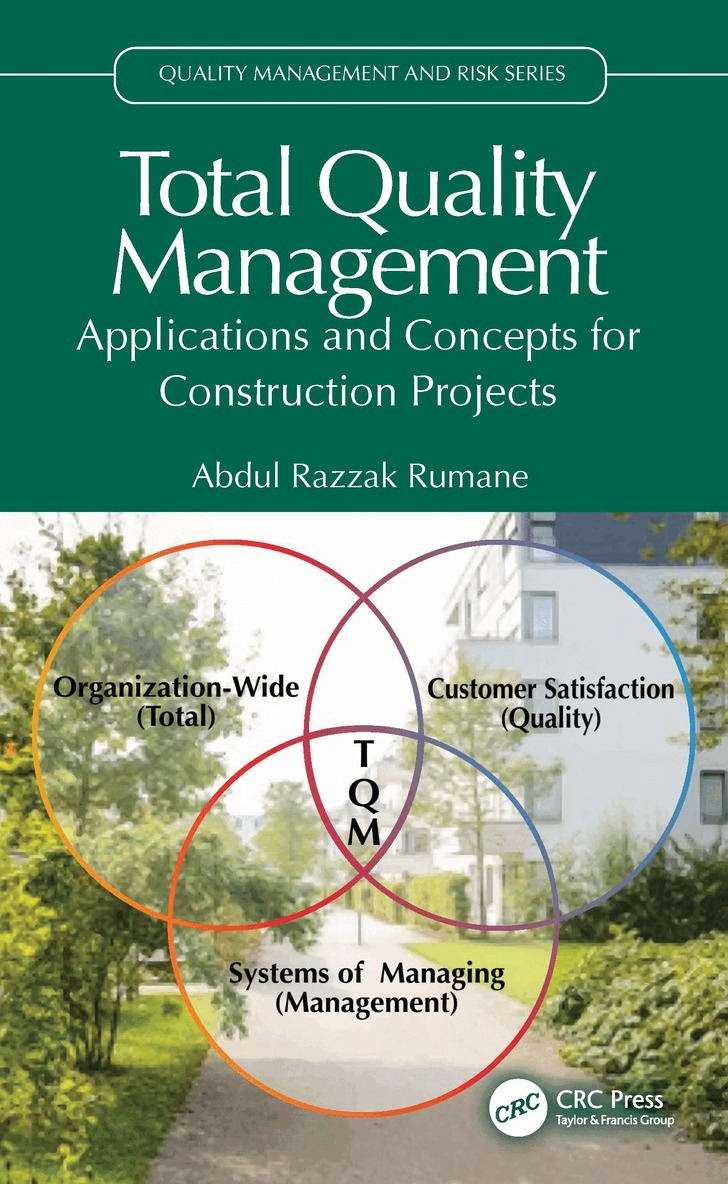
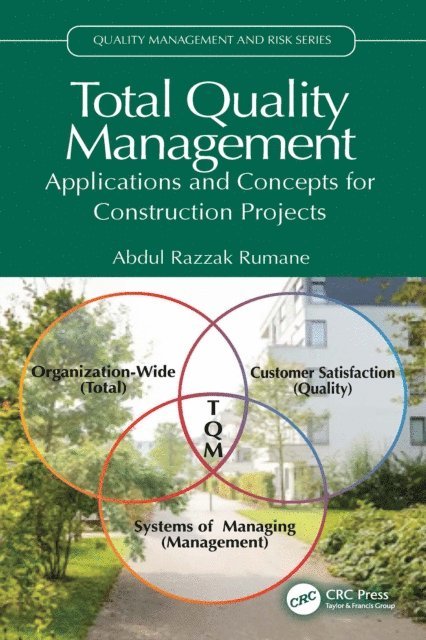
This book has been developed to provide significant information about the usage and application of the Total Quality Management (TQM) concept in a construction project environment. The content spans from the inception through to the closing of the project focusing on the TQM approach in each phase of the project.Total Quality Management: Applications and Concepts for Construction Projects, focuses on the application of the Total Quality Management concept in construction projects and contains many quick-reference figures and tables for easy comprehension. It offers a concise and complete implementation process for the application of TQM and helps achieve competitive advantages in the global marketplace resulting in the construction project being qualitatively competitive and economical. The book highlights the standards for TQM and gives a brief introduction to the quality management system along with providing an overview of the project, the quality, the types of project delivery systems, and the principles involved. Discussions of quality and the different steps it moves through within the project setting including inspection, statistical quality control, and quality assurance round out the book’s offerings.Construction and quality professionals, industrial engineers, project managers, students, academics, and trainers will find that this book satisfies their needs and meets their requirements for a book that specifically uses TQM in construction projects.
724 kr
Skickas inom 10-15 vardagar
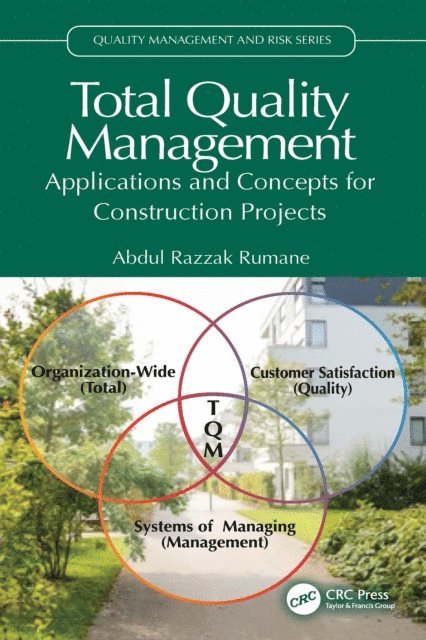
This book has been developed to provide significant information about the usage and application of the Total Quality Management (TQM) concept in a construction project environment. The content spans from the inception through to the closing of the project focusing on the TQM approach in each phase of the project.Total Quality Management: Applications and Concepts for Construction Projects, focuses on the application of the Total Quality Management concept in construction projects and contains many quick-reference figures and tables for easy comprehension. It offers a concise and complete implementation process for the application of TQM and helps achieve competitive advantages in the global marketplace resulting in the construction project being qualitatively competitive and economical. The book highlights the standards for TQM and gives a brief introduction to the quality management system along with providing an overview of the project, the quality, the types of project delivery systems, and the principles involved. Discussions of quality and the different steps it moves through within the project setting including inspection, statistical quality control, and quality assurance round out the book’s offerings.Construction and quality professionals, industrial engineers, project managers, students, academics, and trainers will find that this book satisfies their needs and meets their requirements for a book that specifically uses TQM in construction projects.
2 441 kr
Skickas inom 10-15 vardagar
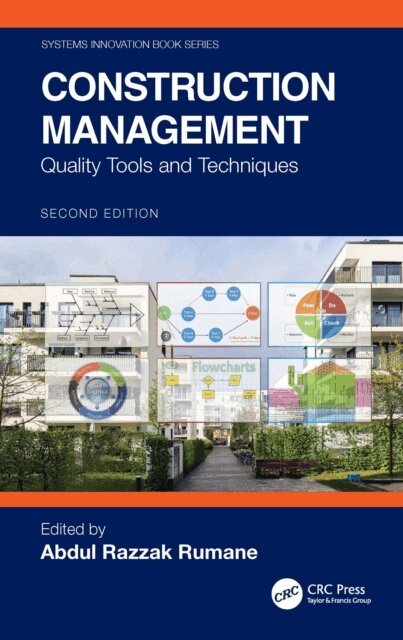
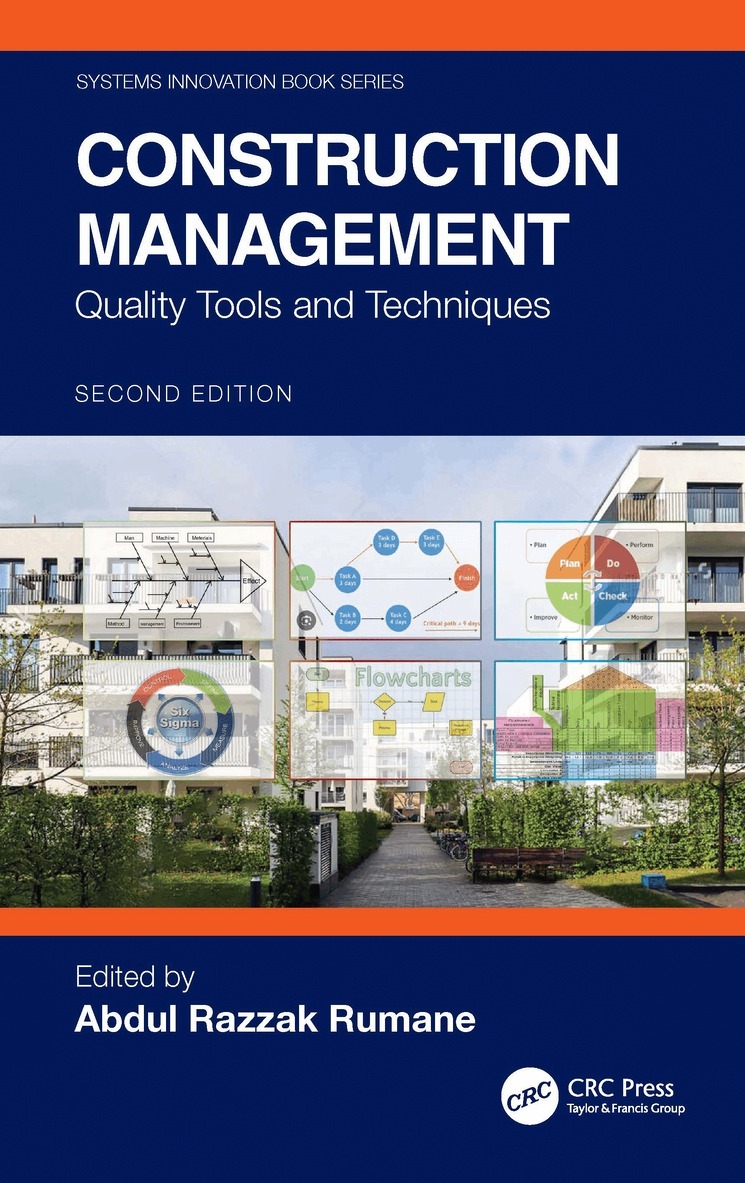
The application of quality tools and techniques in construction projects has a great influence on the cost-effectiveness results of construction projects and achieving successful project performance. Quality management tools and techniques help in project planning, execution, monitoring, and control of the project and evolve a project management system that makes project deliverables.Construction Management: Quality Tools and Techniques provides the usage and application of various quality tools and techniques in different phases of construction project management focusing on three quality management processes involving the varying aspects of quality. This volume illustrates how important quality is for construction projects and offers an overview of construction projects along with a brief introduction to the different types of projects, the different phases of the life cycle, and the principles. Project Delivery Systems (PDS) along with their organizational relationship, participants, advantages, and disadvantages of each system are included. The book goes on to discuss the qualification of construction managers and the type of management systems and their roles during the different design stages from the beginning through to the handover of the project is also included.This volume provides significant information and guidelines to construction and project management professionals (owners, designers, consultants, construction managers, project managers, supervisors, contractors, builders, developers, and many others from the construction-related industry) involved in construction projects (mainly civil construction projects, commercial-A/E projects) and construction-related industries.This book is also available as a set, Handbook of Construction Management: Scope, Schedule, and Cost Control, 2-Volume Set (9781041071174).
2 441 kr
Skickas inom 10-15 vardagar
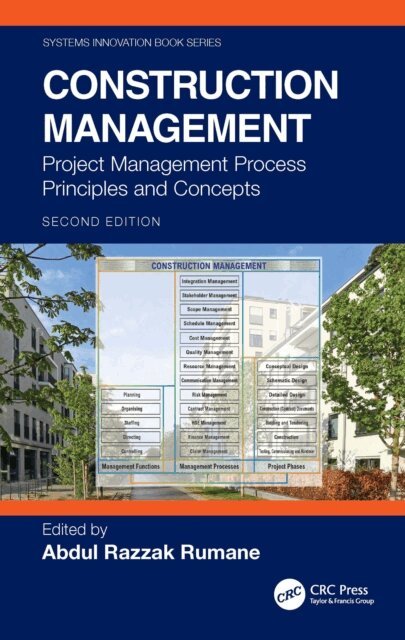
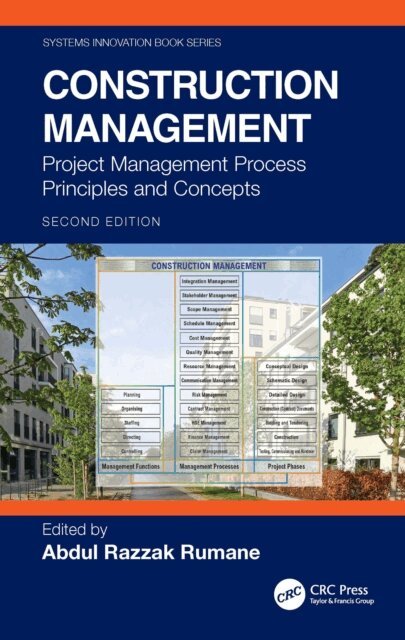
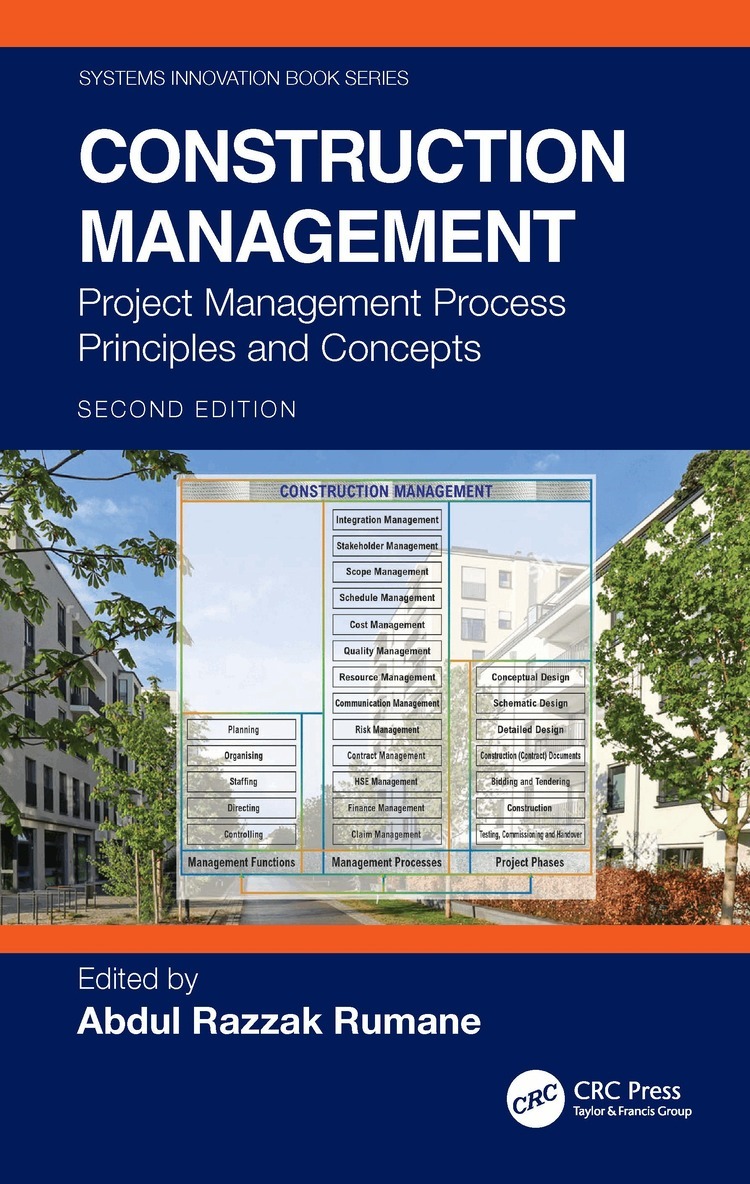
Management process groups along with the processes in the knowledge areas having to do with the principles and concepts used in the development of major construction activities are very important in the overall construction management process. This volume covers the application of these activities that manage the construction project from inception through to the completion of the construction project.Construction Management: Project Management Process Principles and Concepts discusses the five elements of management functions which include planning, organizing, staffing, directing, and controlling, and explains how these activities/elements of management functions can be used in construction projects. Information about strategic planning, operational planning, intermediate planning, and contingency planning, and the steps involved with relevance to construction projections is offered in this volume. The different types of organizational structures, such as simple, functions, divisional, matrix, team-based, network, and modular, with an example organizational chart, are presented. Also covered are staffing processes such as acquisition, roles and responsibilities, assessment, team building, training, and development, along with directing and controlling elements of the management functions. This volume is rounded out with the inclusion of the five types of management processes, such as initiating, planning, executing, monitoring, controlling, and closing, along with applicable knowledge areas based on the PMBOK® methodology.This volume provides significant information and guidelines to construction and project management professionals (owners, designers, consultants, construction managers, project managers, supervisors, contractors, builders, developers, and many others from the construction related industry) involved in construction projects (mainly civil construction projects, commercial A/E projects) and construction related industries.This book is also available as a set, Handbook of Construction ManagementScope, Schedule, and Cost Control, 2-Volume Set (9781041071174).
5 749 kr
Skickas inom 10-15 vardagar
This 2-volume handbook covers the importance of quality management tools and construction management principles, procedures, concepts, methods, and tools. The applications to various activities, components, and subsystems of different phases of the life cycle of a construction project to improve the construction process in order to conveniently manage the project and make the project most qualitative, competitive, and economical are also covered. Due to the voluminous nature of construction management processes and with the addition of certain missing topics, and for proper understanding of the required information the new edition is divided into two volumes consisting of topics related to quality tools and techniques and process principles for the execution of construction project. This new edition focuses on quality tools and techniques used for construction management and project management and provides concise and complete information about various quality tools used to manage construction projects from inception until the handing over of the project. This also includes the operations and maintenance aspects as well. Various types of construction contracts along with a discussion on standards and quality management systems are included. Six Sigma tools in construction projects are very important and value methodology for the optimization of construction project design is also discussed within this new edition 2-vol handbook set. Handbook of Construction Management: Scope, Schedule, and Cost Control, 2-Volume Set provides significant information and guidelines to construction and project management professionals (owners, designers, consultants, construction managers, project managers, supervisors, contractors, builders, developers, and many others from the construction-related industry) involved in construction projects (mainly civil construction projects, commercial-A/E projects) and construction-related industries.Volume 1, Construction Management: Quality Tools and Techniques (9781041066965) and Volume 2, Construction Management: Project Management Process Principles and Concepts (9781041067009) can also be purchased individually.
2 375 kr
Skickas inom 10-15 vardagar
Dealing with such a multi-layered and fungible intangible as quality during the design and construction process is difficult for all parties involved. To the architect, quality means an appealing and enduring design, but to the builder, it means understandable documents that, when acted upon, lead to an enduring, well-made structure. To the owner, it is the end result: a building that is not only fit for the purpose, but a positive addition to its surroundings. Reconciling these seemingly contrasting priorities requires processes that are embedded not just at the project level, but within the entire enterprise with designer, builder, and owner committed to integrating quality into all their business processes.Quality Tools for Managing Construction Projects not only details the importance of developing a comprehensive management system, but provides the tools and techniques required to do so. The book examines the usage and applications of tools and techniques in different phases of a construction project, focusing on plan quality, quality assurance, and quality control. Following the construction cycle, Dr. Rumane delineates the quality tools and their application, ending with the implementation of quality systems throughout the entire design and construction cycle. The book demonstrates how these tools can help in planning, executing, monitoring, and controlling a project—evolving project management into a system that ensures project deliverables consistently meet the defined scope on schedule and within budget. The author’s systems perspective recognizes and supports the ideal collaborative approach that modern design and construction projects need. Dr. Rumane then demonstrates that successful quality management is more than a series of handoffs between teams who’ve completed tasks.
2 982 kr
Skickas inom 10-15 vardagar
The book is developed to provide significant information and guidelines to construction and project management professionals (owners, designers, consultants, construction managers, project managers, supervisors, contractors, builders, developers, and many others from the construction-related industry) involved in construction projects (mainly civil construction projects, commercial-A/E projects) and construction-related industries. It covers the importance of construction management principles, procedures, concepts, methods, and tools, and their applications to various activities/components/subsystems of different phases of the life cycle of a construction project. These applications will improve the construction process in order to conveniently manage the project and make the project most qualitative, competitive, and economical. It also discuss the interaction and/or combination among some of the activities/elements of management functions, management processes, and their effective implementation and applications that are essential throughout the life cycle of project to conveniently manage the project.This handbook will: Focus on the construction management system to manage construction projects Include a number of figures and tables which will enhance reader comprehension Provide all related topics/areas of construction management Be of interest to all those involved in construction management and project management Provide information about Building Information Modeling (BIM), and ISO Certification in Construction Industry Offer a chapter on Lean constructionThe construction project life cycle phases and its activities/elements/subsystems are comprehensively developed and take into consideration Henri Fayol's Management Function concept which was subsequently modified by Koontz and O'Donnel and Management Processes Knowledge Areas described in PMBOK® published by Project Management Institute (PMI).The information available in the book will also prove valuable for academics/instructors to provide construction management/project management students with in-depth knowledge and guidelines followed in the construction projects and familiarize them with construction management practices.
1 900 kr
Skickas inom 10-15 vardagar
The first edition published in 2010. The response was encouraging and many people appreciated a book that was dedicated to quality management in construction projects. Since it published, ISO 9000: 2008 has been revised and ISO 9000: 2015 has published. The new edition will focus on risk-based thinking which must be considered from the beginning and throughout the project life cycle. There are quality-related topics such as Customer Relationship, Supplier Management, Risk Management, Quality Audits, Tools for Construction Projects, and Quality Management that were not covered in the first edition. Furthermore, some figures and tables needed to be updated to make the book more comprehensive.